read our blog
get the latest updates from our firm in our blog updates

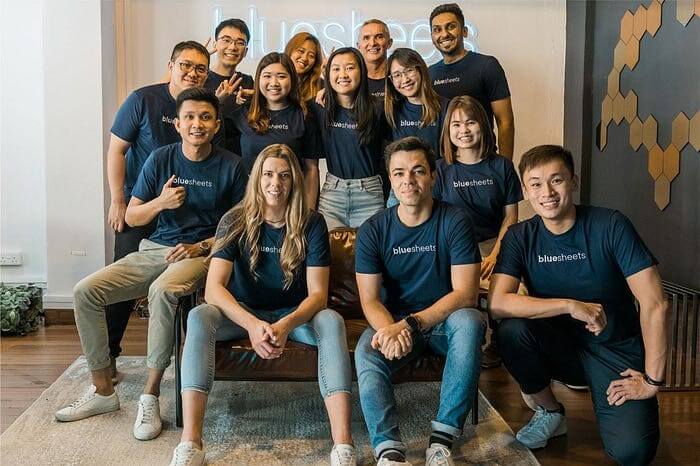
Kindrik Partners advised VC firm Illuminate Financial on its investment in Singapore-based AI-driven data processing and automation company bluesheets. Illuminate led the US$6.5 million series A round. Other returning investors included Insignia Ventures Partners, Antler Elevate, and 1982 Ventures.
Illuminate invests in B2B fintech and enterprise software companies that build solutions for the financial services industry. Backed by global financial institutions such as Citi, JP Morgan, Barclays, Jefferies, Singapore Exchange Group, and BNY Mellon, Illuminate uses its extensive network and industry knowledge to help their portfolio companies achieve their full potential in addition to providing capital.
bluesheets offers AI-driven data processing and workflow automation software that helps businesses digitise and automate their bookkeeping processes. It plans to use the funds to further enhance its AI capabilities and accelerate growth in key APAC markets, including Singapore, Thailand, ANZ, and Hong Kong.
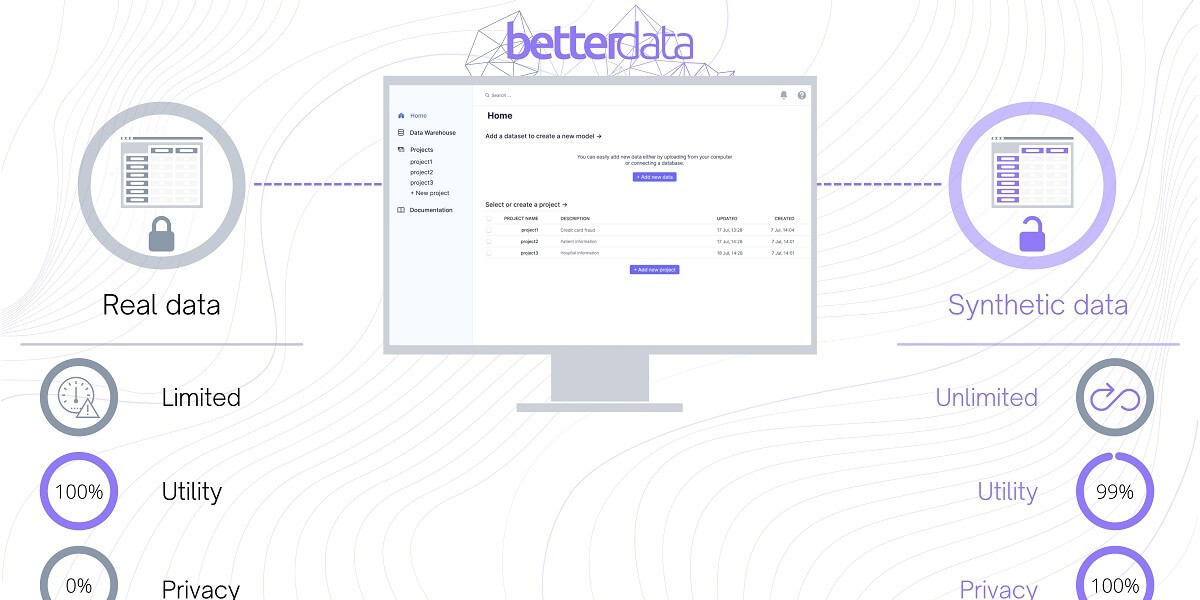
We’re happy to have advised Singapore-based synthetic data company Betterdata on an oversubscribed seed round of $1.65 million, led by Investible.
The company was founded in 2021 by Dr. Uzair Javaid and Kevin Yee and allows clients to share data faster and more securely in compliance with stricter data privacy regulations being introduced around the world. Betterdata uses generative AI to convert real data into synthetic data that looks, feels, and behaves like real datasets. These synthetic datasets retain the structure and correlations of the original data while eliminating the privacy and security concerns that come with holding and sharing sensitive data.
Betterdata plans to use the funding to publicly launch its product, hire more staff as the company scales, and improve its technology stack, with the aim of providing support for single-table, multi-table, and time-series datasets. The company also plans to expand across the Asia-Pacific region over the next two years.
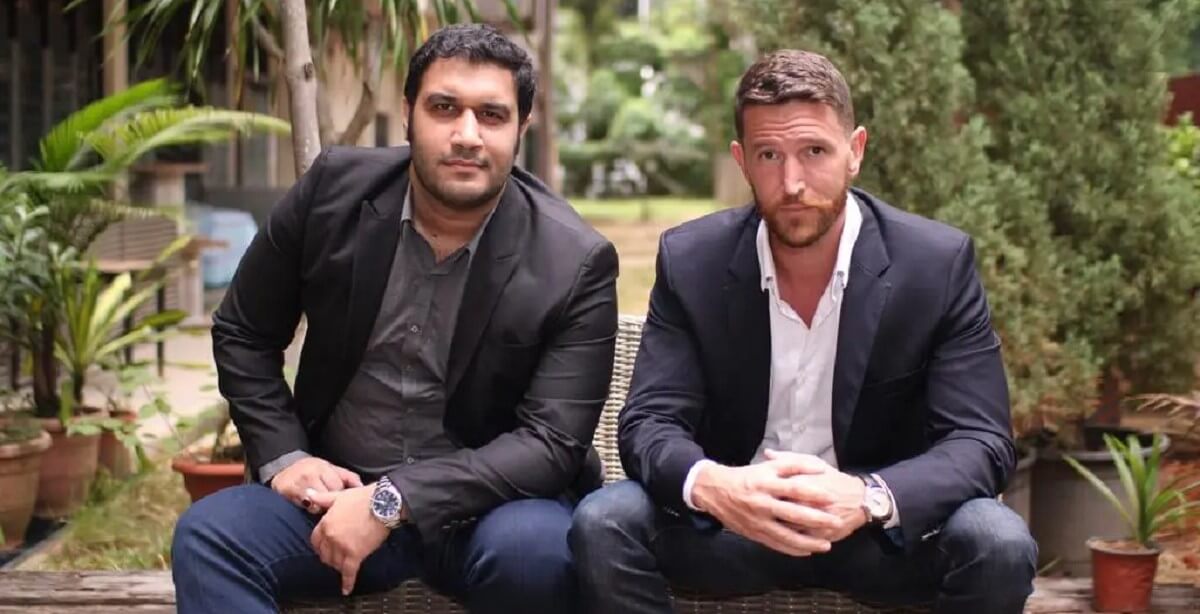
Kindrik Partners advised Singapore-based startup Green Li-ion on its recent USD20.5 million pre-B funding round. The round was led by TRIREC, followed by investors including Banpu NEXT and Equinor Ventures.
Green Li-ion was founded in 2020 by Leon Farrant and Reza Katal to develop technology capable of recycling lithium-ion batteries and is now a leading developer of battery recycling technology. The company has developed modular units capable of recycling spent batteries into cathode material that can be used in the production of new batteries. Each unit is able to process 4-6 metric tons of spent batteries per day, the equivalent of 20 EV batteries or 70,000 iPhones.
The funding will help the company scale its manufacturing capacity in order to deliver 50 modular units per year. The first commercial operation is slated to start production in the first half of 2023 in Oklahoma, USA.

As technology lawyers we have worked with hundreds of companies raising their first equity financing round. We have also come across companies and founders (typically on their next financing round) who completed their seed rounds without using a lawyer.
Proceeding without a lawyer is understandable for early stage tech companies. Venture capital term sheets and long form documents are often presented as standard form agreements. The perception is that engaging a lawyer will add time and cost to a process when getting money in the door and keeping costs low are key considerations.
We may be slightly biased(!), but companies and founders who we have worked with had an easier time closing their fundraising quickly and efficiently. They were also in a much better position following closing and when raising their next funding round. Here are 5 reasons why engaging a lawyer on your first round is important, and some good news on the cost.
more efficient process
Closing an equity financing is often a company’s first experience with a legal process. The round will involve negotiating and executing a term sheet, subscription agreement, shareholders’ agreement, updated constitution, and disclosure letter, along with ancillary documents such as director and shareholder resolutions and waivers.
Having a lawyer to guide the company and founders through this process is critical to getting the round closed as efficiently as possible. Some documents (like the disclosure letter and the updated constitution) are usually prepared on the company side, and others (like resolutions and the investor KYC process) can be prepared in advance with your lawyer liaising with your company secretary, meaning that they don’t hold up signing and closing.
making sure you have market terms
Because we advise on many capital raises, we understand how the material terms of your capital raise compare with what we see as the market standard for seed rounds. This provides founders with comfort on which terms they can regard as standard and which to negotiate. If sticking points arise, we can also suggest ways to resolve them.
We are also familiar with most of the seed investors in Singapore, their documentation, and their expected positions on most items. We find this also makes a big difference in streamlining the drafting and negotiation processes.
understanding your obligations
The venture capital terms and documentation from institutional investors in Singapore are typically of a high quality, and are becoming more standardized across the ecosystem. However, these agreements still include important representations, warranties and undertakings from the company, and in certain cases founders personally. Most of these will be familiar to VCs and other experienced parties, but it is important for founders (especially first timers) to understand what these items mean, and the best way to mitigate any risk.
Broadly speaking these items can be categorised as:
- representations and warranties provided by the company and (usually) founders about the position of the company at the time of investment
- restrictions on the actions of the company and founders going forward, such as investor veto rights (also known as reserved matters), the vesting of founder shares against their continued involvement in the company, and restrictions on the transfer of founder shares (usually lock-in, rights of first refusal, and co-sale rights)
- ongoing positive obligations to the investors, most commonly information and reporting obligations.
Understanding these obligations is important, not just to avoid a technical breach of the company’s governance documents, but also to maintain good relationships with your investors.
Post-closing requirements
Seed round documents usually include one or two post-closing obligations on the company. Most commonly tidying up any items raised during due diligence that could not be dealt with before closing, and/or the establishment of an ESOP.
In the excitement of closing a seed round it can be easy to forget these post-closing matters and, in the absence of a lawyer, this is often not picked up until the due diligence process for the company’s next round. This can create delays in order to address these items before moving ahead with a new investment round.
Having a lawyer will help founders to stay on top of these obligations.
good position moving forward
A company’s seed round investment documents will usually be terminated and replaced at the time of the company’s series A round. However, incoming series A investors will review those documents as part of their due diligence. If those seed documents include terms that are unusually favourable for investors (like a non-standard liquidation preference), your incoming investors may expect the same to be included in your series A agreements. Similarly, your seed investors may reasonably expect to retain their existing rights in the next round documentation (or in some cases your seed investor may even be leading your series A round). It is important that your seed documents are not placing the company in a potentially difficult position for negotiating future funding rounds.
but what about the cost?
We are always excited to assist startups with their seed rounds. These rounds are often a company’s first time accessing a material amount of external capital and represent a major milestone in the company’s life cycle.
To help keep your costs under control at this early stage, we offer a fixed fee of S$6,500 to work with you on your seed round subject to certain conditions. You can read more about our fixed fee offer here. Even if our fixed fee offer does not apply to your circumstances, we are happy to discuss your round and provide an estimate before kicking off.

Back in 2018, Y-Combinator (YC) updated their core investment instrument and launched what is now known as the post-money SAFE.
We analysed the post-money SAFE back in 2020 – see our blog here https://kindrik.co.nz/blogs/a-primer-on-post-money-safes-in-new-zealand/. The main difference between a pre-money and post-money SAFE is that, on conversion, under the pre-money terms the calculation of the number of conversion shares does not include the conversion of the SAFE itself and any other convertible instruments in issue (other convertible securities). With a post-money SAFE all of these other convertible securities are included. The end result is further dilution for existing ordinary shareholders on conversion of the post-money SAFE.
But what about convertible notes? Have they remained drafted on a pre-money basis or, like the SAFE, has the market moved towards the more investor friendly post-money position?
Convertible notes v SAFEs
The terms of convertibles notes differ from SAFEs. SAFEs remain outstanding until a conversion event occurs, or the company has a liquidity event. So, in effect, there is no repayment obligation. In contrast, convertible notes have a maturity date and generally accrue interest. Therefore, startups have no time pressure to close an equity financing under a SAFE. Whereas under a convertible note, they might need to get it done within say 18 months, or the note could be repayable. For that reason, SAFEs are generally the preferred document for founders.
The market has certainly followed YC’s lead when it comes to SAFEs. Most SAFEs we now see are the post-money version. However, the same can’t be said for convertible notes, for which conversion into shares is still calculated on the more founder friendly pre-money calculation. Looking at templates available online, whether provided by law firms (including our own!), VCs or industry bodies, this looks to be the consistent approach across the board. That said, we do occasionally see them on deals where investors are looking to secure a better position or when they simply draft the document incorrectly.
Round up
Founders should be cautious here and take advice at the term sheet stage so there is no ambiguity when everyone comes to drafting the final instrument. If any post-money instrument is used, it may require founders to rethink the valuation cap on the deal.
Investors could argue that there is nothing intrinsically different between a SAFE and a convertible note in terms of how equity should be calculated on a conversion event. I.e. why shouldn’t the number of shares be determined on the same basis for each?
However, YC’s justification at the time of launching the new SAFE was that it makes the conversion calculation simpler and creates more certainty over the future dilution. Which is certainly true. But YC’s model is about speed and efficiency and they invest in multiple companies in their intakes. A SAFE is also a pretty founder friendly investment instrument, and rarely negotiated much. A convertible note, on the other hand, has other disadvantages to founders and more onerous terms, in particular, interest and repayment obligations. Notes also tend to include information rights, a most favoured nation clause, events of default provisions and other covenants that don’t typically appear in SAFEs.
Taking that into consideration, our view remains that convertible notes should be drafted on a pre-money basis, and that post-money notes remain non-market.
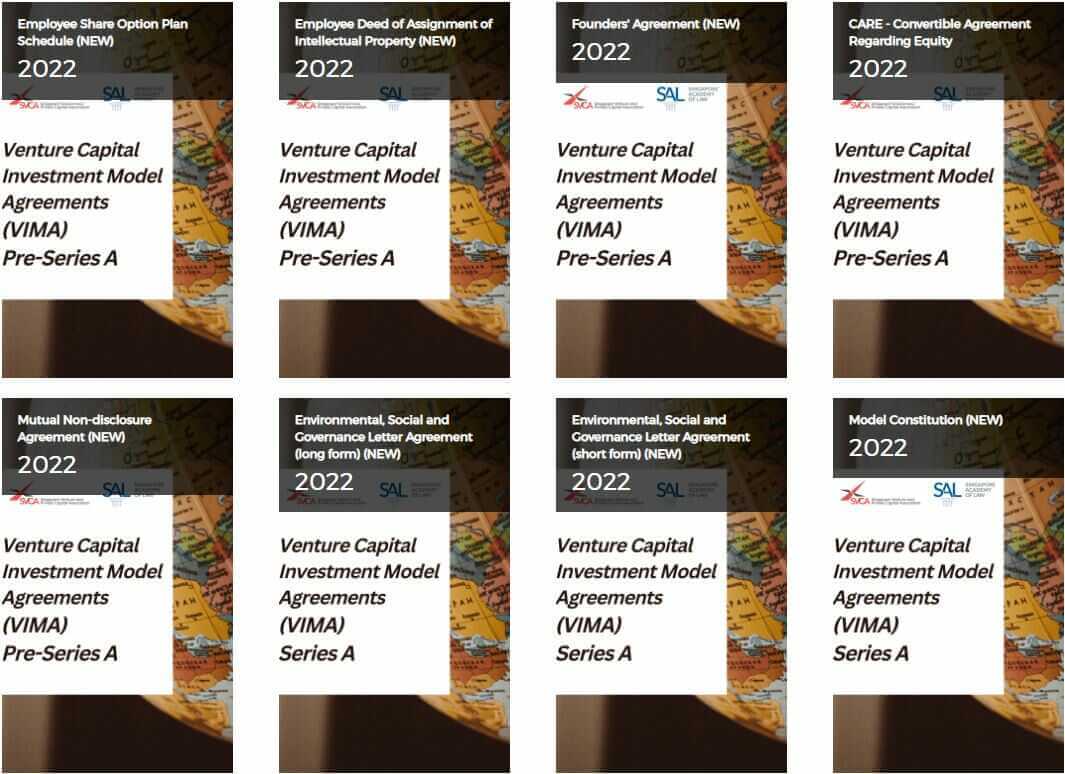
The template documents used in the venture capital ecosystem across Southeast Asia have been updated. Launched by the Singapore Academy of Law and the Singapore Venture & Private Capital Association in 2018, the new VIMA 2.0 documents are available for free to help start-ups.
8 new documents have been added to the suite of documents, including a founders’ agreement, a model constitution, an IP assignment, and an employee share option plan primer. The inclusion of a template letter covering Environmental, Social and Governance (ESG) matters reflects the increasing trend of investors to seek ESG commitments from their portfolio companies.
The core investment documents from 2018 have also been updated. This includes the two term sheet forms, the subscription agreement, and the shareholders’ agreement. We’ve summarised the main changes to these documents below (note this is non-exhaustive).
Term sheet (short form)
- clarifies that all parties bear their own costs
- provides that no dividends are to be paid to ordinary shareholders unless the holders of the preference shares either first or simultaneously receive a pro rata share of such dividends
- provides an option for the liquidation preference to be a multiple of original investment funds
- makes completion subject to customary conditions precedent
- expands the representations and warranties, including providing a general indemnity
- adds the option for pre-emptive rights to be provided to shareholders holding a certain percentage of shares
Term sheet (long form)
All changes made to the short form term sheet, plus it:
- adds clarification to the liquidation preference provision requiring that, if available proceeds are insufficient to make payments in full to preference shareholders on a liquidity event, the proceeds be shared among the holders of preference shares pro rata on an as-converted basis
- adds an optional provision to prohibit variation of the shareholders’ agreement unless agreed by all parties or by a certain % of shareholders
- lists certain new conditions precedent
Subscription agreement
- adds new default conditions precedent (clause 2 and schedule 4)
- includes new pre-completion undertakings (clause 3)
- changes the completion mechanics (clause 4.1)
- adds provisions detailing what happens if a single investor or the company fails to perform its obligations on completion – e.g., whether completion can occur with the other investors or not (clauses 4.4 and 4.5)
- adds a founder specific cap on liability (clause 8.4)
- allows an investor to assign or transfer its rights, benefits, interests and/or obligations to an affiliate
- adds new warranties covering items such as anti-money laundering, IP assignment by employees, and insolvency (schedule 6)
- includes a disclosure schedule that removes the need for a separate disclosure letter (schedule 8)
- removes the terms and conditions of the preference shares
Shareholders’ agreement
- adds further provisions governing meetings and shareholders (clause 3.2)
- adds vesting provisions covering good leaver and bad leaver scenarios (clause 16)
- limits the personal liability of the founders (clause 19)
- expands the termination provision so that it automatically terminates in certain situations (e.g. on an IPO). Termination does not release a party from accrued rights, obligations and liabilities (clause 21)
- adds a new schedule including the terms and conditions of the preference shares (schedule 3).
Round up
The amendments reflect changes commonly made by lawyers who use them on deals, and overall are an improvement. E.g., the new conditions precedent included in the subscription agreement are customary for equity financing transactions. The better place for the terms and conditions of the preference shares was arguably always in the shareholders’ agreement, as it is now. Including founder vesting provisions, caps on founder personal liability, and anti-corruption warranties/undertakings really just reflects market practice. The move to a disclosure schedule is also a good idea to remove the need for a separate letter.
There were some improvements that were missed. E.g., the tag along formula still does not reflect most tag along/co-sale provisions that we see in the market; and the liquidation preference language continues to require an actual conversion into ordinary shares (assuming proceeds come out higher on an as-converted basis), which would be avoided with more conventional drafting.

Kindrik Partners is delighted to have advised Hello Clever on its recent AUD4.5 million pre-seed and seed funding round led by Vectr Ventures. Other funders included Yolo Investments and CrossFund. Hello Clever is a buy-to-earn ecosystem startup founded in 2021 by business partners and friends Caroline Tran and Gavin Nguyen.
Through the Hello Clever App and the CleverShop, the company helps young Australians be “clever” with their money. Customers can shop, earn cashback, and make payments to friends in one place.
Given the economic difficulties being faced by businesses in 2022, co-founder Caroline says “we are lucky to still retain our position in the market with the ability to innovate, build new capabilities and secure long-term prospects while at the same time deliver the sustainable, profitable growth that our investors and business partners expect from us”.
Partner Chris Wilson says:
“The Hello Clever team clearly values its customers and their financial security, especially in the current uncertain economic environment. It was a pleasure working with such a pro-active and efficient founding team. We’re excited to see Hello Clever continue to grow and develop to help young people with their finances.”

The global economic downturn has inevitably hit the startup and venture capital ecosystem. Investors in startups, like everyone else, are impacted by falling stock prices and fund valuations, distracted from investing new money and busy supporting existing portfolio companies. These factors make it harder for startups to raise money right now.
But for those startups that are still raising money, what is the approach of investors? Is the VC term sheet about undergo a change?
valuations
Startup valuations are falling. For those companies that have raised a previous round of financing, founders will want to avoid a down round – a fundraising in which a company issues shares at a lower price than the previous investment round – at all costs, as doing so may trigger investors’ anti-dilution rights. If anti-dilution rights are triggered, founders could face significant further dilution.
If company cash is low, existing investors may need to support a new financing. If so, founders will need to negotiate hard with both new and existing investors. Anti-dilution rights can be fully or partially waived on a fundraising at the end of the day. If anti-dilution rights are triggered, founders may then need to ensure that they remain sufficiently incentivised following the dilution, for example via an increased portion of the company’s ESOP.
extension rounds and convertible notes
Extension rounds at the same price as the last financing round may be an alternative to a down round. With no increase in valuation, startups will want to classify such investments as a bridge or extension. Therefore, expect to see investment rounds using preference share class terminology such as series A2, series B+, pre-series A or similar.
We also anticipate more convertible notes will be used in the market. This not only avoids initial dilution but pushes the whole difficult discussion on current valuation to another day. This, of course, also has its disadvantages. To some extent, founders are just kicking the valuation debate down the road and it will still have to be addressed at some point. In the current market, it also seems inevitable that SAFEs will be less common than traditional convertible notes carrying repayment obligations. We also expect investors to be more aggressive on setting lower valuation caps and fluctuating price discounts depending on the timing of conversion into equity.
tranched investments
Now is the time to get money into the business to give it runway for a decent period of time. Tranched investments conditional on financial performance are best avoided by startups at the best of times. Right now, it is very difficult to forecast traction and performance over the next 12-18 months. Unfortunately, given the uncertain economic environment, investors may well think the opposite and insist on structuring investments in tranches subject to KPIs.
warrants
Warrants, which provide an option to purchase more shares at a future date at a fixed price, may also be a tool for investors to use in the current environment. The exercise price of such warrants is key – the lower the price, the more potential dilution. If warrants are issued and/or exercisable down the line, based on company performance, the true share price of the financing round may be considerably less than initially agreed.
redemption / buy-back rights
Investors sometimes include redemption or buy-back rights which entitle them to their money back in certain circumstances. Usually this is where there is some kind of event of default by the company or its founders.
However in difficult times, investors tend to broaden the circumstances in which such redemption or buy-back rights can be enforced (e.g. financial performance deteriorates or being unable to satisfy a key commercial arrangement or deliverable). In this uncertain economic period, investors may look to de-risk transactions even further using such a mechanism. Founders should be cautious about agreeing to any broad redemption or buy-back rights triggered by anything other than a material breach or default.
liquidation preference
Liquidation preferences provide investors with downside protection if a company is either sold or wound up. In such an event, investors are entitled to receive an agreed amount of the proceeds before anything is paid to other shareholders. During the good times, founders and startups have become accustomed to 1x non-participating liquidation preference in most cases – a generally accepted VC market standard. With stormy clouds above, we can expect that to change, with liquidation preference carrying higher multiples, and also participating preferences returning.
Further, for companies that have raised previous rounds of investment, incoming investors are more likely to seek a senior class of shares, than rank alongside existing preference shareholders, which is common in normal market conditions.
exit rights
Exit rights give investors a way to sell their shares if the company hasn’t got to a liquidity event (e.g. a trade sale or IPO) within a set period. We may see shorter time periods before these rights kick in. The remedies provided to investors vary, but we could see more instances of the following:
- a right to require the company to buy-back investors’ shares at a specified price (for example, based on fair market value)
- investors having the option to reconstitute the board giving them greater voting control
- an obligation on the board to engage an investment banker to find a buyer, coupled with a drag-along right so that shareholders (including founders) can be forced to sell at a price determined by investors
venture debt
Finally, venture debt is likely to become a more important source of financing in the short term, in most cases complementing an equity financing. As an alternative capital raising option for high growth companies, venture debt is a good option for entrepreneurs looking to extend their runway, using an instrument that results in less dilution.
round up
Right now VC firms and other investors will be taking a closer look at downside protection in their term sheets. Of course, not all investors are predatory, nor will the majority take advantage of the difficult economic climate to seek further influence in startups. But now is certainly the time for founders to reach out to lawyers at the term sheet stage to understand what is, and what isn’t, market standard, and how this may be changing.

Kindrik Partners advised edtech startup Jackett on its US$1 million seed funding round led by Forge Ventures. Entrepreneur First, Epic Angels Network, Carousell co-founder Siu Rui Quek, and OnLoop co-founder Projjal Ghatak also participated.
Charlotte Trudgill and Rachiket Arya started Jackett after realising that technology could enhance the teaching process, reduce the administrative burden on teachers, and create a more personalised experience for students. Jackett lets teachers scan and digitise questions, create personalised assessments using the platform’s library, and auto-grade students’ answers using AI. It also uses smart analytics to provide a deeper understanding of student performance over time.
Jackett plans to use the capital to improve its operating system and make its platform available to more teachers and education institutions in emerging markets.
Partner Chris Wilson says:
“Jackett has gone from strength to strength in its short history and this early involvement from prominent investors shows they have great potential going forward. We look forward to seeing them continue to help teachers deliver the best possible education to their students.”

Kindrik Partners is happy to have advised property technology company Propseller on its US$12 million series A round led by Vertex Ventures Southeast Asia and India.
Other participants in the round include existing investors Hustle Fund, Iterative, and Rapzo Capital, alongside new investors Partech, ICCP SBI, Vulpes Ventures and Redbadge Pacific. The fundraise also attracted investment from the co-founders of several prominent proptech companies, namely PropertyGuru’s Jani Rautiainen, Marta Higuera of OpenAgent, Steffen Wicker of Homeday and Flyhomes’ Tushar Garg.
Founded in 2018, Propseller has developed an end-to-end real estate transaction platform that has made transactions more efficient and data-driven for both buyers and sellers. Notably, the platform is able to tell users the likelihood of a successful closing at each step of the process.
Propseller plans to use its Series A funding to scale its business model, expand its offerings and enter overseas markets. To achieve this, it plans to significantly expand its current team of 50 employees by hiring 200 more people.
Partner Chris Wilson says:
“Buying a home is often the largest financial decision in a person’s life, and Propseller is revolutionising the way people buy and sell their homes by building a platform that prioritises efficiency and transparency. The company has modernised the traditional real estate agency and we look forward to seeing them bring these solutions to new markets.”

Kindrik Partners is delighted to have advised cleantech startup SunGreenH2 on its US$2 million seed funding round. The round was led by SGInnovate. Vinci BV, Entrepreneur First, SOSV’s HAX, she1K, and Apsara Investments also participated.
Founded in 2020, SunGreenH2 develops nanotechnology with the potential to transform hydrogen production. The company manufactures core components for electrolysers, which create hydrogen by splitting water molecules into their atom parts. SunGreenH2 has revolutionised this process by creating components that increase the production and decrease the energy consumption of electrolysers without relying on platinum and other expensive elements.
The funding will be used to set up their first manufacturing facility in Melbourne to meet the demands of their early partners. The company plans to partner with system integrators to produce whole electrolysis stacks and eventually with larger companies to produce more end-to-end solutions.
Partner Chris Wilson says:
“SunGreenH2 has the potential to be a pioneer in the production of green hydrogen production. We are pleased to be able to help the company secure this funding and look forward to seeing them contribute to a low-carbon future.”

Kindrik Partners is pleased to have advised cryptocurrency analytics platform Merkle Science on its US$24 million series A funding round. The round was co-led by BECO Capital, Darrow Holdings (an affiliate of Susquehanna International Group) and K3 Ventures.
Founded in 2018, Merkle Science develops threat detection, risk mitigation and compliance tools that can detect, investigate, and prevent cryptocurrency-related crime. The rapid adoption of blockchain technology across the financial sector, the escalating impact of hacks and greater regulatory scrutiny have resulted in a massive increase in demand for these tools.
The new investment will help Merkle Science expand in the USA and Europe, as well as fund the research and development of tools for emerging technologies such as NFTs, decentralised finance and cryptocurrency bridge protocols.
Partner Chris Wilson says:
“Despite some recent growing pain, there has been massive growth of the cryptocurrency market in recent years which has resulted in a significant increase in demand for improved security surrounding digital assets. Merkle Science has stepped up to provide multiple solutions in this area and we look forward to seeing how they will use this funding continue to contribute to the cryptocurrency industry.”

We’re pleased to have advised Philippine based e-commerce platform edamama on its US$20 million series A funding round led by Alpha JWC. Existing investors Gentree Fund, Robinson Retail Holdings, Innoven Capital, Kickstart Ventures and Foxmont Capital Partners also participated in the round.
edamama is a parenting-focused platform that offers customers a personalised shopping experience designed to simplify decision-making for parents. Following its launch in May 2020, the company has grown rapidly by providing families across the Philippines a safe and trustworthy way to digitally access an extensive range of parenting products through its proprietary technology. In addition to its innovative product offerings, edamama also provides an online gift registry and subscription services for essentials.
The company plans to use the funding to expand its operations, ramp up delivery solutions, and enhance its content and community. It also plans to open offline stores and scale its own private label portfolio.
Partner Lee Bagshaw says:
“edamama launched during the strict Covid lockdown imposed in the Philippines at a time where consumers were shifting from brick-and-mortar stores to e-commerce platforms. The business has continued to grow rapidly by establishing a reputation for providing affordable and quality products. We are delighted to have advised the company on their latest fundraise, one of the largest series A financings ever completed in the Philippines.”
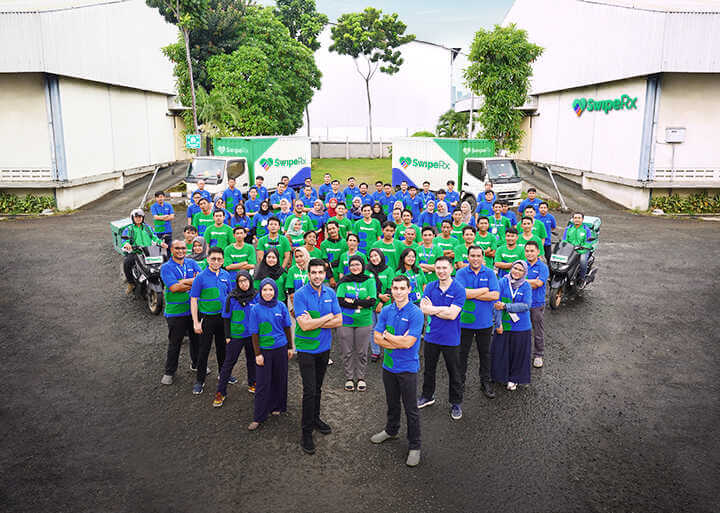
Kindrik Partners is pleased to have advised digital B2B pharmacy platform SwipeRx on its US$27 million series B funding round led by MDI Ventures. Other investors in the round included the Bill & Melinda Gates Foundation, Johnson & Johnson Impact Ventures and Susquehanna International Group (SIG).
SwipeRx, formerly known as mClinica, was founded with the goal of providing tech-based solutions to issues facing pharmacies in Southeast Asia. SwipeRx pioneered the community-driven commerce model that unites the fragmented pharmacy channel on a single platform enabling them to access all the information, education and medicines they need. From online education, to centralised purchasing and logistics, to financing, SwipeRx caters to the critical needs of pharmacies.
Operating across Indonesia, the Philippines, Vietnam, Malaysia, Thailand and Cambodia, SwipeRx’s intends to further scale its growing network of pharmacies, expand specialised healthcare logistics to fulfil B2B commerce, accelerate its tech innovation and recruit talent
Partner Lee Bagshaw says:
“Pharmaceutical networks in Southeast Asia have long struggled with fragmentation, but SwipeRx’s platform is innovating how the industry operates via an innovative community-driven commerce model. We’re delighted to have advised the company on their latest financing and look forward to seeing how their innovation continues to transform the delivery of healthcare and pharmaceutical services.”

Kindrik Partners is delighted to have advised Filipino e-commerce platform GrowSari on its US$77.5 million series C financing. Investors in this round include the International Finance Corporation, KKR, Wavemaker Partners and the Temasek Group’s Pavilion Capital.
Founded in 2016, GrowSari is a B2B platform that provides support for micro, small, and medium-sized enterprises (MSMEs) in the country. GrowSari began as an ordering platform for sari-sari stores (small, independent convenience stores). Today, the platform provides many different types of MSMEs access to a wide range of digital services, including bill payments, telco reloads, wallet top-ups and procurement of retail goods and medicines.
The funding will allow GrowSari to continue to expand into new store formats, accelerate its national expansion and build its logistics and fulfillment network.
Partner Chris Wilson says:
“Small and medium sized-business play such a key role in the social and economic makeup of the Philippines, with MSMEs accounting for 63 percent of employment in the country. We are extremely pleased to help GrowSari continue to transform the way these companies do business”

Kindrik Partners is delighted to have advised Indonesian agritech start-up Sayurbox on its US$120 million series C financing led by Northstar and Alpha JWC Ventures. Other investors participating in the investment round included the World Bank’s International Finance Corporation, Astra Digital, Syngenta Group Ventures and Global Brain.
Founded in 2017, Sayurbox digitises Indonesia’s agricultural and food supply chain addressing inefficiencies in the industry. Using unique demand forecasting, inventory planning and route optimisation technology, the business increases customer experience through freshness, pricing, product range and delivery. Sayurbox currently serves around 1 million customers in the Greater Jakarta, Surabaya, and Bali areas, while working with more than 10,000 farmers nationwide, providing a seamless supply chain from the farm to the end consumer.
The investment will be used to accelerate growth in existing markets, expand to new cities and extend its end-to-end supply chain nationwide.
Partner Lee Bagshaw says:
“Agritech, logistics and food supply technology are rapidly growing sectors in Indonesia and Sayurbox leads the way in looking to improve productivity in a fragmented industry. We’re pleased to have been able to advise the company on this transformative financing round.”

We’re pleased to have advised Silent Eight on its US$40 million series B financing. The investment round was led by TYH Ventures and supported by HSBC Ventures, OTB Ventures, Wavemaker Partners, SC Ventures (Standard Chartered Bank’s venture unit), amongst others.
Silent Eight leverages AI to create compliance platforms for some of the world’s leading financial institutions. As a pioneer in the field of AI enhanced economic sanctions enforcement and financial crime prevention, its platform can investigate suspicious transactions, beneficiaries, and customers in real-time and at significant scale.
Founded in Singapore and operating in multiple markets, Silent Eight has raised US$55milion to date. The latest funding will be used to expand technology functions for its customers, and to hire over 150 data scientists, developers and engineers in 2022.
Partner Lee Bagshaw says:
Financial crime prevention is increasingly the most important topic for institutions and businesses. Artificial Intelligence systems such as Silent Eight’s that can operate rapidly and at scale, reducing manpower and cost, represent the future and we’d expect the business to continue to scale rapidly. Kindrik Partners is particularly delighted to have assisted on this substantial financing led by global investors.

Kindrik Partners is pleased to have advised digital financing platform Funding Societies on its US$144 million series C+ funding round. The investment round was led by SoftBank Vision Fund 2, with participation from VNG Corporation, Rapyd Ventures, EDBI, Indies Capital, K3 Ventures and Ascend Vietnam.
Funding Societies is the largest SME digital financing and debt investment platform in Southeast Asia. The company provides loans ranging from $500 to $1.5 million to small and medium-sized ranging from neighbourhood stores to high-growth start-ups. Since its launch in 2015, it has lent more than $2 billion in business financing via over 4.9 million loans.
Small and medium enterprises across Southeast Asia have historically struggled to access finance and Funding Societies has established itself as a key platform to provide sustainable finance for such businesses, utilising AI credit scoring technology.
The fundraising will enable further expansion beyond its current markets of Singapore, Indonesia (where it is known as Modalku), Malaysia and Thailand, with the Philippines now in Funding Societies sights. The capital raised will also enable further development of the technology platform.
Partner Lee Bagshaw says:
Digital financing platforms continue to scale rapidly as they serve the funding needs of SMEs in Southeast Asia. Funding Societies has grown rapidly in its seven years and is one of regions fintech stars. Kindrik Partners is therefore particularly delighted to have assisted on this latest venture financing round.

We’re delighted to have advised Singapore-based Appboxo on its US$7 million series A funding round led by RTP Global. Existing investors, Antler and 500 Global, together with new investors SciFi VC, Gradient Ventures also participated.
Appboxo’s platform lets developers convert their apps into super apps, either by building their own micro-apps or accessing them through their “showroom” marketplace for developers. The company is already used by 10 super apps across Southeast Asia, India and South Africa
The fundraising is intended to grow the business’s two products – Miniapp, a SaaS platform with SDKs and APIs for building and launching mini-apps and Shopboxo https://www.shopboxo.io/ which lets businesses set up and customise online stores via mobile.
Whilst Appboxo is currently focussing on Asia-Pacific, the intention is to enter new markets including Europe and the US. The company has scaled extremely fast in the last two years establishing new partnerships on the back of the significant growth in ecommerce and emergence of super apps in Southeast Asia.

We’re pleased to have advised Jala, an Indonesian aquaculture startup improving the sustainability of the shrimp farming sector, on their recent US$6 million seed round. The round was led by Althelia Sustainable Ocean Fund. Other participants in the round include the Meloy Fund, an American environmental conservation group; and Real Tech Fund, a Japanese deep-tech-focused fund.
Founded in 2015, Jala helps shrimp farmers manage their farm to increase their yield and create a sustainable farm. The proprietary hardware and software platform enables growers to monitor pond conditions, shrimp growth, and gather data for harvest prediction, disease alerts, and more. Additionally, Jala operates a marketplace to connect shrimp farmers to processing companies which allows farmers to become more competitive in the supply chain and increase transparency and product traceability. Today the platform is being used by more than 6,700 farms across Southeast Asia.
Jala intends to use the funds for expansion of the current business, developing its product roadmap, and exploring how they can contribute to sustainable certification standards for shrimp aquaculture.
Chris Wilson, partner at Kindrik Partners, says of the deal “We’re proud to have advised Jala on their recent round. Food sustainability and traceability are becoming increasingly important to today’s consumers and investors and there is a lot of room for innovation in the industry – we can’t wait to see how they grow.”
Read our other recent deal announcements here.

We’re pleased to have advised DiviGas, a Singapore-based startup cleaning up the hydrogen production industry, on their recent US$3.6 million seed round. The round was led by Energy Revolution Ventures and Mann + Hummel, a German industrial filter company. Entrepreneur First, Union Square Ventures, SOSV/HAX, Amasia VC, Volta Energy Technologies and Climate Capital also participated in the round.
DiviGas has engineered a product designed to efficiently separate and recover hydrogen and other gases at refineries and plants. Their innovative design allows customers to save money and minimise the wasteful and dangerous side-effects such as CO2 production and other mixed gases and chemicals.
The company was founded in 2019 by Dr. Ali Naderi, a researcher in the field of gas processing membranes, and Andre Lorenceau. The startup intends to use the funds to create a plant in Melbourne to produce the first industrial-scale pilots with select partners.
Chris Wilson, Partner at Kindrik Partners says, “we see DiviGas making a huge impact on sustainability efforts in the industrial energy sector – and there has never been a better time for it.”
Read our other recent deal announcements here.

We’re pleased to have advised Kilo, a Vietnam-based B2B e-commerce platform, on their recent $5 million pre-series A round. The round was led by Altos Ventures and January Capital. Other investors in the round included Goodwater Capital, Ascend Vietnam Ventures, Decisive Capital Management, Ratio Ventures and other angel investors.
Kilo connects wholesalers with micro, small and medium enterprises (MSMEs), providing more transparency and increased efficiency to the industry. The platform enables MSMEs to manage their inventory turnover and save costs. Owners can browse various suppliers and compare costs, as well as view in-stock availability for different items.
The company was founded in 2020 by Kartick Narayan, who is ex-Amazon and ex-Coupang. Today the company has thousands of MSMEs across 24 provinces in Vietnam.
The funds will allow Kilo to expand its team and focus on product development, such as adding features to its platform like financing, logistics, and self-service e-commerce store creation for MSMEs.
Chris Wilson, Partner at Kindrik Partners says, “we have seen significant interest in startups targeting MSMEs in developing countries across Southeast Asia. It is great to see technology companies like Kilo assisting these small businesses that are such a vital part of the market for consumers and the local economies.”
Read our other recent deal announcements here.

Our Southeast Asia team has advised Shoplinks, an Indonesian FMCG precision marketing platform, on its recent US$900,000 seed round. The round was led by Cocoon Capital and the Indonesian Women Empowerment Fund.
Shoplinks offers FMCG brands a marketing platform that distributes personalised coupons to shoppers through both online and offline channels in Indonesia. Founded in 2019 by serial entrepreneurs Teresa Condicion and JD Lee, the company aims to create a solution for brands that optimises their promotional budgets and reduces wasted budget from lack of personalisation of coupons to shoppers. In Indonesia, the lack of digitalisation in mom-and-pop stores and supermarkets often made it difficult for brands to effectively reach their customers, a situation that was compounded with the Covid-19 pandemic. Today, Shoplinks partners with brands such as Proctor & Gamble, Unilever, and Johnson & Johnson, processing thousands of coupon redemptions every month.
With its new round of funding, the company intends to increase its market presence in Indonesia before expanding into other Southeast Asian markets. The funds will also be used to grow its team and invest in product development.
Partner Lee Bagshaw says of the deal, “Indonesia’s online and offline retail opportunity is one of the largest in the world and is ripe for digital disruption. We look forward with interest at how Shoplinks will use their latest round of funding to accelerate digital transformation in the region.”
Read our other recent deal announcements here.

Our Southeast Asia team has advised Ackcio, a Singapore-based startup that builds wireless monitoring solutions for industrial monitoring, on its recent $4m series A round. The round was led by Atlas Ventures. Existing investors Wavemaker Partners, Aletra Capital Partners, and AccelerAsia Ventures, and new investors Enterprise Singapore and Seasight Holdings also participated in the round.
Founded in 2016 by Dr Nimantha Baranasuriya and Dr Mobashir Mohammad, Ackcio delivers wireless monitoring solutions to industries such as construction, infrastructure, rail, and mining. Ackcio’s technology helps contractors monitor projects remotely in real-time, increasing operational efficiency and improving worker safety.
In the past year, the company has expanded to 22 countries. The company intends to use this latest round to fund market expansion, scaling up its research and development efforts, and venturing into new industry verticals such as oil, gas, and energy.
Partner Chris Wilson says of the deal, “Ackcio has seen a tremendous amount of growth in a short amount of time, and with their latest injection of funding we look forward to seeing them continue to expand exponentially, both geographically and into new project verticals.”
Read our other recent deal announcements here.

We’re pleased to have advised Portcast, a Singapore-based logistics startup, on its recent US$3.2m pre-series A round. The round was led by Imperial Venture Fund, a joint corporate VC vehicle between Newtown Partners and South African logistics company Imperial. Other participants in the round include Wavemaker Partners, TMV, Innoport, and SGInnovate.
Portcast offers a SaaS platform that enables freight forwarders and manufacturers to achieve real-time visibility using historical data and AI modelling. It enables the logistics industry to track shipments in real time and to predict events that might affect their progress, such as tides, weather events, and pandemic-related supply issues. The platform can also map out the cascading effects of disruptions such as with the Suez Canal congestion.
Portcast was founded in 2018 by CEO and co-founder Nidhi Gupta. Prior to Portcast, Gupta spent 10 years in the logistics industry in senior leadership roles.
With its new round of funding, the company intends to double its team size, expand into new markets and launch new product features such as order-level visibility and scenario planning.
Partner Chris Wilson says of the deal, “Logistics is an industry that is ready for transformation, and this has become even more apparent in the context of the disruptions caused during the pandemic. We look forward to seeing Portcast’s technology making the logistics field more efficient, effective, and robust.”
Read our other recent deal announcements here.

We’re pleased to have advised Borneo, a Singapore-based data security platform, on their recent US$15.5m Series A round. The round was led by Vulcan Capital and existing investor Wavemaker Partners. Other participants in the round include Prosus Ventures and Lytical Ventures.
Borneo provides a suite of tools to identify sensitive and high-risk personal information through machine learning and APIs. These solutions integrate with existing tools and workflows and are targeted at technology firms that want to strengthen their privacy compliance.
The company was founded in 2020 by former Facebook and Uber exec Prithvi Rai. His elite team has tackled and solved privacy challenges at the likes of Facebook, Dropbox, Uber, and Yahoo!. The startup intends to use the funds to invest in its platform and to meet its rapidly growing customer demand.
Prithvi Rai, CEO & Founder of Borneo says, “Borneo is fast becoming the guardrails for the new data economy. We can prevent data leaks and privacy violations that can result in multi-million dollar fines and erode end-user trust.”
Chris Wilson, Partner at Kindrik Partners says, “It is always exciting to working with a accomplished founder like Prithvi, especially in an area like personal privacy which is of such critical importance to modern businesses.”
Read our other recent deal announcements here.

We’re pleased to have advised Ai Palette, a foodtech startup that uses machine learning to spot food trends, on their recent US$4.4m Series A round. The oversubscribed round was co-led by pi Ventures and Exfinity Venture Partners. AgFunder, Decacorn Capital, and Anthill Ventures also participated in the round.
Ai Palette uses machine learning and AI to help CPG (consumer packaged goods) companies predict consumer trends and speed up the R&D process. Its product, Foresight Engine, aggregates data from various different sources such as social media, search engines, blogs, recipes, images, menus and company data, and can recognise and analyse comments in 15 different languages.
The company was founded in 2018 by Somsubhra GanChoudhuri and Himanshu Upreti, who met through venture builder Entrepreneur First. The company is based in Singapore, with an engineering hub in Bangalore and plans to use the funds to expand its customer base beyond Asia, recruit new talent in data science and engineering, and develop new product lines.
“Ai Palette is bringing some great innovation in the food space to the table with their product” (no pun intended), partner Chris Wilson says of the deal. “Their oversubscribed Series A shows the confidence that investors have in the technology and the opportunity ahead of them.”
Read our other recent deal announcements here.

Our Southeast Asia team has advised Lifepal, a digital direct-to-consumer (D2C) insurance marketplace, on its US$9m series A funding round. The oversubscribed round was led by ProBatus Capital. Cathay Innovation, Insignia Ventures Partners, ATM Capital and Hustle Fund also participated in the round.
Lifepal was founded in 2019 by former Lazada execs Giacomo Ficari, Nicolo Robba as well as tech veterans Benny Fajarai and Reza Muhammad. Lifepal’s insurance marketplace is the largest of its kind in Indonesia, and receives four million visitors to its platform monthly. Visitors can access over 300 different policies that cover different areas such as health, life, automotive, property, and travel. Visitors can also access educational content that helps them understand and articulate their needs, and then the platform allows them to compare up to 50 different providers to find the policy that best suits them.
The company intends to put the funding towards product development and customer experience.
“Startups in the insurance and fintech space are getting a lot of attention in Southeast Asia as innovative companies like Lifepal are finding ways to connect with individuals in markets that have traditionally been unbanked or underserved”, partner Chris Wilson says of the deal. “With customer behaviour increasingly shifting to digital services in Indonesia, the team has a huge opportunity in front of them.”
Read our other recent deal announcements here.

Our Southeast Asia team have advised ADPList, a cross-border mentoring platform, on their recent US$1.3m seed round. The round was led by Surge, the accelerator programme run by Sequoia Capital India. The funding is supported by prominent angel investors Crystal Widjaja (ex-Gojek executive), JJ Chai (CEO of Rainforest), Quek Siu Rui (Co-founder & CEO, Carousell), Ting Feng Toh (Co-founder of GetGo), and Zopim Founders (Royston Tay, Wen Xiang Wu, and Yang Bin Kwok).
ADPList (formerly ‘Amazing Design People List’) connects people in the design and product management community to mentors in some of the most popular tech companies in the world such as Facebook, Amazon, Apple, Netflix, and Google. Mentors can show their availability on a shared calendar that mentees can access in order to schedule virtual sessions. Virtual sessions are conducted within the platform via one-on-one video calls, small group mentoring, and townhall-style talks.
ADPList, originally conceived as a publicly shared Google spreadsheet, started out in April 2020 by Felix Lee and James Baduor as a way for designers to provide peer support and share advice with others impacted by the pandemic. Today, it is available in over 70 countries with 20,500 mentees, more than 2,500 mentors, and 5,000 booked sessions a month. Booking a mentor at ADPList is currently free, with plans to commercialise the service as well as expand the platform to include other professions.
“It’s warming to see people wanting to give back and support upcoming talent in their industry”, partner Chris Wilson says of the deal. “The cross-border element also allows knowledge from some of the most successful companies in the world to circulate beyond Silicon Valley, which is promising for the development of other tech hubs.”
Read our other recent deal announcements here.

Kindrik Partners recently advised Shikho, an edtech startup focused on making education accessible and affordable for Bangladeshi students, on its $1.3million seed funding round.
LearnStart, the seed fund of Silicon Valley-based edtech investment fund Learn Capital, and Anchorless Bangladesh, a New York-based early-stage venture capital firm, led the round. It also had participation from Wavemaker and Ankgur Nagpal, founder and CEO of online platform Teachable. The company previously raised $275,000 in pre-seed financing from LearnStart and other angel investors.
The content on the Shikho platform is based on the Bangladeshi National Curriculum and features animated video lessons, interactive live classes, and continuous assessment. It also includes gamification techniques such as point-scoring systems and leaderboards, where students can measure their performance against users at their school, or across the entire app.
The company was founded in April 2019 by CEO Shahir Chowdhury and COO Zeeshan Zakaria. The pair previously worked in finance but both have connections to the education sector – both Chowdhury’s parents were teachers, and Zakaria pivoted from finance to teaching mathematics.
Shikho plans to use the funds to continue hiring edtech talent and accelerating content and technology development, in addition to focusing on user acquisition, including offline sales teams for school wide presence.
Partner Lee Bagshaw says of the deal, “the market opportunity for Shikho is massive and they’re poised to take the lead in remote learning in Bangladesh and beyond – it was a pleasure to work with them on this deal.”
Read our other recent deal announcements here.

We’re pleased to have advised Edamama, an e-commerce platform targeted at mothers in the Philippines, on its recent US$5 million pre-series A round. Gentree Fund, Robinsons Retail Holdings, Kickstart Ventures, Foxmont Capital partners, and other angel investors participated in the round.
Edamama was launched in mid 2020 by Nishant and Bela Gupta D’Souza and grew substantially during the pandemic as customer purchasing shifted from brick-and-mortar stores to online. In addition to purchasing items online, customers can create personalised wish lists with Edamama’s Gift Registry that can be shared with friends and family. The startup also offers Explore, a platform where parents can book child-related classes and activities, and Subscribe & Save, the Philippines’ first online diaper subscription service.
The startup intends to use the funds raised to develop new platform features, enhance its range of trusted products and services, and expand its warehouse and delivery capabilities.
Co-Founder Nishant D’Souza commented, “We’re very proud to bring on board these eminent strategic investors being such an early stage venture – the recognition of our business momentum in an unprecedented operating environment is a real achievement for our team.”
Lee Bagshaw says of the deal, “The last year or so has for obvious reasons seen a huge rise in e-commerce activity, and it’s been great to see Edamama leverage this – we look forward to seeing what they do next.”
Read our other recent deal announcements here.

Our guide covers venture debt for startups and fast-growing tech companies in Southeast Asia – what it is, the different forms of venture debt, why to use it compared to bank debt or equity financing, when best to use it, and key terms to consider when negotiating with lenders.
Have questions about the venture debt process? Feel free to get in touch with us.
Access the guide by filling out your details below:

Our Southeast Asia team have advised Singapore-based startup impress.ai on its recent pre-series A round. The round was led by Summit 29K with Seeds Capital, the investment arm of Enterprise Singapore, also participating.
impress.ai was founded in 2017 by Sudhanshu Ahuja, Vaisagh Viswanathan and Amrith Dhananjayan. The startup has developed an AI chatbot for recruiters and hiring managers that allows those users to interview, engage, and shortlist candidates and help them at every stage of the talent acquisition process. The product is already being used enterprise clients such as Accenture, DBS, and Singtel.
The latest round of funding will be used to accelerate product development, accelerate hiring, and expand to Australia, Hong Kong, and Taiwan.
Read our other recent deal announcements here.

Our Southeast Asia team have advised e-commerce aggregator Rainforest on its recently completed seed funding round. The round was led by Nordstar with Insignia Ventures Partners also participating. The round includes $6.5 million in equity financing and a $30 million venture debt component from an undisclosed American debt fund.
Rainforest was founded in January 2021 by JJ Chai, Jason Tan and Per-Ola Röst. The founders are alumni of some of Southeast Asia’s top startups including Carousell and Fave (who have also been our clients).
Rainforest acquires direct to consumer (DTC) e-commerce brands who sell through Amazon marketplace. It is focused on ‘rolling up’ APAC-based microbrands and has acquired three brands so far. The funding will be used to add more brands sold through Amazon’s B2B service Fulfilled By Amazon (FBA) to Rainforest’s portfolio.
Partner Lee Bagshaw says of the deal, “It was a pleasure to help Rainforest with their seed funding round. The team’s previous experience in rapidly scaling digital companies is second to none and we look forward to seeing Rainforest’s progress having raised sizable funding.”
Read our other recent deal announcements here.

We’re delighted to have advised Fave, the Malaysia-based fintech platform providing QR payments and loyalty cashback to restaurants and retailers, on its acquisition by Pine Labs, the Indian Sequoia-backed payment and merchants platform.
The deal is valued at more than US$45 million. Pine Labs intends to roll out the Fave payments app in India across a network of 500,000 merchants on its platform.
As part of the deal, Fave’s founders Joel Neoh and Yeoh Chen Chow will continue to lead the consumer platform for the group across Asia. There are also plans to hire over 100 new employees across both Southeast Asia and India.
Fave started out in 2015 as fitness sharing platform KFit before stepping into multi-category local commerce with the launch of Fave.
As Fave took on speed, Kindrik advised the business on several funding rounds as well as its acquisitions of Groupon’s businesses in Indonesia, Malaysia and Singapore in 2016 and 2017.
In 2020, Fave entered into a strategic partnership with Pine Labs where Fave’s QR code was integrated with Pine Lab’s terminals, enabling an integrated platform for acceptance and loyalty cashback solutions.
Fave co-founder Chen Chow Yeoh says “Lee Bagshaw and Kindrik worked with us through all our funding rounds, our acquisition of Groupon companies and now our exit. We’re thankful for their expertise and guidance in the VC and tech M&A space.”
Partner Lee Bagshaw says, “It’s been a six year journey working with Joel and Chen Chow starting when the business was trading as KFit. We’re pleased to have watched Fave grow and play a role of the digital transformation of payments across Southeast Asia. We wish them the best of luck on their continued journey with Pine Labs.”

In the last few years, convertible notes have been frequently used on Singapore financings. Perhaps less common has been the use of SAFEs – the instrument created by Y-Combinator (YC) several years ago. However SAFEs are on the increase on fundraising deals across Southeast Asia.
Two years ago, YC reinvented the SAFE and launched what is now known as the ‘post-money’ SAFE. And just last month they released beta versions of the “Valuation Cap, no Discount” post-money safe and side letter specifically for companies registered in Singapore. You can access these here.
quick reminder – what’s a SAFE?
A simple agreement for future equity – in short, it’s an instrument convertible into shares similar to a KISS or convertible note. What’s different with a SAFE is that it doesn’t typically have any interest accruing, nor any maturity date and repayment obligation. They are therefore seen as a founder friendly investment tool to raise capital.
Like KISSes and other convertible notes, SAFEs typically convert into shares on the basis of a conversion price which is usually an agreed discount to the price of the next equity round, but which is subject to an overall valuation cap – i.e. whichever gives the lower price for investors.
so, what changed with the ‘post-money’ SAFE?
post-money SAFEs don’t dilute each other (bad news for founders)
The main change is that the new SAFE uses a post-money valuation cap instead of pre-money. The drafting change is fairly subtle to see: the definition of Fully Diluted Capital in the SAFE is amended to reflect the new principle. However, the impact can be significant. It means that the company’s valuation for calculating the conversion is “post” (i.e. after) the conversion of any other SAFEs or convertible instruments issued by the company, but prior to the valuation of the company immediately after the equity financing round. This results in further dilution for founders on conversion and potentially to any other investors that do not hold post-money SAFEs.
Just to be clear and to dispel a myth, by ‘post-money’, this is post all other SAFEs and convertible notes, but not post the next equity financing as well, as some founders have asked. That really would cause dilution!
Under post-money SAFEs, the post-equity financing option pool is no longer factored into the pre-money calculations, which actually benefits founders from a dilution perspective. Under the original SAFE, option pool expansions resulted in SAFE investors receiving additional shares. However, overall this doesn’t balance out the additional dilutive effect outlined above.
you’ll only feel the impact with multiple rounds of SAFEs
It is worth pointing out that for a company that only ever raises one SAFE investment round, a post-money SAFE has no real impact. Rather, it comes into play when more than one series of SAFEs or other convertible notes are issued. In Singapore, we perhaps see this less commonly than say in the US where substantial amounts are often invested using SAFEs and other convertible instruments, and not only in the first round of investment.
easier to calculate cap table (good news for founders)
YC’s view at the time of launching the new SAFE was that it makes the maths simpler for everyone and creates more certainty over ownership and dilution. Which is probably true. But if you issue more than one round of SAFEs or other convertible notes, and you use post-money SAFEs, founders will likely experience more dilution on conversion than they would have done under the original YC SAFE, simple as that.
In light of this, if presented with a post-money SAFE, founders may want to negotiate up the valuation cap to mitigate against the dilutive impacts potentially coming into effect.
what else did YC change?
The original YC SAFE granted holders a pro-rata right on the next financing round. The new SAFE doesn’t automatically include this. Instead, YC put out a separate side letter on their website under which these additional pro-rata rights might be granted.
Also, the old SAFE could only ever be amended by the holder. The new SAFE on the other hand permits amendments by written consent from a majority of SAFE holders. This is something we think is valuable on all convertible instruments, i.e. the holders effectively make decisions on a consensus basis, avoiding one single small investor taking a different view holding things up.
other key points to remember about a SAFE
Not specific to the new post money version, but whenever drafting or reviewing a SAFE, keep these tips in mind:
- Look out for most favoured nation (MFN) provisions. These enable early investors to have the benefit of any rights granted to future SAFE holders which might be more beneficial. If nothing else, it can be a burden reissuing new SAFEs on these better terms to lots of prior investors.
- SAFEs typically convert automatically on completion of the next equity financing. There should ideally be no minimum amount to be raised to trigger this automatic conversion under a SAFE. Some investors like to include a threshold to ensure it is a legitimate fundraising round. Always be careful you do not go too high with this so as to prevent automatic conversion of the SAFE.
- A SAFE (like all convertible instruments) should include language to the effect that, on conversion, holders will only have the benefit of their lower conversion price for the purposes of liquidation preference and anti-dilution rights. This can be achieved through issuing a separate class of “shadow” preferred shares, or just by drafting carefully the relevant provisions in the constitution and shareholders agreement put in place on the equity round.
round up
If you are presented with any kind of SAFE right now, it will most likely be the post-money version, so come and have a chat to us.

Our Southeast Asia team have advised greentech startup Green Li-ion on its US$3.45m seed funding round. The round was led by US-based cleantech company LiNiCo Corporation. Previously, Green Li-ion raised US$400,000 in pre-seed funding as part of Entrepreneur First’s 2020 cohort in Singapore.
Green Li-ion produces sustainable solutions for battery rejuvenation and recycling.
“The precious metals used to manufacture lithium-ion batteries are often mined in socially and environmentally damaging ways and the reason why they are not recycled is that it is simply not economical to do so with the current technology,” says Leon Farrant, Green Li-ion’s Chief Executive Officer.
“With Green Li-ion, we are committed to introducing the next generation of battery rejuvenation and closing the loop,” says Leon.
The company intends to put the funding towards hardware development, including engineering and specialist manufacturing support.
On the topic of the capital raise, Leon says, “There were a number of moving parts to the transaction and Kindrik were invaluable in getting the deal over the line.”
“It’s great to see greentech get funded here in Singapore and see Green Li-ion leading the charge in sustainable battery recycling”, partner Chris Wilson says.
“It was a pleasure helping them with their seed funding round and we can’t wait to see what they do next.”
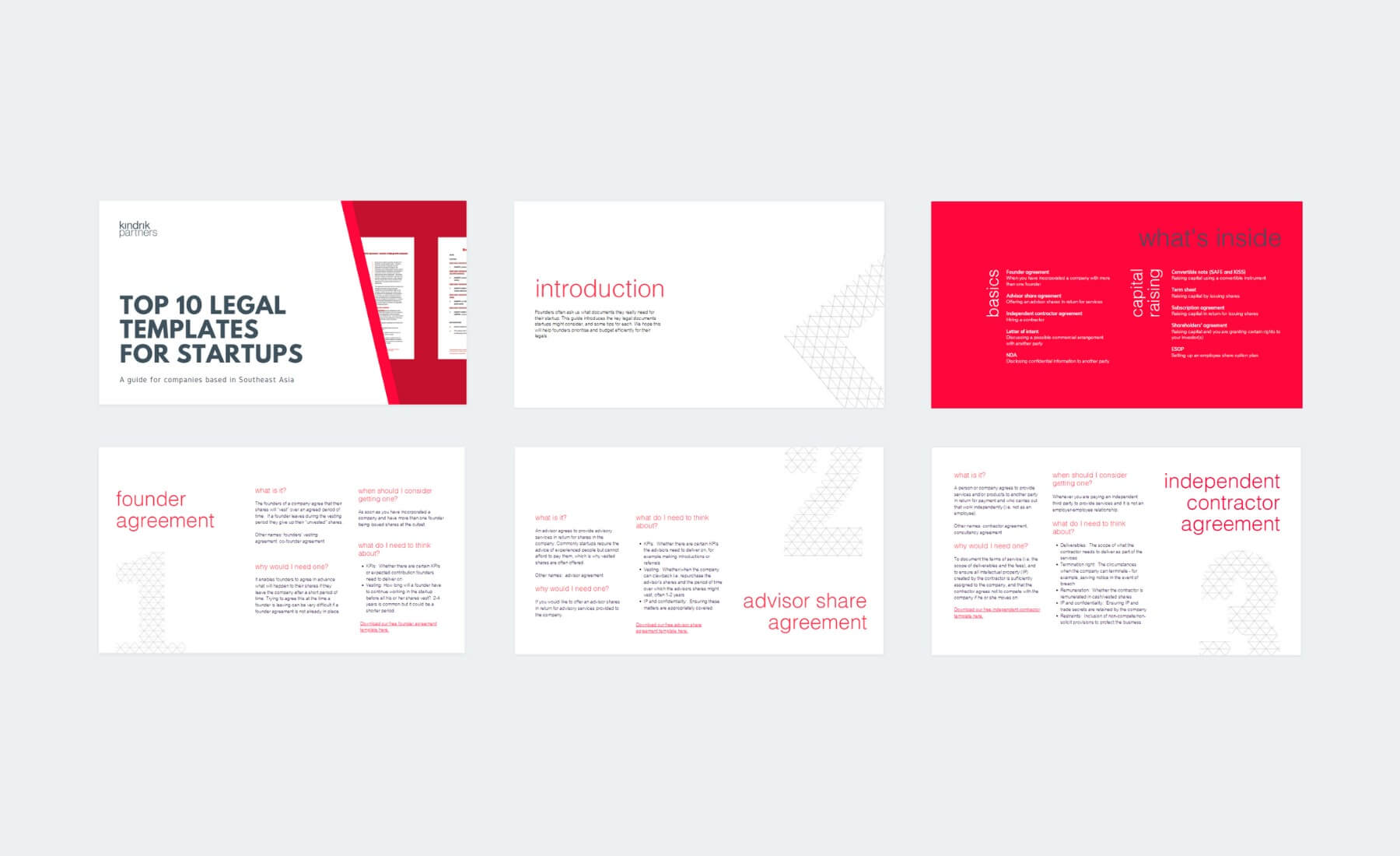
From capital raisings to drafting governance contracts, we help startups every day with their legal needs. We’ve created a new guide to help founders find their feet: Top Ten Legal Templates for Startups: A guide for companies based in Southeast Asia.
This guide contains basic tips when putting this paperwork in place. Having these documents in order can help your startup further down the line, particularly when raising investment. With each template, we cover what it does, when a startup might need to use it, and essential points that founders should wrap their heads around.
All legal agreements we cover in the guide are also available for download free on our website. These templates include explanatory notes to help founders and non-lawyers complete the agreement.
Have questions about our guide or one of the templates? Feel free to get in touch with us if you’d like some help adapting one of the agreements we’ve recommended.
Access the guide by filling out your details below:

When writing this time last year, we were full of optimism for 2020. A lesson in not looking too far ahead!
reflections on the region
Unsurprisingly in such an extraordinarily difficult year, it’s been tough for many of our tech clients across Southeast Asia. Some have hunkered down to conserve cash, some raised emergency financing, and others have had to pivot temporarily or permanently. For those more fortunate, it was business as usual.
Fortunately, our deal flow in 2020 has remained strong and kept us busy. Globally, the number and size of technology M&A and investment transactions has amazed observers, including ourselves. Regionally, Southeast Asia continues to be extremely attractive to both local and global investors. As Techcrunch very recently noted, Singapore has firmly put its flag down as “Asia’s Silicon Valley”. Additionally, Singapore and Vietnam, along with much of Asia, have coped with the pandemic much better than the US and Europe. As a result we expect investor appetite for these young digital economies to continue increasing rapidly, both in terms of setting up shop and seeking investment opportunities. This suggests a busy time for the SEA tech and venture focused law firms such as Kindrik as we head into 2021.
firm highlights
This year, there was no exhibiting for us at Echelon or Tech in Asia. Our regular speaking events hosted by accelerators and incubators across the region also went exclusively online. Indeed, as regional accelerator programmes in the main paused for the year, there was a drop off in the flow of new startups emerging and raising seed capital. However, 2020 still saw plenty of activity for the team. Deals occasionally took slightly longer to close, but investor-friendly VC terms and down rounds didn’t materialise for the most part. All in all, it was business as usual on fundraising transactions. There were more bridge financings and more convertible debt than usual as investors looked to support existing portfolio companies over the difficult months.
In terms of other highlights:
- we renamed ourselves Kindrik Partners to take us forward with a dynamic brand
- we acted for VC funds on over 10 Series A or later financing transactions
- we advised on many notable financing deals including:
- Fave on its transformative partnership with Pine Labs
- Neat, the Hong Kong based fintech startup, on a US$11 million series A
- Silent Eight, the regtech startup leveraging artificial intelligence, on its latest funding round, bringing the company’s total capital raised to US$15 million.
- See-Mode Technologies on its series A funding led by Mass Mutual Ventures.
- Singapore-based Horizon Quantum Computing on its financing round led by Sequoia.
looking ahead
We’d expect 2021 to see some consolidation in the startup ecosystem and potentially some small (and maybe larger) M&A deals. Who knows, we may even see the biggest merger of all between Grab and Go-Jek. Those tech companies who raised in 2019, and have kept their heads down this year, will probably come up for air and engage with the investor community. We also expect a lot of the VCs who kept some of their powder dry in 2020 to be particularly active in the first half of 2021. Indeed, our pipeline already looks good.
Thanks to the Kindrik Singapore team who have been working at home for the best part of the year – you’ve done a great job. Best wishes too to all our clients in Asia for 2021. It can only get better.
We’re pleased to have advised Singapore-based venture capital firm, Monk’s Hill Ventures (MHV), on two recent series A financings.
Most recently, Indonesian logistics platform Logisly announced their US$6million series A financing led by MHV. The Jakarta-based startup provides B2B tech-enabled logistics solutions.
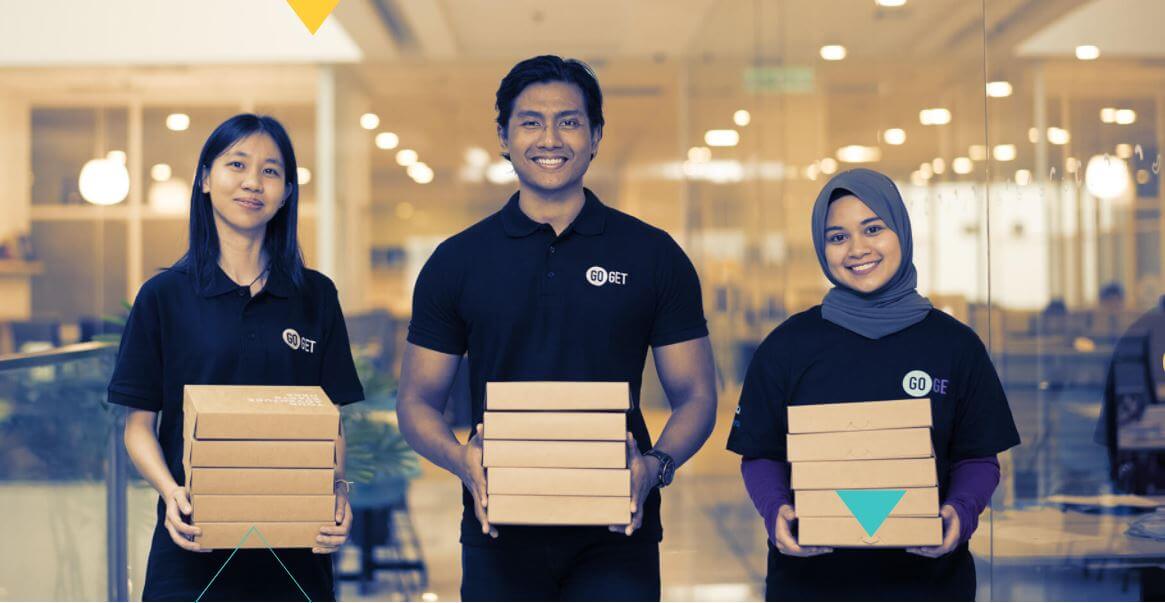
This follows on from Malaysian-based startup, Go-Get, completing their series A investment in October, again led by MHV. The on-demand platform currently has over 20,000 gig workers, and has onboarded 5,000 businesses of all sizes, from micro SMEs to MNCs.
Partner, Lee Bagshaw says: “Whilst the global startup economy battles with COVID-19, it is encouraging to see continuing investment activity across Southeast Asia, with VC transactions led by notable investors like Monk’s Hill Ventures. For platforms enabling disruptive areas such as on-demand and logistics, the region remains very attractive for investors.”

Our Southeast Asia team have advised Philippines-based fintech company JazzyPay on its seed funding round led by early-stage venture capital firm Cocoon Capital.
JazzyPay allows its partners to accept payment via 27 payment methods, including credit and debit cards, online banking, e-wallets and over-the-counter deposits. The company was launched in 2018 and has been serving merchants that typically have only accepted cash and cheque payments, including organisations such as hospitals, schools, clinics and medical suppliers.
“In an emergency, the payment method should be the least of your worries,” JazzyPay Chief Operating Officer and co-founder Kathleen Acosta said.
The company intends to put the funding towards product development as well as expanding its network of partner merchants.
Senior solicitor Sarah Yen says of the deal, “It was a pleasure to help JazzyPay with their capital raise – they are solving a real need for Filipinos and we look forward to seeing their continued growth.”

We recently helped Neat, a Hong Kong based fintech startup, on a US$4 million extension to their US$11 million Series A round which closed earlier this year.
Neat started over two years ago with a focus on making business accounts accessible to startups and SMEs in Hong Kong. Existing investors that participated in the series A extension include Mass Mutual Vetnures, Linear Capital, Pacific Century Group, and Robby Hilkowitz, as well as new investor Vectr Fintech.
The coronavirus pandemic has not stopped Neat’s momentum.
“Some of the world’s most successful companies were born during or just after the financial crisis of 2008, think of WhatsApp and Uber,” says David Rosa, CEO.
“The majority of businesses founded during COVID-19 will have a digital-first mindset, which means they will have an opportunity to start trading globally from day one. We’re excited to be supporting this new wave of international entrepreneurs.”
With the new funding, Neat will continue product development as well as improving its customer support experience and fuelling its growth.

Our capital raising lawyers in Singapore have had a busy first half of 2020, even as Covid-19 impacts globally on fundraising. As at end of July, we had 42 fundraisings by Southeast Asian companies, slightly above where we were at the same point last year.
Our numbers (compared with previous years) implies that startup financing, particularly in Asia, has remained pretty resilient. The availability of capital in Southeast Asia, with the particularly vibrant VC scene in Singapore, has ensured financings have ticked over during lockdowns.
It is fair to say that we have seen more bridge financings amongst existing clients than normal, compared to fundraising for new companies. As investors look to support existing portfolio companies over the next few difficult months, many companies have had to change their investment strategy. Venture debt may play an increased role alongside traditional equity financing in more deals we see going forward. Thankfully, to date, we’ve not seen many down rounds, but these could increase over the next 12 months unless founders can find alternative financing structures.
There’s a lot of discussion in the market about how the pandemic has changed the investment landscape, with deals being pulled or delayed. Fortunately, we’ve not seen too much evidence of that in the tech space so far. Deals are taking slightly longer however, and we expect more investor friendly terms to appear.
Stay tuned – we’ll be keeping a close watch to see how fundraisings in tech companies in our key markets continue to look over the rest of 2020.

Our Southeast Asia team have advised See-Mode Technologies on its recently completed series A funding round. The round was led by Mass Mutual Ventures Southeast Asia. Other investors in the round include existing investors Blackbird Ventures, Cocoon Capital, Entrepreneur First, and SGInnovate.
See-Mode Technologies was founded in 2017 by Dr Mohammadzadeh and Dr Sadaf Monajemi. See-Mode uses artificial intelligence to help better predict the risk of stroke and vascular diseases.
The funding will be used to increase its headcount, expand its research and development (R&D) and engineering capabilities, and expand the business into Europe and the United States.
Partner Chris Wilson says of the deal, “It was a pleasure to help See-Mode with their series A funding round. Their mission of empowering clinicians to prevent stroke is admirable and we are excited to watch their continued growth.”
Read our other recent deal announcements here.
Kindrik Partners recently advised Singapore-based venture capital firm Qualgro on its investment into data pipeline startup Hevo. Hevo raised $8 million as part of its series A funding round. Other investors included Lachy Groom, a former executive at Stripe, and existing investors Chirtae Ventures and Sequoia Capital’s accelerator, Surge.
The startup was founded in 2017 by Manish Jethani and Sourbh Agarwal. Manish Jethan says, “Our mission is to remove the technology barrier for non-technical users within companies and enable them to make smarter decisions with their data. Hevo enables companies to eliminate data silos without having to setup an engineering team to build and maintain complex integrations with multiple systems.”
Today Hevo has offices in San Francisco and Bengaluru, with customers across 20 countries. The funds will be used to accelerate Hevo’s global expansion and expand its technology, sales, and marketing teams.
Partner Chris Wilson, who advised Qualgro, says of the deal, “It was a pleasure to help Qualgro continue to support B2B SaaS startups in Southeast Asia and help those companies turn into global players.”

Kindrik Partners recently advised Singapore-based alternative meat foodtech startup Karana on its $1.7million seed funding round.
Participating investors include Henry Soesanto (CEO of Monde Nissin Group), agtech investment firms Big Idea Ventures and Germi8, and angel investors Kevin Poon and Gerald Li (both Hong Kong entrepreneurs with experience in the food and beverage industry).
Founded in 2018 by Dan Riegler and Blair Crichton, the company’s processing method uses jackfruit sourced from Sri Lanka to create a texture that replicates minced and shredded pork more closely. This texture makes it easier than other meat substitutes to use in dishes like dumplings, char siu bao or bahn mi.
“In the future, we will launch products using other regional ingredients that will enable us to expand beyond pork,” the founders said.
Chris Wilson, Kindrik Partners partner, says of the deal, “We are seeing a lot of momentum in the foodtech and meat substitute industry. Following this round Karana is well placed to take advantage and are we are excited to watch their continued growth.”
Read our other recent deal announcements here.
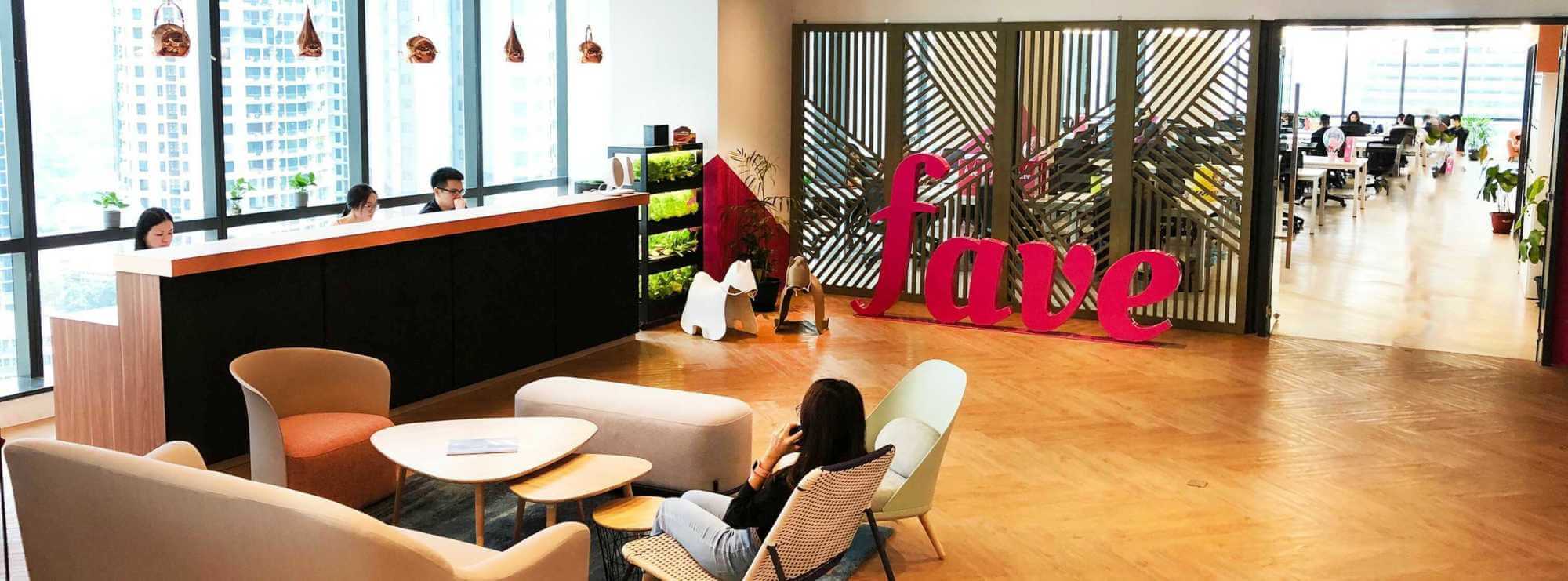
We’re pleased to have advised Fave on its strategic partnership with Sequoia-backed payments and merchant platform, Pine Labs.
Under the terms of the collaboration, Fave’s QR code will become integrated with Pine Lab’s terminals, enabling an integrated platform for acceptance and loyalty cashback solutions.
Digitalisation will play a key critical role in the recovery of Southeast Asia’s economy post Covid-19, in particular for merchants who have been temporarily shut down and need to stay relevant on reopening. Collaborations between operators like Pine Labs who provide critical terminal infrastructure alongside Fave’s expertise in merchant loyalty programmes makes sense.
Partner Lee Bagshaw says “We’ve been along Fave’s journey for some time now and they continue to be proactive in a rapidly changing Southeast Asian digital market.”

From Thursday 16 July 2020, Simmonds Stewart is changing its name to Kindrik Partners.
Victoria Stewart, the firm’s chief executive, said “We are at a new stage in our company’s life and we wanted to reflect that with a new name.
“We’re so much more than a couple of surnames, we’re a group of exceptional lawyers. Finding a new name wasn’t easy, but we’ve landed on one that we all like and we think it will represent us well into the future”.
The firm wanted a name that reflected how it operates. “We think Kindrik captures a sense of confidence and strength. We’re a nimble firm that has broken the traditional mould to achieve great outcomes for our clients. We bring that confident and capable presence to the table.”
“Plus, we just love how Kindrik sounds” says Stewart.
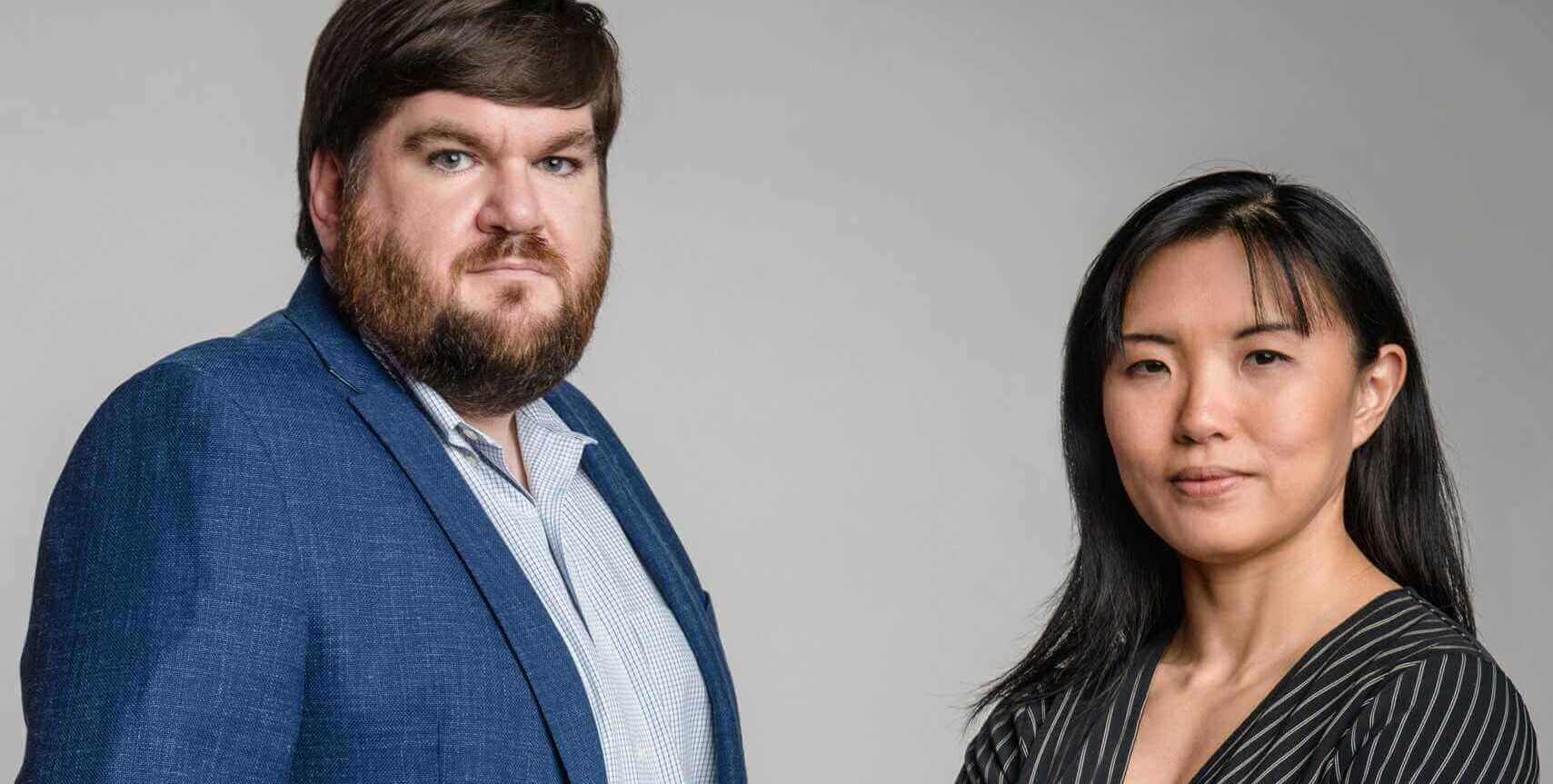
Kindrik Partners recently advised Singapore-based Horizon Quantum Computing with its seed-plus round led by Sequoia. The latest round brings its total seed financing to US$3.2 million (SG$4.5 million).
Previous investors SGInnovate, Abies Ventures, DCVC, Qubit Protocol, Summer Capital and Posa CV also participated in the round.
Horizon Quantum Computing develops programming tools to simplify the process of developing software for quantum computers. The company was founded in 2018 by CEO Dr Joe Fitzsimons. The additional funding will be used to speed up product development, engage with customers and early adopters, and strengthen its team.
“Our tools will greatly increase the applicability of quantum computing, opening up new use cases and enabling easier adoption of the technology,” said Fitzsimons.
“We view quantum computing as an emerging technology that will become inevitable in the future. We are certain that quantum technology will be a game-changer and will have a tremendous impact on the world – from how governments and organisations work, right down to our everyday lives,” said Dr Lim Jui, Chief Executive Officer of SGInnovate who led the company’s seed round in 2018.
Chris Wilson, Kindrik Partners partner, says of the deal, “We were pleased to have been able to help out on this financing round with Horizon as they gear up bring this truly cutting-edge innovation to market and look forward to watching their journey.”
Read our other recent deal announcements here.

Kindrik Partners recently advised Split on its seed investment round led by 500 Startups.
Split is a ‘buy-now-pay-later’ service that gives businesses the ability to offer payment via interest-free instalments. Its solution can be integrated with offline stores, e-commerce platforms, and businesses that sell via chat apps or social media.
Split was founded in 2018 by Dylan Tan and Vishvesh Suriyanarayanan as a part of venture builder Entrepreneur First’s talent investment programme.
Chris Wilson, who heads our Singapore office, commented, “Fintech startups with strong offerings are continuing to successfully attract capital in these times, particularly startups like Split that are offering solutions that help businesses address shifts in consumer spending behaviour.”
Khailee Ng, managing partner of 500 Startups says of the deal, “We see incredible potential in how their instalment payment service works not just for large retailers but also serves a massive longtail of small and medium businesses selling online, offline or via social commerce.”
The startup has so far partnered with brands across Malaysia and Singapore. We look forward to seeing the company grow.
Read our other recent deal announcements here.

Kindrik Partners recently advised Entropica Labs on its seed investment round led by Elev8 VC. Other investors included SG Innovate, Wavemaker Partners, Lim Teck Lee Group, TIS Inc., V1 Capital, and Entrepreneur First.
Entropica Labs is a company developing quantum computing software solutions, spun out of Singapore’s Centre for Quantum Technologies (NUS). Entropica’s current focus is quantum optimisation and machine learning, supporting enterprise customers to understand and integrate quantum computing. The company will primarily use the funding to expand its team and continue development of its software.
Co-founder and CEO Tommaso Demarie said of working with us,
Kindrik Partners helped us navigate through the hurdles of our first seed round. Sarah Yen was always available to answer all our calls and questions, making sure we fully understood all points of the agreements before committing to any decisions.
I value thoroughness, care for details and precision. Sarah and Kindrik Partners never failed to meet our expectations, and they have been our first choice for all Entropica’s legal work since.
We look forward to seeing Entropica continue to grow in this high-growth space.

With the coronavirus crippling economies worldwide it can sometimes feel like a hopeless time to be operating any kind of business, let alone a startup.
While it is certainly a difficult time, we thought it would be useful to share a few good news stories of companies raising capital during the current crisis. For companies with a compelling offering we are still seeing a number of VCs with dry powder and a willingness to invest.
deals closed during WFH and circuit breaker
During the period from 1 March through the first week of May – essentially since the time that we’ve been WFH and in shutdown according to the Ministry of Health’s recommendations – we have assisted 17 companies and investors close their funding rounds. Some of those rounds were in progress before the shutdown, but we are also working on several ongoing transactions, so we think this is a fair snapshot.
summary stats
Some quick stats on the deals that have completed during the WFH and circuit breaker period:
- Deal size: S$260k to $15m
- Total funds raised: ~S$36m
- Deal stage: 9 seed, 7 series A or later, 1 venture debt
- Source of funds: 2 internal rounds, 14 lead by external investors
- Industries: cybersecurity, fintech, F&B/retail, AI & machine learning, energy, logistics, and (unsurprisingly) health
- Our involvement: we acted for the company on 13 transactions and for the lead investor on 3
takeaway for founders
To founders thinking about raising capital – do not be too discouraged by the current environment. There are still active investors and funds are available for companies with a compelling proposition. For further info on doing deals during through the coronavirus crisis see our other blogs on Covid-19.

During the surge in VC activity and booming startup valuations in Southeast Asia, no one has needed to look at how down rounds work. The economic impact of Covid-19 may change that for startups in the region. Here’s the download.
what’s a down round?
A down round is a fundraising transaction in which a company issues shares at a lower price than the price at which it issued shares to investors in an earlier investment round. This is bad news as the company’s valuation has therefore fallen.
Does it matter if a company does a down round? Down rounds in normal economic times can be viewed somewhat negatively. The growth in valuation is critical for existing VCs valuing their portfolio and for companies to attract quality follow-on investors. Down rounds can also put stock option plans underwater and be damaging for founder and employee morale.
Aside from this, if founders are considering doing a down round, the key issue they should consider is if their company’s existing investors have anti-dilution rights, and how that will impact the share capital.
what are anti-dilution rights?
Anti-dilution rights compensate existing investors for the falling valuation when a down round occurs. The rights are generally attached to preference shares issued to investors.
This compensation can happen in a couple of different ways. Some anti-dilution rights are structured so that existing investors are immediately issued extra shares as part of the down round transaction (as a bonus issue). However, in Southeast Asia that mechanism is very rare. Instead, the conversion price is simply adjusted. For example, if an investor invests in a company’s series A round, and then the company goes on to raise their series B at a lower price, anti-dilution rights adjust the conversion price that applies when the existing series A investors finally convert their preference shares into ordinary shares on an exit.
The effect is that investors will hold a higher percentage of the company’s overall share capital and receive more proceeds on any exit. It also means that ordinary shareholders, such as founders, lose out.
types of anti-dilution
There are two main types of anti-dilution protection: full ratchet and weighted average.
Full ratchet anti–dilution protection gives investors rights to convert their preference shares into ordinary shares at the lower price of the new financing round. This can be brutal for founders in terms of dilution. Thankfully, in Southeast Asia, full ratchets are hardly ever seen.
Most investment documents therefore incorporate broad-based weighted average anti-dilution protection. This again results in lowering the conversion price and increasing the number of ordinary shares for investors on an as-converted basis.
However, the size of the adjustment is much smaller and depends not only on the price of the down round but also the company’s total share capital. The result is significantly less dilution for ordinary shareholders.
the maths involved
For those who are interested in seeing how the math of broad-based weighted average works, a typical formula looks like this:
the formula
CP2 = CP1 * (A+B) / (A+C)
CP2 = Series A Conversion Price in effect immediately after new issue
CP1 = Series A Conversion Price in effect immediately prior to new issue
A = Number of Ordinary Shares outstanding immediately prior to new issue (includes outstanding ordinary shares, all shares of outstanding preference shares on an as-converted basis, and all outstanding options on an as-exercised basis; and does not include any convertible securities converting into this round of financing)
B = Aggregate investment in new round of financing divided by CP1
C = Number of shares issued in the new round
an example of the formula in action
(source: Singapore VIMA lexicon)

tips for founders
In this new world, startup founders raising capital may need to revisit their startup’s valuation if the economic impacts of Covid-19 mean that the last round valuation can no longer be supported. Down rounds and anti-dilution adjustments are not the only option, however. Founders may want to get creative and consider the following alternatives.
negotiate with investors
This is a balance between existing investors (who expect to be compensated for the lower valuation) and new investors (who want the deal but only at the lower valuation). If cash is low, existing investors may need to support a new financing. So if you’re a founder, negotiate. Existing anti-dilution rights can be fully or partially waived in connection with the next round. Indeed, this often happens.
founders incentives
If you are a founder, you will need to ensure that you are sufficiently incentivised following any dilution of ordinary shareholders. One way could be to agree with investors that an increased portion of any ESOP can be allocated to founders.
convertible notes
If your startup needs capital quickly, then a convertible note which converts on the closing of the next equity financing may be a solution. This avoids the dilution caused by the down round. Of course, this does to some extent just kick the valuation discussion down the road and you will need to consider carefully the terms of the note, particularly around the valuation cap and discount.
warrants
Startups can also use warrants, which allow for further shares to be issued in the future at the option of the investors. This de-risks the transaction for investors but gives them the option to double down in the future at the same conversion price if the business is successful at riding out the impacts of Covid-19.
other investor-friendly terms
Finally, startups can keep new investors happy in ways other than valuation. For example, mitigating downside risk by providing other economic rights to the investors, such as higher than market standard 1x liquidation preferences, participating preferences, or other future price adjustment ratchets. Founders will need to weigh up the overall impacts of these as opposed just running with the down round.
If you’re interested in understanding more about a down round for your startup, book a time to speak to one of our startup lawyers.
Want more? Explore our other Covid-19 resources here.
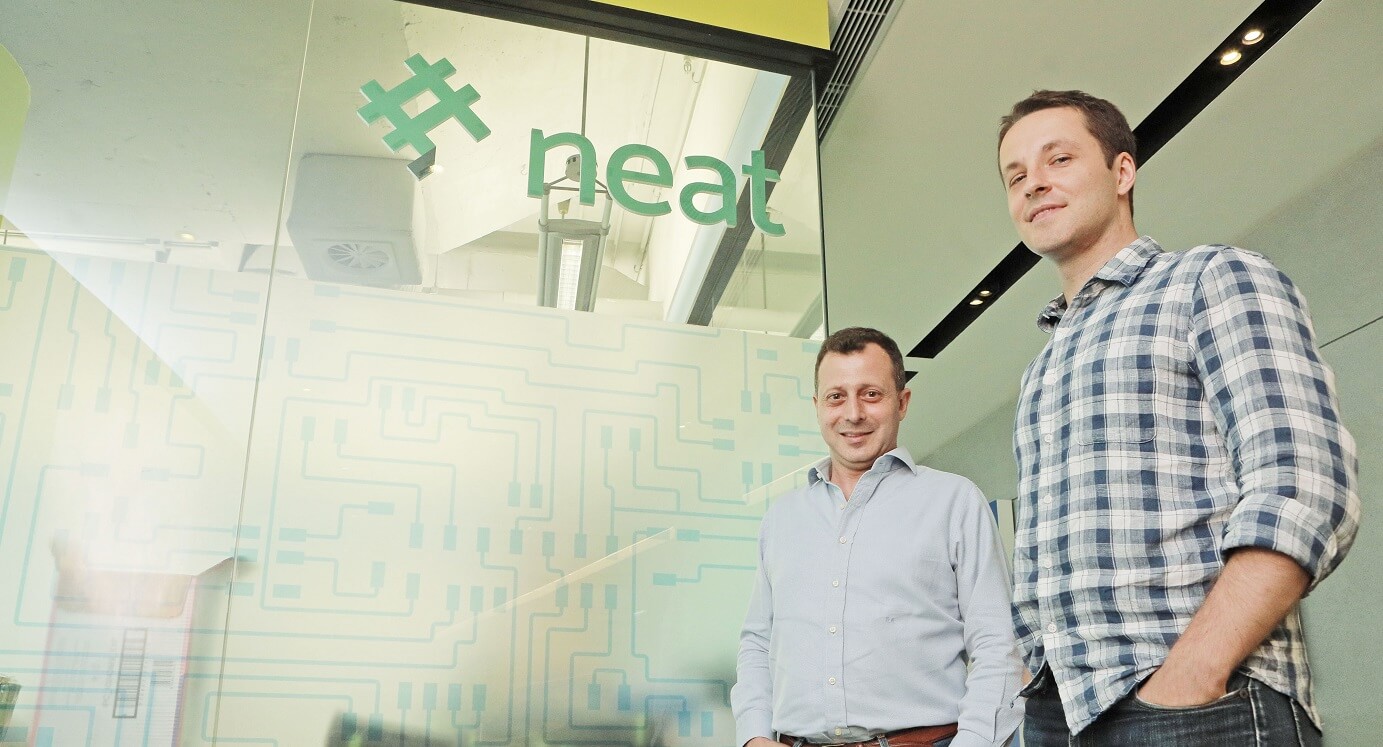
We recently helped Neat, a Hong Kong-based fintech startup, raise US$11M in its Series A deal led by Pacific Century Group. Other investors included Visa and MassMutual Ventures, as well as existing Neat investors Dymon, Linear Capital and Sagamore Investments.
Neat started over two years ago with a focus on making business accounts accessible to startups and SMEs in Hong Kong. Neat now powers the finances of thousands of companies and has offices in Hong Kong, Shenzhen and London. The series A funds will go towards further expansion, primarily focusing on businesses that trade between Europe and Asia.
Neat’s co-founder and CEO David Rosa said of working with Kindrik Partners, “Fundraising for a startup company is an extensive process. We have ambitious goals and Kindrik Partners’ meticulous support and extensive expertise throughout has helped bring us closer to our vision of helping global entrepreneurs.”
Lee Bagshaw, who heads our Southeast Asia practice, commented, “With so much uncertainty globally it’s great to see significant startup financing rounds still closing in Hong Kong, particularly in high growth areas such as fintech. We’re excited to support Neat on its journey to serve entrepreneurs and startups.”
Read our other recent deal announcements here.

Startups generally die because they run out cash, not ideas. At this time, founders will be looking closely at their cash and runway. As VCs hunker down, new capital will be scarcer and startups may have to scramble for cash using bridge financings with less founder friendly terms.
We’ve considered some of the issues around startups structuring bridge financing transactions in an economic crisis – using both equity or convertible notes. Here’s our rundown of what we think founders might face.
(You can view our other Covid-19 related content on our blog.)
priced equity rounds
- Valuation – The main issue here is low valuations. Startups will want to avoid a down round at all costs which may significantly dilute existing shareholders. That might mean we see more debt instruments like convertible notes which don’t fix a valuation immediately (we discuss convertible notes below).
- Tranched investments – Investors may increasingly look to tranched investments (being investments where the funds are made available in stages, instead of the total investment amount being made available upfront). Founders will need to consider how much risk this introduces to the prospect of actually seeing the money. Are the tranches subject to KPIs? If so, are the KPIs achievable and able to be measured objectively, so you don’t end up in a dispute with investors about whether or not a KPI has been satisfied? The conditions to closing of any deferred investment amounts will also need to be reviewed carefully. Is there any material adverse event (MAE) clause triggered by a deterioration in the financial performance of the business? If so, you may need to be clear on what is material in these extraordinary economic circumstances, where clearly the goal posts have shifted.
- Secondaries – Startups may need to structure deals with a mix of primary offers (new investment monies) and secondaries (sales of shares by existing shareholders) – with secondaries at a discounted price. This will enable some VCs, angels and other early investors to exit and cash out. Founders may need to think about offering this to sweeten deals for existing investors.
- Term sheets – These are non-binding. Investors do not typically sign term sheets and then withdraw for market reasons. But we’re in extraordinary times. Investors can in theory walk away without any reason. Keep exclusivity periods in term sheets to a minimum (e.g. not more than 30 days) so if an investor does start to look like it is having a rethink, the company can quickly move on to other investment opportunities.
- Deal process – Startups need deals to close quickly. The opposite is likely to happen however, as investors take time to consider how the business will look on the other side of COVID-19’s impacts. Founders should consider limiting the number of new investors and engage early with existing shareholders on any terms which impact them. The simpler the transaction and the fewer the surprises for existing shareholders, the faster the equity deal is likely to close.
convertible notes
- Increase in debt – There will inevitably be more debt financings during the remainder of 2020 and beyond. Mainly as debt holders take priority over shareholders in a winding up, and investors will prefer this position. In the startup world that most likely means convertible notes rather than traditional bank debt (which won’t be available anyway), and venture debt (which usually supplements equity financing rounds).
- Type of instrument – We’d expect investors to insist on conventional convertible notes (or a KISS) for the time being, as opposed to SAFEs. This is because they include a maturity date – the date on which the debt must be repaid if the company hasn’t closed the next equity financing round – which partially de-risks the investment for investors. Typically maturity periods have been 18-24 months. In normal times, this would be more than sufficient time to close the next equity financing. This may no longer be the case, particularly if the VC industry shuts down for a period. Startups will need to consider the risks of taking on debt, repayable with interest on a future maturity date, if they can’t close the next equity round. If, as a startup, you don’t honestly believe you’ll be able to close the next equity round before you’re required to repay convertible debt and interest, you’d be better off raising an equity round instead of entering into a convertible note, even if it means undertaking a dreaded down round.
- Terms – One advantage of using convertible notes over equity is usually speed. Without lots of warranties and other covenants to negotiate, traditionally startups are more likely to close convertible note deals quicker. However, convertible notes in bridge financing scenarios, which often occur post a seed round or even after series A or B have occurred, can include much more investor friendly terms, including broadly drafted events of default, long form reps and warranties, and even new governance provisions. Founders will need to consider whether it still makes sense for the business to take on debt if they end up negotiating the same type of issues they would on an equity deal.
- Security – Typically convertible notes have been unsecured. We think it is highly unlikely that we’ll see secured bridge financings, certainly not with traditional VCs. But, this is a new world, and who knows how angels or other investors might look at things.
- Warrants – We’re expecting the use of warrants to increase alongside convertible notes. Warrants allow for further shares to be issued in the future at the option of the investors. This de-risks the transaction for investors but gives them the option to double down in the future at the same conversion price if the business is successful at riding out the impacts of Covid-19.
If you are raising capital or have a transaction where existing shareholders are selling down, you can book a 30-minute free consultation with one of our startup lawyers to discuss. Pick a time that suits you via our online booking tool.

Our Southeast Asia team have recently advised Singapore-based cybersecurity startup Right-Hand Cybersecurity on its US$1 million seed round. The company provides a SaaS solution that helps companies monitor, measure, and mitigate the cybersecurity risk of their employees. The round was led by local early-stage VC fund Atlas Ventures, with Singapore Government backed SGInnovate and venture builder Entrepreneur First also participating in the round.
Right-Hand’s CEO, Theo Nasser, says, ‘We greatly appreciate Kindrik Partners’ responsiveness and diligence to help us close our seed round. Fundraising is a time consuming, yet integral, process for founders, so having strong legal partners like Kindrik Partners to ease that process adds a lot of value.’
The company intends to use the funding for product development and to expand its engineering, research, and data science teams.
Right-Hand is another great example of the momentum in this space and of the increasing interest from investors and founders in Singapore as Singapore builds its profile as an emerging cybersecurity hub.

The unprecedented crisis caused by Covid-19 is having a major impact on all economic activity. Investors in startups, like everyone else, are impacted too. Angel investors will likely be distracted from doing deals. VCs might feel pressure not to deploy capital – particularly as their limited partners will start to be overexposed to venture capital as the value of their other assets falls. All this can lead to less cash for startups.
But what if you are a startup in the middle of capital raising transaction? We’ve done a quick round up of things to consider, depending on what stage of the fundraising process you’re in.
Other Covid-19 resources:
- The founder’s guide to understanding down rounds (5 min read)
- Bridge financing for startups in an economic crisis (5 min read)
if you’ve got a term sheet
The most important thing to remember is that a term sheet is non-binding. Whilst investors do not typically sign term sheets and then withdraw for market reasons, we are in unusual times. Investors can in theory walk away without any reason which can cause major disruption to a capital raising process.
If you are in the process of receiving and negotiating term sheets, a good tip is to keep any exclusivity period in the term sheet to a minimum (e.g. not more than 30 days) so if an investor does start to waver, the company can move on quickly to other opportunities.
Another tip is to structure the deal to close it quickly. Consider limiting the number of investors and keep existing shareholders up to speed so paperwork can be executed without delays.
if you’ve signed an investment document but the deal has not completed
Whilst investors are legally bound to close the deal and fund the company once they have signed up, share subscription agreements always include a clause that the investment is subject to the fulfilment of certain conditions.
These conditions often include a ‘material adverse effect’ clause – which means that no event has occurred or is continuing which has a Material Adverse Effect (MAE) on the business.
A typical definition of a MAE might look like this:
“Material Adverse Effect” shall mean any change or effect (including but not limited to change in applicable Law) that would have (or could reasonably be expected to have) a materially adverse financial impact to:
- the business, operations, assets, condition (financial or otherwise), or operating results of the Company, or
- the ability of the Parties to consummate the transactions contemplated herein, or
- the validity, legality or enforceability of the rights or remedies of the Subscribers under the Transaction Documents.
This might sound complicated, but essentially a MAE clause allows investors to withdraw from a fundraising deal if there is a change which impacts on the business or its financial performance in a material way.
Whether COVID-19 would be a MAE depends on how the provision is drafted. MAE clauses do not just cover deterioration in the financial performance of the business, but almost anything which materially affects its operations. This could be a termination of a key license, law change, or just an inability to deliver services as before. COVID-19 is of course impacting not just economic activity but also forcing governments to implement new measures on a daily basis.
how big a deal is a MAE in a fundraising transaction?
Possibly not that major in the case of startups and fundraising deals. Unlike M&A transactions which often have longer periods between signing and closing, on financing deals, investors and startups tend to wrap things up quickly so the founders can get back to their day job. Signing and completion are usually simultaneous or within a few days of each other. That means there is little or no time for an investor to withdraw on the basis of an MAE anyway. The exception to this is where there is a rolling close on financing deals, i.e. further money invested after a period of time. Even if investors are legally bound to fund as part of a later tranche, the MAE could come into play at that time, and allow investors to withdraw.
For an investor to pull out of a transaction on grounds of an MAE occurring, the event clearly needs to have occurred after signing the deal. Given COVID-19 is already known to everyone, an investor would therefore have to demonstrate that there was some specific change that occurred after signing. One way that could happen is if the MAE clause specified that it was triggered if the earnings of the business deteriorate by a certain percentage after signing, e.g. 10-20%.
At this time, it may be fair for startups to exclude general market deterioration in the definition of MAE to exclude the overall economic impact of COVID-19 including any measures implemented by governments in response to the crisis.
other tips to consider when fundraising during COVID-19
review warranties carefully
Warranties provided by the company or founders on a fundraising should only cover the period up to closing. However, certain warranties may in effect look forward if they refer to the business plan.
For example, warranties covering the business plan often include the following:
Business Plan
- The Business Plan has been diligently prepared by the Warrantors in good faith and each of the Warrantors believes that, as at the date of this Agreement, it represents a realistic plan in relation to the future progress, expansion and development of the Business
- The financial forecasts, projections or estimates contained in the Business Plan have been diligently prepared, are fair, valid and reasonable and have not been disproved in the light of any events or circumstances which have arisen subsequent to the preparation of the Business Plan up to the date of this Agreement.
- The assumptions upon which the Business Plan has been prepared have been carefully considered and are believed to be reasonable, having regard to the information available and to the market conditions prevailing at the time of their preparation.
In the current economic climate it is virtually impossible for a startup to accurately project its future trajectory even over the next 6 months. Therefore, these kind of warranties may not be appropriate right now, and startups should avoid giving them if possible.
avoid tranched investments and KPIs
Now is the time to get money into the business to give it runway for a period. Investments which include deferred money conditional on financial performance are best avoided by startups at the best of times. But right now, it is impossible to forecast traction in the next 12 months or so. Startups would likely better off raising the full amount at a slightly lower valuation now than going with tranches and KPIs.
watch out for redemption / buy-back rights
Investors sometimes include redemption or buy-back rights which entitle them to get their money back from a startup in certain circumstances. Usually this is where there is some kind of event of default by the company or its founders.
However, occasionally, we’ve seen deals where investors have redemption rights which can be enforced in other scenarios (e.g. failure to complete a restructuring or obtain a new licence to operate, financial performance deteriorates, or perhaps being unable to deliver under a separate commercial arrangement). In this uncertain period, such rights bring considerable uncertainty and risk to startups and should be avoided.
what’s next
Sequoia Capital has released a report saying that the coronavirus is the ‘black swan’ of 2020, and to brace for coming economic shocks. But the developing economic environment shouldn’t put off startups who are looking for money – it’s a case of being wise about the fundraising process, and knowing how to deal with the changing times, and perhaps in time the changing transaction terms.
If you’d like to speak to us about your fundraising situation, get in touch.

It has been another incredible year of deal activity for the Kindrik Partners Singapore office, with 74 closed deals (c.f. 47 in 2018).
amount raised
- Our Southeast Asia clients raised over US$206m worth of capital.
- The average raise was US$2.7m, with a median raise of US$1m.
- A few hero raises such as Indonesian healthtech Alodokter’s US$33m series C really pushed the average above the median raise.
While we enjoy the excitement that goes with these big headline grabbing deals, our team takes huge satisfaction from the speed and (low) cost at which we can turn out and close a high volume of pre-seed, seed and Series A investment deals (which are still the life blood of startup financing).
pre-money valuation
- The average pre-money valuation for equity transactions was US$30.7m.
- The median for equity transactions we saw was US$4.7m.
Like the average and median raise sizes, the average pre-money valuation for our companies were distorted by a few hero deals.
investment instruments
Equity (shares) was the most common investment instrument in Singapore. As in previous years, most pre-seed investment transactions and a majority of non-institutional seed rounds in Southeast Asia were made using convertible notes. The KISS note being the most common type of note used.
looking ahead in 2020
Though it’s too early to see what impact COVID-19 will have on capital raising in Southeast Asia, we’ve had anecdotal evidence that business travel has dampened in the region.
Although the region remains active, numbers may fall below what we saw last year as overseas investors delay travel to the region, and investors and founders shift more towards remote working tools such as videoconferencing to build trust and confidence through the capital raising process.

[Note: The firm’s name was changed to Kindrik Partners in July 2020.]

We recently helped long standing client Storehub raise US$8.9 million in a series A+ funding round led by Vertex Ventures.
StoreHub is a cloud-based retail platform that enables restaurants and retailers to automate the growth of their customer base and revenue, as well as their entire operations. With this latest financing, the Malaysian tech startup has raised over US$14 million to date.
The Storehub platform is now being used in 13,000 stores across Southeast Asia, with transactional growth up to US$1.2 billion. The proceeds of this latest funding will be used to accelerate expansion within the region’s e-commerce sector.
Our head of Southeast Asia practice, Lee Bagshaw, says “Storehub is a developing into one of the stars of the Southeast Asian startup ecosystem with strong recurring revenues and a leading position in its space. Having worked with founder Wai Hong from the outset, when Storehub was a POS provider, we’re pleased to have been able to help them on another notable deal.
Wai Hong says “Kindrik Partners were, as ever, efficient and easy to work with on the deal, bringing up to date knowledge of VC terms in the region.”

Our Southeast Asia team have advised Singapore medtech company eko.ai on its US$4million series A financing. The deal was led by Sequoia with SGInnovate, Partech Ventures and Startup Health participating in the funding round.
eko.ai’s tools improve cardiovascular research and the performance of echocardiography clinical trials. Its machine learning platform automates the process of measuring and interpreting echocardiograms (ultrasound images of the heart).
With the funding, eko.ai intends to grow its team and push operations in the US and Europe with the ultimate goal of democratising echocardiography globally.
Co -founder James Hare commented. “There’s always challenges when closing a funding round with several investors, particularly in the medical space. The Kindrik Partners team have great venture capital experience and helped us understand what VC terms were market standard for the region”.
Healthtech businesses in Southeast Asia continue to attract investors. Last year Kindrik Partners advised Indonesian healthcare Alodokter on its US$33million series C financing and Lifetrack Medical Systems on its series A led by UOB Ventures Management and Phillips.

Wow, where did 2019 go and more importantly is that really the end of the decade? For all but the first two years of that decade I’ve been working with tech startups and VC funds in Southeast Asia. Fast forward to 2019 and the Kindrik Partners team have become permanent fixtures in the startup ecosystem.
A lot has changed. Back in 2010 ride hailing apps were still being dreamed up. Now we’re debating whether we really have super apps in the region. One thing for sure is that VC activity has exploded in Southeast Asia and we expect deal flow to increase as more VCs set up shop – intrigued by the growth opportunities that young digital economies like Singapore, Indonesia and Vietnam offer.
2019 saw plenty of activity for the team. Deals tended to take slightly longer to close reflecting the fact that some of our clients have grown fast and are now raising growth capital (series B and above). But we also saw plenty of seed financings for startups springing out from accelerators and the universities.
We tend to publish our transaction numbers in the new year, so for now just some brief highlights:
- launched our newly-designed website for Southeast Asian tech companies and startups
- advised on notable corporate deals including:
- Alodokter on its USD33million series C
- Lifetrack Medical Systems on its series A round led by UOB and Phillips
- C88 Financial Technologies on its acquisitions of Optus and IDX
- Bambu on their USD10million Series B round
- interviewed VCs and put out a successful ‘Ask a VC’ blog series – by the end we had VCs contacting us due to FOMO!
- spoken at startup events hosted by accelerators and incubators across the region, including Found8, Trive, CyLon, Block71 in Jakarta, and more
- exhibited at Echelon and Tech in Asia Jakarta, which we expect will be a regular thing going forwards
Best wishes for 2020. Here’s hoping we see lots of term sheets!

This year’s cornerstone industry report on Southeast Asia’s internet economy is out. Google and Temasek launched the report in 2016 as a multi-year research program, and this year Bain & Company have joined as lead research partner.
Didn’t get around to reading it? Don’t worry. We’ve summarised some of the key takeaways of the report for Southeast Asian entrepreneurs in the internet economy space.
1. The market size of the internet economy in Southeast Asia (in terms of gross merchandising value) remains huge – and will likely grow to $300B by 2025.
The report focuses on the online travel (flights, hotels, and vacation rentals), online media (advertising, gaming, subscription music, and video-on-demand), ride-hailing (transport and food delivery), e-commerce, and digital financial services (payments, remittance, lending, investment, and insurance).
In these pillars alone, the internet economy has exceeded $100B in GMV in 2019, and is projected to hit $300B by 2025.
This is great news for internet economy startups. Southeast Asians are now the world’s most engaged mobile Internet users, and about one out of two internet users in the region are involved in the internet economy. It’s clear the internet economy pie is huge enough for plenty of companies to grab a piece, and only continues to grow in size.
2. If you’re looking for where to grow in Southeast Asia, Indonesia and Vietnam are the pacesetters.
Growth of the region’s internet economy has accelerated in the past few years, but Indonesia and Vietnam are clearly ahead of the pack both in terms of potential market size and funding.
Indonesia’s internet economy is worth an estimated $40B, having expanded at an average growth rate of 49% a year since 2015. Indonesia is also home to many unicorn success stories such as Bukalapak, Gojek, Tokopedia, and Traveloka.
Vietnam is also emerging as a strong digital economy; the GMV of its internet economy is likely to account for over 5% of the entire country’s GDP in 2019. E-commerce is particularly strong in Vietnam. Startups in Vietnam raised over $1B in funding over the last 4 years, and 2019 is likely to be a record year.
Aside from these two superstars, Singapore remains a strong centre for well-funded startups and unicorns. Singapore’s strong spending power means that despite Singapore’s small size, its internet economy is comparable in size to the likes of its larger neighbours such as Indonesia.
On the flipside, funding for the internet economy in Thailand, Malaysia, and the Philippines lags behind. One reason may be regulatory uncertainties. In the ride-hailing sector for instance, the regulatory landscape in Indonesia, Singapore, and Vietnam has paved the way for unicorns like Grab and Gojek to flourish, whereas the same certainty is lacking in other Southeast Asian countries.
3. Focus on areas beyond metro centres, as growth in those areas will outpace growth in metro centres between now and 2025.
Up until now, the larger and more densely populated urban areas have dominated the internet economy in terms of active users and e-commerce orders, accounting for over 50% of the internet economy. These areas include Jabodetabek in Indonesia, Kuala Lumpur and Kluang Valley in Malaysia, Metro Manila in the Philippines, all of Singapore, Greater Bangkok in Thailand, and Hanoi and Ho Chi Minh City in Vietnam.
However, now that many internet economy businesses have established operations in these big cities, the focus has now shifted to the non-metro areas. Tokopedia, for example, intends to develop a “digital villages” initiative together with the West Java administration.
The internet economy in the beyond-metro areas is estimated to grow 4x between 2019 and 2025 – twice as fast as the projected growth in metro areas.
We are likely to see tech companies in the region take advantage of this, particularly the established unicorns and the “aspiring unicorns” valued between $100M and $1B which have already dominated the metro areas and are looking for further expansion.
4. Consumer behaviour has fundamentally changed, and internet companies need to get creative to attract and retain users.
Ten years ago, almost four out of five Southeast Asians had no access to the internet. Today, it has become the norm across the region to order goods and services online.
This means internet startups have had to shift tactics to hold users’ attention. The top e-commerce companies in the region have turned to a variety of strategies, from regular online promotions and shopping festivals, to using entertainment and gamification as a promotional strategy. Online shopping apps will live-stream “unboxing” videos inside their apps, and launch minigames which let online shoppers play together to unlock discounts.
Consumers no longer just use e-commerce for one-off big ticket items like electronics – they are daily users, with over 5 million orders being placed daily in the region.
5. Capital for internet economy startups continues to roll in, despite funding activity slowing down globally.
Although global venture funding in 2019 has weakened compared to the same period a year earlier, funding in Southeast Asia remains strong. In the first half of 2019, Southeast Asian internet companies raised $7.6B, around 7% more than in the first half of 2018. Funding for the internet economy in the region has grown beyond earlier predictions, which has attracted even stronger funding in a positive cycle.
The average early-stage deal size has doubled over the last three years – seed rounds have gone from $500k on average in 2016 to $800k in 2019, and series A deals have doubled from $2M to $4M in that same period.
The “funding gap” between series B and series C that was oft-talked about in recent years has largely been resolved, and the gap has now moved more to the series C and D stage. Many VCs are also raising growth funds to invest in this space.
final thoughts
The report’s findings in this area certainly mirrors what we’re seeing in our practice on the ground here in Singapore. We expect investment activity to remain strong regionally, bolstered also by the region’s successful unicorns pumping money back into the ecosystem.
Positive reports from industry heavyweights such as Bain and Google also affirms our own decision to have a presence in the Southeast Asia market. Do you have a budding startup and want to chat with one of our team? Book a time to talk to one of our technology and VC lawyers.

We’re speaking to Southeast Asia’s leading VC funds to find out about their thoughts on the current state of the region’s startup and venture ecosystem and what they currently are looking for in companies. This week we’re speaking with Vishal Harnal, General Partner at 500 Startups who invests across Southeast Asia.
tell us a little about 500 Startups, and 500 Durians
500 Startups is a global venture capital firm and ecosystem builder. We invest in early-stage companies around the world and across different verticals. We believe that talent and opportunity exists across the world, but access to capital and expertise does not. Our mission is to bridge those divides. To date, 500 Startups has invested in over 2,200 companies across 70+ countries.
In Southeast Asia, 500 Startups invests through the pioneering “500 Durians” family of funds. The 500 Durians team has backed over 220 companies across multiple sectors ranging from consumer and enterprise internet to deep and frontier technology. We focus on the seed stage and invest between US$250,000-US$500,000 in the first round, and then follow on with up to US$5 million in subsequent rounds.
how is the Southeast Asian startup and VC ecosystem looking in 2019?
The Southeast Asian venture capital ecosystem has changed phenomenally over the past 3-5 years in almost every dimension. We’ve gone from having zero to now having eleven companies valued at over US$ 1 billion in the region. The success of those companies has removed any taboo associated with entrepreneurship and has inspired many talented individuals to start companies or join startups in Southeast Asia. Entrepreneurs are innovating not in internet and software businesses, but also in biomedical, space, AI and robotics. With more success stories and more companies being birthed, an avalanche of capital has followed suit. Much of that capital is focused on the later stage funding rounds.
Based on everything we know, this is just the beginning of the inflection point for Southeast Asia’s VC ecosystem – there has never been a better time to be an entrepreneur or investor in Southeast Asia.
the number of VCs seems to grow each year. Will this continue and do you see more large US funds setting up shop in Singapore?
Yes, I believe the number of VCs in the region will continue to grow at an accelerating rate as the ecosystems become more robust. There are a few trends making this happen.
- Venture capital has become more accessible, especially at the early stage. Angel investors are spinning out as funds and syndicates are starting to professionalise.
- More corporates from the region are starting Corporate Venture Capital arms. At the same time, international corporates are setting up regional CVC arms in Singapore. They are participating in other funds or directly into companies.
- Family offices from the region are seeking greater exposure to investors by investing in funds or directly into companies. Many of them are looking to diversify outside their traditional businesses in real estate or finance.
- US and China based VC have either set up or are exploring setting up Southeast Asia focused venture practices. We’re seeing many more investors from those countries in the ecosystem. It’s a sign that the ecosystem here has reached a degree of maturity.
has the series b crunch been resolved?
I never felt there was a “series B crunch” per se. The experience we’ve had with our (very large) portfolio is that the best companies have no difficulty raising Series B rounds and onwards from international investors. The real crunch was always that there were very few local or regional VCs investing at the later stage.
That has also been resolved. Over the past year, many regional firms have raised large Series B and C stage funds. It seems that the regional ecosystem is now complete – all we need are some more exits.
what is the impact on the ecosystem of the tech unicorns?
The biggest impact that local tech unicorns like Grab and Bukalapak have had is that they’ve created massive interest in entrepreneurship and venture in the region. Until these companies became successful, there was grave doubt about whether Southeast Asia had the capacity to produce large venture-backed companies. That is no longer the case as evidenced by the exponential increase in the number of companies being formed, number of people participating in the startup ecosystem, and the volume of capital being allocated to venture in the region.
The next greatest impact the tech unicorns have had is on the learning and received wisdom of the Southeast Asian ecosystem. Until these companies reached scale, few people in the region had experienced what it was like to work at a startup from the early stage to unicorn. Now, there are thousands of individuals, especially the early employees of these firms, who have seen and learnt what a fast growing technology startup is like. What we’re seeing is that these people are taking that knowledge and starting their own companies. That cycle will continue and further strengthen the ecosystem.
people talk about Indonesia a lot, but what other countries in Southeast Asia are producing amazing startups?
We’re still very bullish on Singapore as a market. One area in particular where Singapore startups excel is in deep and proprietary technology. The world-class universities, post-doctorates and research centres have allowed this sector to flourish in the country. There is also significant support from the government and private sector for such companies.
The other market that we’re excited about is Malaysia. While it is largely overlooked by other investors, we’re seeing remarkable entrepreneurial talent coupled with low valuations. Businesses range from consumer and enterprise software to food and agri-tech.
what kind of startups are catching your eye, and how has that changed in the last 12 months?
We are vertical agnostic investors so we see everything from shoe companies in Indonesia to rocket companies in Singapore and can invest in both.
One area we have been focusing on more over the last year are startups that have proprietary technology and valuable intellectual property. For example, we’ve invested in companies that do laser-based terrestrial and satellite communications, computer vision on edge devices, 3D printed liver tissue, among many others.
The second area that we’re exploring more are startups that are more impact focused and are solving hard societal, medical and economic problems. These startups can be just as scalable and profitable as any others but are largely overlooked. Examples are companies that provide financing platforms to farmers, IOT solutions for fisheries, a platform for vegan food discovery, a student accommodation marketplace, among many others.
any predictions for the Southeast Asia ecosystem over the next 2 years?
I’m no oracle, but here are some things I think we’re going to see:
- An increase in capital and entrepreneurs from India. The Indian outposts of US VC firms are starting to map the Southeast Asian market. My sense is that the returns in India have been lower than expected and Southeast Asia is a booming nearby market. Indian entrepreneurs are also looking at either starting new businesses or expanding their existing businesses in Southeast Asia. Some reasons are perceived lower competition, far better demographics and purchasing power, and a more robust funding environment.
- Vietnam is likely to become just as hot as Indonesia. We’re seeing a lot of smart money investing in and scouting Vietnam as a market.
- Hopefully, one or more of the regional unicorns will have an exit. That again is likely to spur even more interest in entrepreneurship and investment in the region.
any tips for founders pitching to you?
Founders often overlook and downplay the most important part of the pitch – themselves. To me, early stage investing is primarily driven by an assessment of the founding team’s experience, capabilities, drive and insights. I’d love for founders to focus more on themselves and why they are the right people to build the company they want us to back!

In a series of blogs we’re speaking to Southeast Asia’s leading VC funds to find out about their thoughts on the current state of the region’s startup and venture ecosystem and what they currently are looking for in companies. This week we’re with Dr Damian Tan of Vickers Venture Partners.
tell us a little about Vickers
Vickers is a venture capital firm focused on deep tech. We’re now one of the largest firms in Southeast Asia by assets under management. For our 5th fund we raised $230 million. Now we’re on our 6th fund and we’re targeting $500 million. We fund startups from seed through to those nearing exit. We follow on as the company grows, which is unusual for some VCs.
how is the Southeast Asian startup and VC ecosystem looking?
We got started in 2005 when there were hardly any VCs in Singapore. Now it feels like everybody wants to be a VC. Everywhere in the world, the VC scene is growing.
There are a lot of problems to solve in the world. It used to be that you’d get ideas from random bursts of inspiration. Now people are systematically looking at problems to solve. We’re seeing founder profiles evolve too. The most successful entrepreneurs are in their forties, leaving big organisations to come in with enough domain knowledge to disrupt their industries in a very significant way.
prediction for the Southeast Asia ecosystem for the next 2 years
Fintech is going to continue being a disruptor. So much of Asia remains under- or un-banked. Cash is king in places like Indonesia and India. E-commerce has already proven to be huge, particularly where these platforms are coming up with solutions specifically tailored for this under-banked demographic.
We’re also interested in the deep tech companies operating in this space. Take Spark Systems, they’re a Singapore-based exchange platform for currencies. Although we’re a finance hub, everything is routed through other places, and there’s a lag of about 300 milliseconds. But if Trump coughs or Kim sneezes, it’s not enough. How do you get it to 3 milliseconds? That is IT rocket science. It was started with people who had the deep knowledge and was supported by MAS.
Healthtech is also going to be interesting. Healthtech companies are going to be a game changer. When you change the medical scene, you change the economics of the market. You have people who are no longer out of work and can contribute again, so it’s not just health, it also has financial implications. If you can cure cancer, not only can you remove a big drain in resources, and stop pain and suffering, but you can contribute to the economy in other ways – instead of cancer treatments, you can free up hospital wards to do other things. It’s very exciting.
So for example, we’re working with AWAK, who do portable dialysis. With their technology, people can go to work, interact with their grandchildren, and contribute and participate in society again.
One thing’s for sure – it’s not going to look the same. I used to work with Oracle – these were part of the last wave. It’s an everchanging industry. But even the current Googles and Amazons are going to have to continue innovating in order to remain relevant.
people talk about Indonesia due to its market size, but which countries in Southeast Asia are producing amazing startups?
We’re country agnostic, but we’ve invested in Thailand, Malaysia, Indonesia, Singapore. We happen to have a lot of Indian entrepreneurs in our portfolio. There are so many with deep tech expertise, and a very well-educated ecosystem to tap in order to scale the company.
has your approach to investing changed as you have become more active, e.g. risk appetite, deal terms, number of investments?
We’ve definitely refined our investment strategy. We prefer companies that have a lot of defensible IP, and where we can calculate the market. That is, deep tech that is able to be commercialised.
We’re not going to be investing in an Angry Birds – who could have predicted that? We don’t focus on disruption of business models. We’re looking for the right technology in the right company in the right space.
We have also evolved from one fund to another. We used to be more open to all kinds of risk – we were more of a seed fund/incubator model, managing a couple of million dollars. But when you’re $200 million, you looking seriously at who is getting traction, who is worth a $100 million series A.
Our reach was initially Singapore and China. Now we’re global. It takes some time. If you want to be a successful VC, it takes a good 10 -15 years. In the last 5 years, we’re starting to see the exits. And then the better you do, the more deals come to you and the more investors come to you.
tip for founders pitching to you?
If you’re starting a business, don’t come to us. If you’re on track to becoming a young unicorn, let’s talk.
We invest in people who are extraordinary, who are going to make the world a better place, significantly – not necessarily with a business model, but with a breakthrough in technology, addressing a global problem. Like biodegradable plastic alternatives, like healthcare.
I want to move to a point where if you’re sick and you sneeze, you can go home and already have three pills waiting for you to help you get better. We all want to get there – what innovations need to happen to enable this?
.
Are you looking to raise funds for your startup in Southeast Asia? Our team of lawyers are market experts in tech and VC. We’ve gained this experience the only way that works – by doing deals (hundreds of them) and by immersing ourselves in the tech ecosystem.
If you need help with your term sheet or have questions about raising your round, book a time to speak to one of our lawyers.

We’re excited to have advised Singapore-based wastewater treatment startup Hydroleap on its US$1.9 million funding round led by Wavemaker Partners. Other investors in the round included Enterprise Singapore’s Seeds Capital and 500 Durians (500 Startups’ Southeast Asia fund).
Hydroleap provides a cost-effective, environmentally-friendly and automated wastewater treatment solution, by replacing expensive chemical treatments with a smart electrical treatment. The company claims its solutions are three times cheaper and two times smaller than current technologies.
Hydroleap CEO and Founder Dr Mohammad Sherafatmand said, as an early stage startup, we needed an active and responsive lawyer to go through drafts, find the best bargain and cover many angles of our fundraising round. I am glad that we went through this with Kindrik Partners (specifically Sarah Yen) due to their quality service and reasonable pricing.
Hydroleap intends to use the new funds to expand into verticals in the mining, palm oil, and semiconductor industries.

Our Southeast Asia team have advised Singapore based Guardrails on its recently completed S$1 million seed funding round. The company allows its customers to easily access open-source security tools for use within their GitHub and GitLab workflows. Modern development teams are empowered to find, fix, and prevent security vulnerabilities in their web and mobile applications.
GuardRails are a graduate of cyber security accelerator CyLon, which put them in a favourable position to meet and raise funds from institutional investors. The round was led by Singapore VC Cocoon Capital. Guardrails founder Stefan Streichsbier said, “The chemistry was right from the first meeting and I was impressed with their track record. We are very happy to be working together on the future of GuardRails.”
The funding is intended to promote the company’s technology build-out, marketing, sales, and other working capital requirements. We expect Southeast Asia to follow global trends and for cyber security to become an area of focus for both entrepreneurs and investors in the near future.

A few weeks back we attended Tech in Asia in Jakarta, one of Southeast Asia’s premiere technology and startup events. It was exciting to chat with hundreds of startups, founders, investors, and venture builders over two jam-packed days.
It was the first year that Tech in Asia had rolled all three of its conferences into one flagship event in Jakarta. Having seen it now first hand, the momentum in the Indonesian scene is undeniable. Speakers, from founders to investors, acknowledged that Indonesia was a place of tremendous activity and huge potential.
The event had an impressive line up of speakers and local tech stars such as Tokopedia, Traveloka, and Go-Jek, and VCs like East Ventures, Golden Gate Ventures, and Sequoia.
Reports showed over 5,000 visitors attended, and we saw a steady stream of interest by our booth. It’s clear from the conversations we had that there is a real need for a tech startup focused law firm. Many legal tech platforms have launched to address the legal issues that Indonesians are facing. However, from our conversations there remains a gap in the market for a less traditional law firm who understands the fast-moving startup context.
It was refreshing to see so much local talent and exciting to showcase our resources for the startup community. If the latest Temasek & Google e-Conomy SEA 2019 report is anything to go by, it’s only the beginning. We can’t wait to see what opportunities and success stories the tech scene in Indonesia will serve up next.
We recently collaborated with early stage venture capital fund TRIVE to run ‘Startup Law 101: Founders agreements, Seed Rounds and IP’.
Our Sarah Yen and Kristen Lim from ShookLin&Bok were the keynote speakers, and it was awesome to see registration maxed out and a full room on the day. There’s clearly a desire to start up right in the Singapore startup ecosystem!
Sarah Yen kicked off the evening with a run-down of founders’ agreements and founder vesting. She also covered typical terms in a seed round,as process, timing and cost.
learn more:
raising seed capital in southeast asia part 1: getting investor ready
raising seed capital in southeast asia part 2: structure and terms
Kristen Lim then covered the basic concepts of intellectual property to help founders get comfortable with managing intellectual property at a cash strapped startup.
Our audience was engaged through the end, with over 20 questions via Pigeonhole, our online question portal. Sarah and Kirsten fielded questions from the portal and then individual questions for a full hour afterwards.
We love getting amongst the community and being able to share what we’ve seen in the industry. We want to give founders information and tools to make it easier to look after the legal basics, without needing to untangle things down the line.
A big thanks to Trive for help in organising our session as well as JustCo Marina Square for giving us the space. If you missed it, don’t fret. Check out our online legal resources to help you with your legal basics. We’ll also be answering the questions we received and posting them online soon.


In a series of blogs, we’re speaking to Southeast Asia’s leading VC funds to find out about their thoughts on the current state of the region’s startup and venture ecosystem and what they currently are looking for in companies.
This week we’re speaking with Hian Goh from Openspace Ventures.
what does the venture capital scene look like now in 2019?
There has been huge growth in the amount of activity in the region. 2018 was the first year where late stage VC exceeded $10b in invested capital. To compare, China is down 50 percent from $20b a quarter on average to now around $10b per quarter. This isn’t unexpected, and so it makes sense that more capital is being deployed in Southeast Asia.
I predict that we have another two years of strong capital flows into Southeast Asian startups because of the knee jerk reaction from China. This means a strong foundation for Series A and Series B raises. It means new founders enticed by the funds, and new growth funds put in place.
There is a perception that things may be overvalued in the region, but I think that this is the first time that SEA tech startups are on equal footing as startups in other regions. SEA is now also attracting the VC capital of late stage (early stage is a given). That to me is fascinating. Now, is it too much, or too little? Only time will tell.
On the actual startup side, the quality of the founders has been increasing exponentially. I’ve seen three distinct waves of founder evolution:
Phase 1: the twenty-something from the local university with an idea
Phase 2: the Rocket Internet guys
Phase 3: the entrepreneurs who have come from the Valley or from larger companies and are setting up startups in their 30s and 40s.
When you get the tinder of quality startup founders and the jet fuel of $10 billion worth of capital, that is going to make for an explosive situation. Some sectors will be overheated For instance, Indonesia at the moment has very healthy valuations. So are startups in the fintech sector.
the number of VCs seems to grow each year. Will this continue and do you see more large US funds setting up shop in Singapore?
More VCs are being drawn to Singapore, yes. The US VCs are having a great time in the US. Chinese investors, on the other hand, understand the opportunity very well and want to expand here in order to diversify the geographic risk in their portfolio. So, US funds, no… but the Chinese are coming.
We’re also seeing that there are two different types of VCs emerging. There are generalist VCs (Vertex, us at Openspace Ventures, and Jungle) and then specialist VCs like QualGro, Dymon for B2B and Play Ventures for gaming.
The specialist VCs are helpful to us. For instance, if we decide we want to invest in a gaming startup, we can talk to the gaming guys who are looking. We see the flow of deals and when we see something we like, we can speak to a specialist and help get a steer – look out for this, look out for that.
has your approach to investing changed as you’ve become more active?
No. We have been series A for five years. We remain high touch, high conviction. We aim to take board seats or be very active. It’s how we do it and it’s working. Both funds have been top tier performers from Cambridge Associates’ research and the latest Preqin research. We believe we are currently performing the best amongst our peer group. The trick is to stay bold even when success may cause you to become more risk-averse in order to protect your success.
what is the impact on the ecosystem of the tech unicorns, eg Grab, Go-Jek, Tokopedia
It’s true about the rising tide lifting all boats, and that we’re getting more attention. It’s very important for young people to have aspirational heroes: for example, for the average Indonesian to see Nadiem Makarim (Go-Jek’s founder) go from scratch to 10 billion in 5 years.
The impact of the unicorns is one thing. What’s more interesting to me is the other companies who are doing amazing things but who are not hypergrowth.
There is a pressing need in our society to be more daring in what we do. Seeing local heroes is a beacon for another person to go out there and crush it, whether it be Quek Siu Rui from Carousell, Ming Liang Tan from Razr, or Rachel Lim at Love, Bonito.
people talk about Indonesia due to its market size, but what other countries in Southeast Asia are producing amazing startups?
In our view, we should spend more time in the Philippines, Vietnam, and Thailand. Take Kumu. They’re a livestreaming company that’s really taken off in the Philippines. It’s a cultural phenomenon. Even though they’re just five guys, we told them, ‘you’re a 10 billion-dollar startup’.
So much work has gone into the infrastructure: $10b has been put into broadcasting, 100 million people have each paid $70 for their cellphone that can receive video, someone else has spent $4b on 4G. The team set up this app, but they totally hijacked and got the benefit of all the cost that has gone into building the infrastructure. We said, do not underestimate the impact you can have with all this infrastructure behind you.
what kind of startups are catching your eye, and how has that changed in the last 12 months?
Agritech startups are interesting to us. Southeast Asia has been the farmland of Asia and the rest of the world. We’re looking closely into alternative forms of nutrition such as maggot worm farms and insect protein.
Like I mentioned, we’re also watching the Philippines and Thailand (the secret’s out about Vietnam). The startups and entrepreneurs in Thailand are going to do a lot for their country.
any predictions for the Southeast Asia ecosystem for the next 2 years?
I see two forces in play here. One is that we’re close to what might be described as ‘peak funding’. That is to say, there is a lot of capital coming to Southeast Asia. Historically we’ve been 3-5 years behind, so there’s still a lot of growth. Internet penetration across the region was in its teens five years ago, now it’s in excess of 50%. We will benefit from that.
We’ll also see more competition for capital formation and entrepreneurs. Everyone will need to hustle more – us included.
southeast Asian startup to watch?
I have a man crush on fashion startup Zilingo. The startup is hyper scaling, the founder is an amazing, dynamic woman, and now they’re one of the best in breed when it comes to startups to watch.
tips for founders pitching to you?
- Don’t ask us to sign an NDA, it’s a rookie move.
- Don’t just ask for a coffee, be specific. We both want things from each other, so be honest and let’s see if it fits.
Are you looking to raise funds for your startup in Southeast Asia? Our team of lawyers are market experts in tech and VC. We’ve gained this experience the only way that works – by doing deals (hundreds of them) and by immersing ourselves in the tech ecosystem.
If you need help with your term sheet or have questions about raising your round, book a time to speak to one of our lawyers.
We’re speaking to Singapore’s leading VC funds to find out about their thoughts on the current state of the Southeast Asian startup and venture ecosystem, and what they currently are looking for in companies. This week we’re speaking with Michael Blakey from Cocoon Capital.
how is the Southeast Asian startup and VC ecosystem looking in 2019?
The ecosystem is looking good, but it feels rather lopsided. When I first came over to Singapore six years ago, most of the startups had a B2C focus, and I was seeing one good deal only every couple of months. Now, I am seeing a good company every week, and there are also more B2B opportunities emerging. The quality and volume of startups are clearly trending upwards.
What makes it lopsided is that the money is congregating around Singapore and Jakarta rather than throughout the region. In many other markets, the progress is much smaller and there is not a lot of early stage capital.
If you look at Singapore’s startup ecosystem, the government is providing a lot of funding to a high number of startups, and this has definitely stimulated a greater interest in the space. With this support, it gives more people the opportunity and confidence to try their hand as an entrepreneur.
the number of VCs seems to grow each year. Will this continue and do you see more large US funds setting up shop in Singapore?
There are more VCs entering the market, but I think the gaps in terms of funding size are changing. When I first came to Singapore, there was an abundance of seed funds, and not so many Series A and later stage funds. Now, there are a plethora of Series A funds with a reduction in active seed funds, and while there isn’t a huge number of later stage funds, more international funds are turning their attention on the region.
Typically, Series B or later stage funds have a more global investment remit. So what is happening is that seed funds are local and invest locally, Series A fund are becoming more regional and Series B and later are turning global.
what other countries in Southeast Asia are producing amazing startups?
Outside of Indonesia and Singapore, Vietnam is the next one on the list. A lot of that is attributed to high quality tech talent, and the market is clearly underserved. Vietnam has a population of 95 million people and you can probably count the number of VCs there on two hands, so there is a great opportunity there.
At Cocoon, we made our first investment into Myanmar this year, and we have been amazed at the growth. It is still very early days for the ecosystem there, but I see a growing appetite in the younger generation. With a population of over 50 million, the opportunity is clearly massive. The country’s infrastructure is becoming more developed and the internet is now stable enough for people to experiment and get their hands dirty. Currently, a lot of the activity is being driven by expats and returning locals, which is kick-starting the ecosystem. We expect to see more and more locals coming in soon.
Across Southeast Asia, Cocoon is really committed to getting to know the ecosystem. We support them through office hours, workshops, and building relationships with the entrepreneurs. It is a very raw and underdeveloped scene but we anticipate it will mature and grow fast, and we are excited for that.
what kind of startups are catching your eye, and how has that changed in the last 12 months?
The companies we invest in are very diverse since we base most of our investment decisions on the founding team. The quality is improving. For instance, we see more people leaving well-paying jobs to go into startups and we also see more second and third time founders.
any tips for founders pitching to you?
We have hundreds of applicants coming to us a year, so the most challenging step for them would be getting that first meeting with us. The best way to do so is to try and get someone to refer you. Reach out to people in our portfolio companies. That is a guaranteed ‘we will meet you’ – we have backed them because we trust them. It is all about reputations and relationships in this industry.
For example, we recently turned down a founder when she sent us her deck, but then took a meeting when one of our portfolio companies said we should connect and we ended up offering them a term sheet.
When you get that meeting with us or any investor, the most important thing is to make sure your deck is targeted to investors. They might see 1,000 – 1,500 companies a year. Be very clear on the problem you are solving and how your exceptional team is going to deliver the solution.
Lastly, not every founder can do this, but if you are going to try the cold approach, try to do something that makes you stand out. Once, I had a parcel sent to my office and when I unwrapped it, I found this awful rainbow coloured shoe. It was disgusting. There was a note in the shoe that read ‘Dear Mr. Blakey, I couldn’t find anyone to introduce us, but I wanted to get my foot in the door. You’ll find my business plan underneath.’ I mean the shoe still gives me nightmares but you had to admire the founder whom I called for a meeting!
.
Are you looking to raise funds for your startup in Southeast Asia? Our team of lawyers are market experts in tech and VC. We’ve gained this experience the only way that works – by doing deals (hundreds of them) and by immersing ourselves in the tech ecosystem.
If you need help with your term sheet or have questions about raising your round, book a time to speak to one of our lawyers.
In a series of blogs we’re speaking to Southeast Asia’s leading VC funds to find out about their thoughts on the current state of the region’s startup and venture ecosystem and what they currently are looking for in companies.
This week we’re talking with Peter Huynh from Singapore and ANZ-based venture capital firm Qualgro.
how is the Southeast Asian startup and VC ecosystem looking in 2019?
It continues to be buoyant, as buoyant as its ever been. There have been more funding rounds in the first half of this year than there were in 2018, although the amount of capital deployed is less. This is likely because there are more earlier stage deals but fewer larger deals (series B onwards) than last year.
the number of VCs seems to grow each year. Will this continue and do you see more large US funds setting up shop in Singapore?
We definitely are seeing more international funds (not just from the US) landing in Singapore. There are also more local fund managers emerging which is growing the ecosystem. MAS has simplified the application processes for creating new funds which has made it faster for new funds to start up, which is positive for the community.
It’s a sign of a healthy ecosystem. There is a broadening of the distribution of capital, which means that we’re starting to see more funds that are specialising in fintech, health and other verticals.
has the series B crunch been resolved?
There are more sources of potential series B funding in the region than there ever has been before. The requirement to go to the US or to Europe to find that series B is less true today than it has ever been. Some funds in the region that were initially investing at an earlier stage, have increased the size of their funds so that they can lead series B rounds. And as mentioned, there are more international investors coming in as well, some of which are setting up their own growth funds.
All that said, it doesn’t mean that it’s necessarily easy to raise money, but it’s better today than it has been in the past.
what the impact on the ecosystem of the tech unicorns, eg Grab, Go-jek, Tokopedia
Founders today can have more confidence that it is possible to build large tech businesses from this region – they have been given examples of what is possible. It also gives new potential founders, perhaps some in currently in corporate life, that there is legitimacy to making the leap into a startup.
On the flipside, there is the potential that these larger startups are driving up the cost of acquiring tech talent, which can make it more difficult for smaller startups. But these smaller startups can compete in other ways: flexibility of work circumstances, more responsibility, and higher share options for key staff.
people talk about Indonesia due to its market size, but which countries in Southeast Asia are producing amazing startups?
Funding to Vietnam has increased significantly over the last year or so. The raw ingredients are there – a growing middle class, a young population with strong engineering talent and a strong entrepreneurial spirit. The ecosystem is still predominantly B2C-focussed, although that is evolving, which we’re finding very interesting.
what kind of startups are catching your eye. How has that changed in the last 12 months?
As mainly a B2B investor, we take a thematic approach to investing, and the spaces we’ve been looking at closely include: manufacturing AI, medical AI, and AI that responds to visual cues in their interaction with humans.
prediction for the Southeast Asia ecosystem for the next 2 years
We’re coming into an interesting time in the lifecycle of many of the funds in Singapore. Because of this, there will definitely be more of a focus on exits, both large and small. What we’re missing in the ecosystem currently is the cadence of M&A and trade sales that we see in more mature ecosystems.
What this means if you’re a founder is that you will increasingly need to think about how to build a profitable business at regional scale, since those are the ones that are more likely to get acquired.
If a competitor is acquired, that will also change the competitive dynamics in a given space, since that company may then have access to capital in order to accelerate their scale (similar to what occurred with AliBaba investing $2b to accelerate the growth of Lazada in 2018 after acquiring control in 2016).
tips for founders pitching to you?
- Do your research. Understand our investment thesis. Reach out to founders that we work with, understand how we’ve helped their companies.
- Don’t try to oversell your progress. We are looking for a bold vision, but we want to work with people practicing radical candour – ‘this is where we are, this is what we’ve done well this is what hasn’t gone so well, and what we’ve learnt’.
- We infer a lot from every interaction with you and your team. How detail oriented are you? How prepared are you? How patient? What are your business ethics? We’ll be in a relationship with you for the next 5 – 8 years, so we need to get a good sense of who you are as a founder and your team.
- Try to see the investment process as a matter of fit. You usually only need one or two investors to say Yes – the more transparent you are throughout the process, the more likely you will find the investor that fits you best.

As startup lawyers, we tend to see when things go wrong for companies and their founders more often than most people. To save you having to untangle easily avoidable issues, we’ve created a list of common pitfalls for startup founders.
The good news is these issues are easy to avoid with a bit of planning.
#1 not giving love to your cap table
Your cap table needs to be accurate and mirror the formal share register. We have seen fundraising transactions postponed or even cancelled where founders have not been able to clearly explain their cap table to investors.
Warning signs that you might have a cap table issue looming:
- inaccurate cap tables not showing convertible instruments at all, or incorrectly.
- if you’ve promised options or shares to people but not clearly documented these arrangements. For example, indicating to employees that they mightget a certain percentage of the company in shares or options could end up being legally binding and yet confusing – a percentage of what and when??
how to avoid this pitfall:
Keep track of both your cap table and your share register, whether using specific software or a simple excel spreadsheet. Only allocate options under a formal share scheme approved by the board.
bonus tip: ESOPs and cap tables:
A common question we get from founders is, “how does my ESOP appear on my share register and/or my cap table?”
The answer is that options are not recorded on a company’s share register or on its public filings. However, cap tables typically include the ESOP allocation together with any other convertible instruments such as convertible notes or warrants.
This means that your current share register might differ from your fully diluted holding (i.e. after accounting for your ESOP).
#2 not having vesting arrangements in place
It is a misconception that vesting is something that only investors like to see. Vesting agreements are key from the outset: covering founders and also any advisors who are offered shares. Why? They protect your startup if founders or advisors move on quickly, by enabling the company to claw-back unvested shares.
Having a large percentage of a company’s equity held by people who are no longer contributing is not efficient – those shares could be used to incentivise others in the business, plus new hires.
what to do:
Get vesting agreements in place for founders and advisors. For founders, this should cover some, but most likely not all, of their shares. If shares are to be issued to advisors up front for future services, the company needs a mechanism to buy back some or all of those shares, not just if the advisor leaves, but also if they don’t deliver what was expected.
#3 signing the term sheet without negotiation
Most of the tricky legal and commercial issues are set out in the term sheet. Whilst term sheets are usually legally non-binding it is important to negotiate them with the help of a lawyer before signing. It is difficult to get investors to go back on what was already agreed.
what to do:
Engage a lawyer at term sheet stage. An experienced startup and VC lawyer can review and provide comments on a term sheet in under a couple of hours. This is a good investment if, as in most cases, it helps you secure more balanced documents and deal terms.
bonus tip: short form term sheets:
Be wary of short form term sheets that appear to leave all the key issues to the long form transaction documents. Whilst you’ll probably sign this kind of term sheet quickly – the likelihood is you are simply delaying the real discussions until later. If there are investor friendly deal terms you’ll want to know early on in the process so you don’t waste time, and then not proceed with the deal. Check out our video guide on negotiating a series A term sheet.
#4 underestimating the time taken to fundraise
Documents are becoming standardised and financing rounds closing more quickly. That said, the process always takes longer than founders think. Series A rounds can take 3 months from signing the term sheet, especially where there are lots of moving parts (e.g. if you have a lot of investors to deal with, or several existing shareholders).
Founders sometimes get deal weary at the end of a long process and concede material points just to get it over the line. Therefore, have realistic expectations on timeframe from the outset and, if necessary, start the fundraising process sooner if cash flow is tight.
how you can minimise the fundraising timeframe:
- start early.
- get organised. Set up and maintain an electronic due diligence folder (sometimes called a data room) before you’ve started the fundraising process. This should contain all your indexed company documents, records and signed agreements.
- don’t leave the disclosure process until the last minute on a fundraising transaction – disclosure is critical to protect the company and founders against claims by investors.
- use a completion checklist to streamline the closing process.
#5 making everything too complex
Speed and simplicity often carries the day. Startups can go wrong when they make things complex, especially when it comes to fundraising.
warning signs:
If the convertible note you are negotiating is now 20 pages or more, you’ve probably defeated the purpose of using a note in the first place.
If you are raising a very small funding round but the investment is only drawn down in tranches and/or involves KPIs, you might well be speaking to the wrong investors.
how you can avoid this:
- take the easy route where you can. Use standardised terms for convertible notes like the KISS but check with your lawyer on the terms – they can point out quickly the key points to negotiate (if any).
- work with good series A templates such as the Singapore VIMA model documents and don’t try to reinvent the wheel.
- raise a little less money if you can do so much more quickly on simpler terms.
#6 agreeing to harsh terms with early investors because you need the cash
Conceding material issues in early seed rounds can set a precedent in future fundraisings. It’s not the type of thing that you can ‘fix’ down the road.
For example, if your first round of investors end up with a 2x participating liquidation preference (which would not be considered to be market standard), your future investors are likely to ask for the same, or worse. This becomes more material as the funding rounds “stack” on top of each other of course.
The same applies on control rights. For example requiring all investors to approve certain board matters (rather than a majority) is inefficient, and may encourage future investors to ask for the same (ending up in approval gridlock).
how you can avoid this:
Think about the next round when you are negotiating the current one. Stick to market standards and spend time negotiating the key economic and control rights rather than issues that make little difference to your end goals.
#7 letting your record keeping lapse
Bad record keeping will cost you time, money and aggravation down the line and make you look disorganised when talking to investors.
Depending on where your startup is incorporated, you will have certain statutory and filing requirements. In some countries (such as Singapore), you may have a company secretary who helps you with this.
Startups move quickly. One minute your company has a few ordinary shares held by a couple of founders, and before you know it there are investors, several classes of preference shares, convertible notes and an ESOP.
what you can do to make it easier:
- work with a company secretarial firm that understands the dynamic startup environment so that the paperwork approving transactions and matters can be prepared quickly. Some company secretaries now offer to keep all necessary files on an online platform for easy house-keeping.
- ensure all signed documents are stored in electronic files and updated regularly. This will speed up the process when distributing information to investors.
need a hand? If any of this raises questions for you, we’re happy to help you out. Book a time with one of our startup lawyers and get a 30 minute free consultation.

Atlassian made a splash in the tech M&A world recently by publishing their term sheet for strategic acquisitions.
So why has Atlassian gone public when acquisition terms are generally a closely guarded secret? Atlassian’s stated aim is to make the M&A process fairer, more efficient, and less painful for sellers.
We assume another driver is to position Atlassian as a seller-friendly buyer in the hyper-competitive tech M&A marketplace.
Has Atlassian achieved its goal(s)?
The Aussie tech legend scores brownie points for transparency. The traditional approach of keeping acquisition terms hidden allows buyers to claim their term sheets are market standard. This chestnut makes it hard for first-time founders to negotiate, as there is no easy way to judge whether particular terms are standard or harsh (or where on that continuum a term falls).
As Atlassian notes in its blog, making this information available to prospective sellers should make the negotiation process easier.
Atlassian also deserves credit for putting forward some seller-friendly terms.
Here’s our rundown of things we like in the term sheet and a couple of things that make us go hmmmmm.
three things we like for founders looking to sell
favourable escrow terms
It’s common for us to see buyers holding back at least 10-20% of the purchase price in M&A deals against warranty claims for up to 2 years post-closing (this is called escrow). Atlassian’s terms mean more money in sellers’ pockets upfront when the deal closes. The maximum ask is a 5% escrow if the deal is under $50m.If it’s over $50m the seller can choose between either i) a 5% escrow, or ii) a 1% escrow and footing the bill for Atlassian’s reps and warranties insurance covering up to 4% of the purchase price). In each case Atlassian is comfortable with a 15-month escrow period.
Atlassian’s escrow terms are substantially more attractive than those commonly offered to sellers in tech transactions.
a practical approach to general warranties
Atlassian caps the sellers’ liability at the escrow amount for general warranty claims (including IP warranties). There is also a 15-month claim period. We’ve seen warranty liability capped at anywhere from 25%-100% of the total purchase price, and claim periods of 12-24 months. Atlassian’s terms are therefore pretty friendly to sellers.
ESOPs covered upfront
The term sheet explains how Atlassian treats existing ESOPs. Generally speaking, vested equity is cashed out, and unvested equity is terminated and substituted for an Atlassian scheme. We’re happy to see Atlassian raising this upfront – share scheme details can sometimes be inadvertently left out at the term sheet stage, causing problems down the track.
things that make us go hmmmm (for founders looking to sell)
exposure outside the scope of general warranties
Liability for anything outside the scope of the general warranties is pretty tough – capped at 100% of the purchase price and subject to a claims period of the statutory limitation period, or 6 years (whichever is longer). This special basket includes tax warranties and indemnities dealing with specific issues picked up in due diligence. In the Southeast Asian context, 6+ years isn’t unusual for tax claims but is a long claims period for most other issues, which we think will be unattractive to many founders and sellers.
restrictions for core employees
Core Employees (typically founders) identified in the term sheet will receive a percentage of their purchase price in Atlassian shares that vest quarterly with a 1-year cliff. The core employees are also required to enter into non-compete and non-solicit undertakings. Hard-baking some of the purchase price in stock that is subject to future vesting is a bit tough on those founders who have long been fully vested.
However, this may not be a big concern if only a small percentage of the purchase price to be paid in stock – Atlassian has left this silent in the term sheet for now.
waive goodbye (maybe) to benefits
Atlassian reserves the right to require team members to waive existing vesting acceleration rights, change-in-control payments, severance compensation, or other payments that might be triggered by the acquisition. This is sometimes seen on Southeast Asian transactions, but is usually open to negotiation.
tipping basket
Atlassian expects to be able to bring warranty claims once the total minimum value of all warranty claims hits 0.5% of the purchase price (known as the tipping basket in the U.S. and as the de minimis amount in Southeast Asia). 0.5% does seem a bit low to us but we don’t tend to see sellers die in a ditch over this point..
reverse triangular what?
The term sheet assumes the transaction will be structured as a reverse triangular merger – a structure popular in the US for tax and other reasons. Reverse triangular mergers are not something to be attempted without adult supervision. Expect to spend some money on tax and legal advisers if you need to get your head around this.
It’s great to see such an open discussion by Atlassian of their term sheet and process, and we look forward to seeing whether other regular tech acquirers follow suit.
This article was co-authored with Fiona MacKinnon from our Wellington office.
We’re speaking to Singapore’s leading VC funds to find out about their thoughts on the current state of the Southeast Asian startup and venture ecosystem, and what they currently are looking for in companies.
This week we’re speaking to Yinglan Tan from Insignia Ventures.
how is the Southeast Asian startup and VC ecosystem looking in 2019?
The local conditions are ripe for the next wave of unicorns. Economic growth is growing the middle class, enabling governments to spend more on infrastructure developments and innovation projects, and incentivizing more founders and funds to set up shop in the region.
Regional unicorns are securing rounds from the likes of Softbank, Tencent, and Alibaba. This is spurring acquisition sprees, corporates experimenting with venture capital arms, and the superapp race.
Insignia explains how the innovation landscape has been shaped by the region’s first wave of unicorns in its recent feature, The World Is Flat, But Southeast Asia is a Bowl.
the number of VCs seems to grow each year. do you see more large US funds setting up shop in Singapore?
It’s a snowball effect. Regional successes have set the tone for other foreign VC players in more mature markets to pay more serious attention to startups here. Warburg Pincus’s recent announcement on the $4.25B fund for China and Southeast Asia is one example.
Although Singapore’s track record will continue to play a key role in channelling funds into the region, other countries like Vietnam are becoming attractive for funds to set up shop.
what has been the impact on the ecosystem of the tech unicorns?
Tech unicorns in the region like Grab are leveraging their size to acquire and fund startups with products that they can add to their line-up of value offerings. This has created an innovation ‘gravity well’, with opportunistic startups emerging and positioning themselves for a Grab or GoKek exit.
people talk about Indonesia due to its market size, but what other countries in Southeast Asia are producing amazing startups?
Vietnam has established itself as a destination for tech investment and as a source of engineering and technical talent.
Malaysia’s government has also been very active in enabling entrepreneurs to set up in the country with plenty of active startups and deals, although these deals are smaller compared to other countries.
Successful founders in these countries are building in markets or verticals that are core to the local economy. Logivan, for example, tackled the highly fragmented logistics industry in Vietnam.
what kind of startups have been catching your eye in the last 12 months?
We’ve noticed that successful startups in the region have been leveraging ‘RICE’:
- Reinventions of successful models outside the region, adapted to local nuances
- Integration of services across value chain for more end-to-end solutions
- Cross-border activity, as more enterprises are looking for regional partners for specific functions like logistics
- Elegance as an approach to product-market fit in offline and traditional markets
Startups who excel in one or more of these areas are able to set up a competitive ‘moat’ against foreign players. For example, Janio is capitalizing on this by setting up offices in [countries] to cater to cross-border needs of international clients.
(Read more about RICE on Insignia’s blog)
any predictions for the Southeast Asia ecosystem for the next 2 years
- Funding at the frontier: Specialised investment will open up for emerging verticals in the region like healthtech, entertainment, logistics, and smart cities
- Away from the centre: 2nd to 4th tier cities will become the focus of more startups as the regional unicorns and bigger players take up online segments and more developed localities
- Data sources and use cases: New sources and use cases for data will emerge as platforms engage more consumers, enabling verticals like RPA (robotics process automation), healthtech, and insurtech to tackle industry inefficiencies.
favourite Southeast Asian startup to watch? (portfolio company not allowed :-P)
mClinica has been around since 2012 and they’ve steadily grown across the region, from the Philippines to Thailand, Malaysia, Vietnam, and Cambodia. Their on-the-ground, hands-on approach to the pharmacy markets in the region has turned out to be effective, even as they engaged government institutions.
(Sidenote: Kindrik Partners advised mClinica on their seed and series A financing rounds. Read our case study.)
tips for founders pitching to you?
Unstoppable founders know their three whys.
- Why are you doing what you are doing? This tackles both your motivation and vision, which should be ingrained in an unstoppable founder.
- Why does your solution work? This shows your understanding of product-market fit, and how you will approach growth after the funding round.
- Why are you not yet where you want to be? Necessary to get from 0 to 1 is knowing what it will take to get from 0 to 1 — specifically, what hurdles are there to overcome. It’s easy for a founder to trip up because of ignorance, but an unstoppable founder knows the rocks that lie on the road ahead.
Are you looking to raise funds for your startup in Southeast Asia? Our team of lawyers are market experts in tech and VC. We’ve gained this experience the only way that works – by doing deals (hundreds of them!) and by immersing ourselves in the tech ecosystem.
If you need help with your term sheet or have questions about raising your round, book a time to speak to one of our lawyers.
We’re speaking to Singapore’s leading VC funds to find out about their thoughts on the current state of the Southeast Asian startup and venture ecosystem, and what they currently are looking for in companies.
This week we’re speaking to Justin Hall from Golden Gate Ventures.
how is the Southeast Asia startup and VC ecosystem looking in 2019?
It’s going very well, from strength to strength. There is definitely an increase in the ‘growth stage’ i.e. series B and above. It’s good news, because it means that the gap is more or less resolved. It points to the evolution in the SEA scene – we’ve grown linearly.
what is the impact on the ecosystem of the tech unicorns, eg Grab, GoJek, Tokopedia?
The effects are plentiful. They help validate SEA as a market to global investors. They help recycle capital as they are becoming one of the few serial acquirers in the scene. These are companies that have the capital to acquire locals and return some capital to LPs and GPs who in turn can re-invest in the scene. This is important because we still lack a meaningful exit landscape.
These tech companies are also accelerating the growth and training of the local workforce. They have these processes in place to train people to expand across the region, and to create products that are relevant for each market. They’re helping accelerate the growth of Southeast Asia as well as creating a really fertile ground for new tech companies.
people talk about Indonesia due to its market size, but which countries in Southeast Asia are producing amazing startups?
Singapore and Indonesia have received the lion’s share of the benefits, but there are opportunities in Vietnam, Malaysia, and the Philippines. Investors are starting to understand that.
Singapore was attractive because of its economic environment and Indonesia because of its population, but these are things that you can’t replicate. Their fundamental advantages (as countries) were clear and accessible.
I think the other countries were a little ‘aimless’ – they couldn’t figure out their defensible advantage. There are some areas that lend themselves to building valuable, high scalable companies, but they do need to be more embedded into the DNA of the country and highly localised. It’s not a coincidence that, for instance, one of the few Vietnamese unicorns is focused on driving value for people in Vietnam. These countries can differentiate themselves, if they double-down on their own advantages.
what kind of startups are catching your eye?
Insurance tech (‘insuretech’) across the board is very interesting. It’s a very local problem. The suppliers are local, the regulations are local, and the solutions are local. There are companies coming out of every single country that are interesting to watch.
any predictions for the SEA ecosystem over the next two years?
I think there will be an explosion in growth capital, particularly B and C regional funds. This is the last remaining gap for startups before you can (and should) approach global pools of capital. For the first time, there will be a clear path from pre-seed to post-growth. The gap will be bridged within the next two years, it’s going to reach an inflection point.
any Southeast Asian startups to watch?
One would be Ninjavan. They’re tackling something meaningful – logistics – which would be incredible impactful for the region. Hmlet is another one, for addressing some real inefficiencies in the real estate market. And Tokopedia, for reinventing the game across logistics and e-commerce.
tips for founders pitching to you?
Everyone says to look out for the startups who have the large market and traction – this is universal. I obviously look at that, but specifically, I look to invest in a founder with a chip on their shoulder. I want the founder that has something to prove, who will never give up, who will stop at nothing to steamroll their competition.
Founders need to have deeper motivations beyond money. Most investors will ask, ‘why are you doing this?’ Getting to the real reason, when it gets to the psychological drivers, that’s where I think the success is.
Learn more about Golden Gate Ventures.
We’re speaking to Singapore’s leading VC funds to find out about their thoughts on the current state of the Southeast Asian startup and venture ecosystem, and what they currently are looking for in companies.
This week we’re speaking to Jennifer Ho & Sabiha Sultan from Dymon Asia.
how is the Southeast Asian tech startup and VC ecosystem looking in 2019?
It’s looking really good. One of the nice things is that you’re starting to see second-time founders, as well as founders coming out of the bigger tech companies. It means we’re working with more experienced teams and founders, which is different to what we were seeing in the last two to three years.
We also see a lot of startups now that are tackling more technical problems. The landscape has shifted from big market plays like ride hailing & marketplaces. In these areas, we’ve noticed that the winners have either been identified, or the field has been narrowed down to 1-3 strong players – now entrepreneurs are looking for other opportunities.
Consider digital health. In the first wave we got the likes of Halodoc addressing the immediate problems like accessing medical providers. Now the problems that are being solved are more specialised, like companies using AI image recognition on MRI scans.
the number of VCs seems to grow each year. Will this continue and do you see more large US funds setting up shop in Singapore?
Yes, we see this continuing. Southeast Asia is a really exciting market now. Not only because the talent pool is getting deeper, and we’re getting some early successes, but because there’s so many developing market issues the ecosystem is solving.
Affordability of (and access to) financial services and healthcare remains a huge unsolved issue in some parts of Southeast Asia. The ecosystem is going to develop in more interesting ways than the US has over the last 10 years, and investors are starting to see that.
has the series B crunch been resolved?
A couple of things are happening here. On the one hand, there are definitely more Series B funds setting up shop, and more funds that are writing bigger checks.
That said, the series B crunch was sometimes being talked about by companies who had completed a series A and who were raising funds before they’d really reached a series B valuation. Now though, we’re seeing founders get more savvy about their fundraising strategy as well as becoming more disciplined in their fundraising roadmap. For example, understanding how much they need to raise in their series A to get them to a strong position to do their series B.
(Are you about to raise your Series A? Read our Kindrik Partners guide to raising series A capital in Southeast Asia.)
what has been the impact on the ecosystem of the tech unicorns?
On a basic level, it’s making tech a more desirable area to go into after you graduate, which is helpful to the ecosystem. It’s also encouraging because you have employees inside these companies for 3-5 years who are now thinking about establishing their own companies and who have built the necessary connections in the ecosystem. These unicorns do a great job at fostering these capabilities.
We’ve also noticed a trend (that may be healthy or not) of companies who are building specifically with an exit strategy into the unicorns. It’s great because strategic acquisitions remain the most realistic prospect for VC exits in Southeast Asia.
On the other hand, it’s risky to be optimizing for an exit to 1-3 likely buyers – whose strategic priorities, or decision to build vs. buy, is not within your control. For instance, building a solution specifically targeting large e-commerce platforms. You’re dependent on the platform for your customer acquisition, but at the same time, it’s a risky bet that they may just want to build the solution in-house, or that they may want to shift direction.
people talk about Indonesia due to its market size, but who else in Southeast Asia is producing amazing startups?
We’ve been spending a lot of time in the Philippines. There are some very exciting companies there. We’ve found that there is a high-quality founder pool, and that startups in the Philippines are starting to think regionally a lot earlier.
You compare this to somewhere like Indonesia, where this isn’t as necessary and you can spend your life in that market. The country is starting to get more interesting wins, which is encouraging more people to go into startups.
what kind of startups are catching your eye. How has that changed in the last 12 months?
Insurtech is an interesting space to watch. It’s at about the same stage of interest that fintech was two to three years ago, in terms of the number of startups being founded, the level of interest from insurance companies to work with or partner with insurtechs. We are also starting to see founders who can really combine sector-specific knowledge of insurance pricing and risk with the ability to build products with great UX and UI.
Personally, I’m also hoping to see cyber insurance start to take off in this region in the next few years. Historically, cyber insurance was poorly written, poorly priced and crafted to ensure the insurance company wouldn’t need to pay out. In the U.S. and Europe, we’re starting to see companies who have a more nuanced understanding of the risks and the market creating appropriately priced insurance products that provide better coverage to their customers. This is something Asia sorely needs.
any predictions for the SEA ecosystem over the next two years?
There will be more second-time founders and more experienced founders, and a more vibrant startup landscape. As a specialist fund for healthtech and fintech, we used to know everyone in the scene. As the scene has grown, it’s gotten harder, with more founders to track. But I see this as a positive.
tips for founders pitching to you?
I think some founders spend so long with their problem that it becomes too obvious for them. Which means that when they pitch, they start with the solution they want to build, without fully explaining what the problem is they want to solve. This particularly happens with technical founders who are building a piece of technology that could have broad applications across a range of industries.
I also recommend a disciplined process to raising funds. Be systematic. Have your information ready before they ask for it. This means know where you’ll be in two years, revenue numbers and projections, hurdles to getting key contracts in place, etc. When you’re on your game throughout the fundraising process, your investors will trust that this translates to the day to day job of running your business too.
Are you looking to raise funds for your startup in Southeast Asia? Our team of lawyers are market experts in tech and VC. We’ve gained this experience the only way that works – by doing deals (hundreds of them) and by immersing ourselves in the tech ecosystem.
If you need help with your term sheet or have questions about raising your round, book a time to speak to one of our lawyers.

We’re speaking to Singapore’s leading VC funds to find out about their thoughts on the current state of the Southeast Asian startup and venture ecosystem, and what they currently are looking for in companies.
This week we’re speaking to Michele Daoud from Monk’s Hill Ventures, a leading Southeast Asian early-stage tech venture capital firm.
how is the Southeast Asian tech startup and VC ecosystem looking in 2019?
The ecosystem has been maturing over the last few years. We now have all the key stakeholders in place – from community builders, to investors and mentors.
Many of the low-hanging fruits have been addressed, like e-commerce and ride hailing. Tech entrepreneurs are now tackling arguably more fundamental and challenging issues like education, finance, and healthcare, which is exciting.
We expect to continue to see a wave of returnees (‘SEA turtles’) fuel the regional ecosystem by bringing back their tech and entrepreneurial expertise to the region, but also increasingly more second-time entrepreneurs and tech executives with experience in the region venturing to build their own companies. It’s an exciting time to be working and investing in tech in Southeast Asia.
the number of VCs seems to grow each year. Will this continue and do you see more large US funds setting up shop in Singapore?
I do see this continuing, which is a good thing – competition is good and keeps us working hard, continually refining our value proposition to founders.
Global funds have an increasingly large presence in the region. We see them first consider investments from their home base, and eventually put someone on the ground, which is good validation for the market and is helping build and shape the story of tech in Southeast Asia.
More importantly, having new funds being set up in Southeast Asia gives regional founders alternative sources of capital to choose from, with their own strengths and weaknesses. It allows founders to choose the funds and partners that are the best fit for them, and support them in building the best possible companies based in Southeast Asia.
This is a virtuous cycle which in turn fuels the ecosystem, brings new investors, and helps enable great regional companies. We are all winners when the ecosystem flourishes.
has the series B crunch been resolved?
Yes, there have been several series B funds getting set up in the last few years, including several that have done follow-on investments into our portfolio companies. Overseas funds have also come in to bridge the gap.
You’ll still find some entrepreneurs discussing a Series B crunch, and more generally entrepreneurs discussing the challenges of raising funds in different markets or at different stages. While fundraising is no easy task, not all companies should be receiving follow-on investments and the inability of certain founders to fundraise is part of the natural selection of the best companies, a “survival of the fittest” of some sort.
In 2019, if you’re a strong founder with a sound business model, you should have no issues raising funds.
how are the region’s tech unicorns (the Grabs, the GoJeks) impacting the ecosystem?
Well, these companies are an important piece of the ecosystem. They’ve been actively investing (see Grab Ventures, launched last year), which means additional funding options to entrepreneurs, and they also act as exit opportunities for many smaller startups. Their mere existence has done a lot to put Southeast Asia on the map.
They are also potential partners for startups looking to leverage them for distribution or other. While the Grabs and the GoJeks seem to be offering a large portfolio of products and services, those products and services are oftentimes offered by partners rather than directly by the company.
They are also potential competitors and entrepreneurs should take them into account before starting a business. Understanding their core priorities and competitive advantage is key, and there are areas where a new startup would be at a clear disadvantage.
That said, not all their lines of business are priorities and the “unicorns” tend to focus on their core, so entrepreneurs with more focus and executional discipline can outcompete the Grabs and GoJeks in many of their business lines.
people talk about Indonesia due to its market size, but what other countries in Southeast Asia are producing amazing startups?
Indonesia and Singapore are no-brainers. I think Vietnam has some incredible stories to tell as well. The underlying growth of the economy has been spectacular and while GDP/capita might still be low, the population has proven eager to try new technologies and adopt new products.
Moreover you have a very strong wave of returnees, particularly given the large Vietnamese population in the US. It’s a great addition to the already tech-savvy execution that’s available in country.
Some startups to watch from Vietnam: healthtech startup Jio Health, and Ai pronunciation coach, ELSA (disclaimer: we are investors in both!).
ELSA is a great example to highlight. The founder of ELSA is Vietnamese but currently lives in the United States. She came up with the idea of a pronunciation app after moving to the US for her grad school (MBA and Master’s in Education at Stanford) where she realized that despite her strength in English grammar and vocabulary, she struggled to be understood due to her accent. The company has had tremendous organic growth which is good validation that it’s addressing a core and common painpoint.
what kind of startups are catching your eye? how has that changed in the last 12 months?
I’ve noticed that the companies we come across generally fall within 3 buckets:
- copycats, who are replicating in their home market the successes that others have had abroad,
- companies solving problems that are specific to our region, and
- companies tackling global problems from Singapore or Southeast Asia.
The dealflow has gradually been shifting from (1) to (2), with most of the companies currently falling in that second bucket. These companies are emerging to solve regional specific problems, and it’s very exciting. While (3) is still the minority, those are also interesting companies to watch.
any predictions for the SEA ecosystem over the next two years?
I’ve learned better than to make predictions about the tech space! Our approach is to adopt a learner’s mindset to investing. I have found that publicly making predictions leads to psychological bias, with a potential inclination to then prove those predictions right, consciously or unconsciously. I prefer to stay open and unbiased, noticing new patterns as they emerge.
tips for founders pitching to you?
- Meet me early, not when you’re a couple of months away from running out of money. It’s better to build a relationship and get to know each other over time, so we can understand how we would work with each other.
- Don’t be too ‘sales-y’. Transparency is good. Don’t be afraid that what we’ll uncover might push us away. This sets the tone of our relationship going forward, so make sure you’re candid and transparent, and we’ll do the same.
- Do your research and understand what kind of VC we are, what we invest in, what we care about. It shows us that you’ve put in the work and genuinely want to work with us, but also ensures you don’t waste your time in case you don’t fit within our investment strategy.
Are you looking to raise funds for your startup in Southeast Asia? Our team of lawyers are market experts in tech and VC. We’ve gained this experience the only way that works – by doing deals (hundreds of them) and by immersing ourselves in the tech ecosystem.
If you need help with your term sheet or have questions about raising your round, book a time to speak to one of our lawyers.
We’re speaking to Singapore’s leading VC funds to find out about their thoughts on the current state of the Southeast Asian startup and venture ecosystem, and what they currently are looking for in companies.
This week we’re speaking to Michael Smith from seed venture firm SeedPlus.
how is the Southeast Asian tech startup and VC ecosystem looking in 2019?
The region is now on the map globally, with plenty of LPs investing into Singapore and Southeast Asia. We now have startups who are hugely popular like Grab and GoJek, and we also have Southeast Asia businesses that are starting to do global business themselves.
Over the last 2-3 years, you might have had to explain to people overseas what was happening in the region – but I find myself not having to explain that anymore. Southeast Asia now has global fame.
There’s also traditionally been a lot of focus on the first and second tier cities in the region: Singapore, Kuala Lumpur, Bangkok, Jakarta. What’s changed this year is that people are digging into cities in the Philippines and Vietnam, which would have been too fringe for many VCs in the past.
what are the strengths and weaknesses of the ecosystem?
Having worked in Thailand, Hong Kong and China as well as Singapore, I’m a huge cheerleader for Singapore. The Singapore government has put a lot of wheels in motion to support the ecosystem, more than any other country in the region.
An example is the VC matching programmes. They contribute a lot of capital to startups that we invest in. This goes a long way to de-risk investing in the earliest stages. There are tax incentives for angel investors. Ease of incorporation is also a huge strength, and banking. At all levels, it’s easier for the various players in the eco-system – the non-professional investor, the professional investor, the founder – to participate in Singapore’s startup ecosystem.
what kind of startups are catching your eye. How has that changed in the last 12 months?
When we look around the region, we notice that each country is at a different stage. For instance, in Singapore, infrastructure isn’t a huge problem any more, it’s relatively stable. When you compare that to the infrastructure in Indonesia, it’s not all fixed yet. There is still a lot of opportunity there.
Our investment thesis is around more technical products, as well as infrastructure and logistics. We think there’s a myriad of issues to solve, such as around fleet management. There’s a huge opportunity for this in Indonesia, less so in Singapore.
last time we spoke, SeedPlus talked about a lot of first time founders and that you all were spending a lot of time on the basics – has this changed? Is the scene getting more sophisticated?
The ecosystem has definitely matured, Our preference is for second-time founders, which has become a lot more common. An example of this is Travelstop, which has the team from travelmob (acquired by Expedia). They worked for the acquiring company for a time, and then they started their own business again.
There is still some degree of education involved though, which is why we’ve launched Project Alpha – an event series designed to inspire and target high potential budding startups.
We have noticed that in the core cities, the questions are more sophisticated. In more nascent markets, you might have more basic questions like, “I have six founders, how do I do my first round?” And we have to explain that with that sort of structure, it’s going to be harder down the road to raise funds and be a desirable company to invest in.
But the good news is, even in these nascent markets, we’re starting to get heroes, like Coins.ph in the Philippines. Having these visible local heroes helps. It encourages people who go on to found their own companies.
has the series B crunch been resolved?
We have noticed more A and B+ series, whereas a few years ago it was more concentrated on the institutional seed stage.
There are a few things at play here. If a founder is struggling, they’ll speak of a ‘crunch’. But the reality is, there’s more capital now than ever. We do know that almost every single local fund is on their second or third fund by now. If a business is good, it’ll find the capital it needs.
Round sizes are also getting bigger and more expensive. As the home grown funds are getting bigger, the propensity is to move to later stage deals. That said, there are still a few ‘pure’ seed firms around like SeedPlus, Wavemaker, and Cocoon, to name a few.
any predictions for the SEA ecosystem over the next two years?
It’s tough to say. We may run into some global issues – Southeast Asia isn’t immune to it – things like China’s trade war is having some effect on local firms.
Aside from that, Southeast Asia is going to continue to grow a lot, with second and third-tier cities getting more attention. I also would like to see more later-stage SEA startups acquiring smaller startups. It would be good for the ecosystem to see more exits, not only because it allows VCs to provide returns to LPs (limited partners). Returning money cycles back into new funds, which means more money to invest in more companies. It’s a virtuous cycle.
Are you looking to raise funds for your startup in Southeast Asia? Our team of lawyers are market experts in tech and VC. We’ve gained this experience the only way that works – by doing deals (hundreds of them) and by immersing ourselves in the tech ecosystem.
If you need help with your term sheet or have questions about raising your round, book a time to speak to one of our lawyers.

We are excited to announce the launch of Kindrik Partners’s newly-designed website for Southeast Asian tech companies and startups.
We believe in empowering entrepreneurs and tech companies by giving them tools to self-serve the legal basics. Our goal with our new website is to make it much easier for startups and tech companies based in Southeast Asia to browse and use those resources with a site especially for them.
fixed pricing for common startup jobs
We know that startups are often price sensitive, which is why we’re trying to de-mystify some of the pricing around common activities that people tend to use lawyers for.
We’re experimenting with moving away from the six-minute billable unit to fixed pricing and fee estimates that founders can budget for & rely on.
take a look at our pricing page
open-source ESOP document generator
We’ve retooled our ESOP (employee share option plan) document generator so that people can make their own ESOPs.
It’s never been easier to use one of our document generators. No more registering for an account or using your LinkedIn details – it’s now 100% open and free to use.
We’ll be updating all of our document generators in this new format over the coming months.
easy-to navigate resources section
First-time visitors will find our free legal resources easier to navigate. For example, we’ve included descriptions of our different templates so you can get understand what the template does at a glance.
Visitors can now also browse by subject-matter, like all resources related to raising a seed round, as well as by type (eg all templates).
- explore startup resources
- explore venture capital resources
- explore tech m&a resources
- explore contract resources
new commercial resources
We’ve released three new commercial templates for SEA companies.
watch this space
We’re committed to supporting startups and tech companies in the region with their legal work so that they can get on with growing their business.
If there’s anything you would like to see on our site, get in touch.

Our Southeast Asia team have advised Singapore based Pencil (Pencil Technologies) on its recently completed series seed funding round. The round was led by Singapore VC Wavemaker Partners and supported by SG Innovate.
Pencil is a creative AI company that uses AI pattern detection to help creative and media teams generate content at speed and scale. Their software platform helps companies and agencies produce the volume of personalised content needed for modern digital advertising campaigns.
Creative teams can brief the Pencil platform and then review the generated content. Feedback from the creatives, in the form of approvals or edits, is used to train and further refine the AI. In turn, the AI provides feedback to the creatives, suggesting whether generated content is likely to be effective, differentiated and “on brand”.
Pencil Founder Will Hanschell said, Kindrik Partners were instrumental to a fast and favourable outcome on the round. As first-time founders, we relied on their partnership not only for support with the necessary documentation, but for advice on standard processes and critical regional context on terms.
The funding will be used to grow the company’s engineering and customer support teams, increase the depth of the proprietary datasets, and further refine the underlying technology.Pencil is a great example of the recent trend in VC investment preferences towards deep tech platforms, particularly AI and machine learning. Check out our related blog post for more on VC trends emerging in the first half of 2019.

We attended Innovfest Unbound last week at Marina Bay Sands, which bought together more than 15,000 attendees across the tech sector. One of the areas of focus was on deep tech – startups based on substantial scientific or engineering breakthroughs – which is a sentiment we’ve seen reflected in the increased levels of financing in this space (see our blog on other investment trends we’ve seen in 2019). We dropped by ‘The Investor Advantage’, a panel session populated with several regional VCs as well as government-funded firm SGInnovate. Here are their takeaways on the deep tech ecosystem in Singapore:
- Singapore has great potential to be a global leader in this space: Although Israel gets a lot of limelight as a hub for deep tech because of their military and engineering background, Singapore has to potential to also be at the forefront. Singapore has the ability to harness both human and capital resources like few other countries, and with the efforts of government-owned SGInnovate and other government efforts, is likely to push the country forward in this space.
- Startups need a go-to-market strategy before you approach VCs: Across the board the VCs looked to see a game plan for commercialisation before they invest. If a company is pre-revenue and pre-commercialisation, SGInnovate is a better organisation to turn to for support, as its focus is on the technical innovation itself, developing cutting and bleeding edge technology.
- You can’t just stay a technical founder: Domain experience is a given where many scientists are launching their solution after or in conjunction with their post-graduate studies. Commercial nous is very useful in a sea of technical founders with no commercial experience. Even technical founders need to build storytelling capability.
- You need to know the market: Founders can often have tunnel vision about their solution, with insufficient knowledge about their direct competitors, substitutes, and alternatives. They need to understand the market risk – that is, understand why the market will choose their solution over its alternatives.
All in all, it was an excellent session moderated by Ka Kay Lum of Deal Street Asia, with some great insights from the panel:
- Sae Min Ahn, Managing Partner – Rakuten Ventures,
- Ro Charlz, Vice President – Vickers Venture Partners,
- Sui Ling Cheah, Operating Partner – Wavemaker Partners,
- Hsien-Hui Tong, Head, Venture Investing – SGInnovate.
Having been involved with many of the deep tech investments made by these venture capital firms, we’re excited as they are about the developments in this industry. We’ll continue to watch this space with great interest.

It’s been a busy first quarter of the 2019 financial year for the Kindrik Partners Singapore office, especially for venture capital fundraising. It’s early days but we can already see a few trends starting to emerge in VC markets this year:
More later stage deals (and funding)
We are seeing a big rise in later stage funding rounds. Think series B+ compared to series seed and series A.
A couple of years ago Southeast Asia (and Singapore in particular) had an abundance of institutional seed and series A investors, but few series B+ investors. However, talking to potential investors back then it was apparent that the main issue was a lack of investible later stage companies in the region, rather than a lack of money to invest in later stage deals.
Now, many companies that raised money from those seed and series A investors in the last 24 months are ready to raise some serious expansion capital. This has resulted in a higher number of offshore series B and later stage funds targeting the region.
Singapore’s existing VCs have also matured. Many regional VCs are now raising their second or third funds. In many cases this means larger funds with the ability to write the kind of cheques necessary to participate in later stage funding rounds.
More foreign investors interested in Singapore startups
In a related trend, we are seeing foreign investors leading more deals into Southeast Asian technology companies, particularly from the US and Japan. The rise of regional unicorns like Grab and Sea have shown that large returns are possible when investing into tech companies with a Southeast Asian focus.
This trend may also be driven by a significant return of US capital from recent high profile tech IPOs, and a more conservative view of the Chinese and European markets. This all makes SEA tech companies a logical target for high growth investments.
A thirst for deep tech
Previous investment trends in Southeast Asia have tended to focus on a particular vertical, most notably e-commerce and fintech. This quarter we have seen a shift in focus to technology platforms. Specifically – AI, machine learning, and other deep-tech plays.
This trend is vertical agnostic. Just this quarter we have seen target companies using AI/machine learning in the robo-advisory, advertising, music, e-commerce, enterprise back-end, and product manufacturing verticals.
The Southeast Asia tech investment scene is really starting to mature. It’s good news for startups of all stages, and particularly ones who have been focusing on their technology platform. Watch this space for more updates on the Singapore startup and venture capital scene.
We’ve recently staffed our first booth at Echelon Asia Summit, one of Southeast Asia’s premiere technology and startup events. It was exciting to chat with hundreds of startups, founders, investors, and venture builders over two jam-packed days.
As always, Echelon 2019 drew a sizable crowd. The event also had an awesome line up of speakers and local tech superstars such as e-commerce giants Lazada and Shopback, table-reservation app Chope, and VCs like Golden Gate Ventures, Venturra, and SeedPlus.
The crowds continued well into the early evening on both days. It was also great to showcase our resources for the startup community, such as our free templates and complimentary 30-minute legal consultation.
If our conversations are anything to go by, it seems the growth of venture builders and accelerators in Singapore is not slowing down.This is great news for the startup ecosystem. There will be more opportunities and support for startups and founders, and a bigger pool of high-quality investment candidates for VCs.
We loved getting out into the Singapore tech community, and look forward to meeting more of you at future events!
Our booth during Echelon (hard to miss us).

Kindrik Partners will be appearing for the first time at the Echelon Asia Summit 2019 on May 23 and 24, Singapore’s leading tech conference. You’ll be able to find us in booth 49 (near the Future stage), where Chris and Sarah will be happy to have a chat with entrepreneurs about capital raising and other startup matters.
Echelon is one of Singapore’s largest tech conferences with over 12,000 attendees expected over the two days. Many of Southeast Asia’s most notable startup founders and active VCs are presenting across multiple stages. As has been the case in previous years, startups will get the opportunity to pitch as part of Echelon’s Top100 programme.
Lee commented:
“Echelon was the first tech conference I attended in Singapore and despite lots of competition from new entrants over the years, it continues to be the place to meet and hear from key players in the startup ecosystem. We’re excited to ramp up our engagement this year with our first booth and look forward to making connections with some of the emerging startups.”

Our Southeast Asia team have advised Singapore based healthtech company, Lifetrack Medical Systems on its US$5.2million series A round led by UOB Ventures Management and global health technology leader, Phillips.
Lifetrack focuses on improving access to medical imaging services in emerging markets. Its award-winning LifeSys™ platform enables rapid transmission and aggregation of medical images from multiple sites including remote rural areas. This access to diagnostic imaging in less developed countries is usually constrained by the requirement for high speed bandwidth and expensive server hardware.
The company estimates that over 780,000 patients have had their medical images diagnosed via the LifeSys™ platform to date in 10 countries across ASEAN, North America, Europe, and Africa. The investment will enable the company to scale its international growth further as it develops its technology and partnerships with large enterprise healthcare providers.
The round was supported by leading Philippines based VC, Kickstart Ventures.

Who knows their liquidation preference from their co-sale right?
There’s lots of jargon when it comes to startups and venture capital, and we find half the job for founders is getting their head around it all. Our Singapore team has come up with a solution – an online glossary for startups in Southeast Asia.
Over the last couple of years we’ve put out a lot of guides and videos on reviewing term sheets and raising capital in Southeast Asia, including our popular map of the funding terms.
However, these resources do assume an understanding of a whole bunch of industry terminology. Our startup glossary explains all of this terminology in plain English, and is a great companion to our existing content and indeed to Southeast Asian term sheets and other investment documents.
Our glossary is specifically focussed on the startup and VC ecosystem in Singapore and Southeast Asia. As far as we know, it’s the first of its kind for the region.
To use the glossary, you just need to click on the relevant term and we explain in simple terms what it means. In some places we link to other terms so you can easily move around the tool. Where it’s applicable we’ve linked to relevant templates which you can then use to create documents.

Lee was recently interviewed by Daniel Song on Asia VC Cast. The popular podcast typically involves interviews with experienced venture capitalists and entrepreneurs to present insights on startup fundraising in Asia. Lee is the first VC lawyer to appear on the podcast.
Topics covered in Daniel and Lee’s discussion included:
- Lee’s background and journey to Kindrik Partners
- what founders look out for in a term sheet and mistakes often made during negotiations
- the one term that founders and investors go back and forth on
- pros and cons of using convertible notes in Asia
- process of doing a flip into a Singapore entity
- Kindrik Partners’ content marketing strategy
- plans for the firm in Asia in 2019
Listen to the interview below.
[Note: The firm’s name was changed to Kindrik Partners in July 2020.]
We’re excited to launch our latest initiative for tech startups in Southeast Asia – free online consultations.
how it works
Simply click on the booking link, find an available appointment which works for you and click the time and date. You will then receive a calendar invite for a Zoom call and you are good to go, without the usual back and forth by email. On the day of the meeting, dial into the Zoom meeting and a lawyer will be waiting to provide 30mins of free advice.
why have we done this?
The way legal services are delivered is rapidly changing. We successfully launched our suite of templates and doc makers for use in Southeast Asia. These are used regularly by startups in the ecosystem helping to cut the cost of document drafting. The next step was to consider how initial consultations with our lawyers could be set up more efficiently.
Virtual consultations booked at the convenience of founders is where we came out, and we think it is the first of its kind in Southeast Asia. This will particularly benefit startups across the region who are looking to flip to Singapore and raise capital.
who will you speak to?
The lawyers providing the consultations will be Lee, Chris and Sarah. Together over the years, they’ve advised hundreds of tech startups across Southeast Asia on fundraising and M&A transactions. So we have plenty of expertise and market knowledge to share.
The Singapore Academy of Law (SAL) and Singapore Venture Capital and Private Equity Association (SVCA) have collaborated to create industry standard documents for VC investments in Singapore. These Venture Capital Investment Model Agreements (VIMA) are available here and are for use on pre-series A and series A transactions.
The documents released are as follows:
- Venture Capital Lexicon
- Non-Disclosure Agreement
- Convertible Agreement Regarding Equity (CARE)
- Term sheet
- Short Form Term Sheet
- Subscription Agreement
- Shareholders’ Agreement
Here are our thoughts on the new financing documents.
convertible agreement regarding equity (CARE)
First we had the SAFE, then the KISS, and now we have the CARE. The CARE is based on the principles of a SAFE (rather than a KISS). Specifically, the CARE has a Maturity Date but no repayment obligation, i.e. on the Maturity Date the investor can elect to convert at a Maturity Cap (value to be agreed) or leave the investment amount outstanding, repayable only on a dissolution event. The CARE also has no interest component.
Our experience is that SAFEs are less common than KISS notes in Southeast Asia. Investors usually want the option to either convert their investment amount to shares or require repayment in cash on maturity. This puts some time pressure on founders to deliver an equity financing transaction. If the CARE template becomes the market standard it would represent a win for founders. However, investors might respond by offering discounted Maturity Caps (whereas in a typical KISS the maturity valuation is usually the same as the Valuation Cap).
term sheets
SAL have provided two model term sheets for series A financing transactions. One is short form and the other a more detailed term sheet. As the short form version is 7 pages and the long form 24 pages, we expect the short form document to be used more often in the market.
Both term sheets include options for dealing with material provisions, for example the liquidation preference. On most series A deals in Southeast Asia a 1x non-participating liquidation preference is adopted, but this is not hardwired into the template term sheets. On the other hand, the templates assume that anti-dilution will always be calculated on a broad based weighted average basis – which reflects market practice.
Generally, the templates cover the key points that we would expect to see in a series A term sheet and we are happy to use the short form template as a starting point. In terms of any omissions, there is currently no reference in the term sheets (nor in the shareholders’ agreement) to any founder vesting arrangements. The intention may be to document this in a separate template, yet to be created.
subscription agreement
The subscription agreement is a balanced document, broadly reflecting market practice. It assumes that founders will be personally responsible for the reps and warranties alongside the company, but there are reasonable limitations on that liability, including separate financial caps for both founders and the company.
We don’t think that founders will find the warranty schedule any more onerous than usual. Indeed it doesn’t go as far as some subscription agreements we see – omitting for example specific warranties on data breaches, cyber security and anti-corruption policies / compliance (although these items are most likely captured in the more general compliance warranties anyway).
Finally, the subscription agreement assumes a single closing. It will need to be amended for a rolling close or tranched investment.
shareholders’ agreement
The shareholders’ agreement looks in good shape. The matters reserved for the approval of shareholders and/or the board look fairly reasonable. We expect that investors may add to them in practice. An ICO or other token generation event is included as a restricted matter. One item that founders should note are the forward-looking business undertakings, which are not always included in Southeast Asia funding documents. These include items such as taking steps to protect intellectual property rights, compliance with laws and obtaining insurances.
The term sheets are silent on the topic, but the shareholder’s agreement requires the parties to use their best endeavours to provide an exit within 5 years. If a trade sale or IPO is not achieved within that period, investors can require the company to appoint a third party to advise on exit strategy. At series A stage, we think it is too early to be imposing exit obligations (and that, if included, 5 years is too short a timeframe).
summing up
The SAL documents are a great addition to the Singapore startup ecosystem. We anticipate using them on deals where we are drafting the investment documents for the investee company. It remains to be seen whether investors will use the templates when they are leading on document drafting – particularly those VC funds with their own standard form documents.
We will follow up with some further guidance on the templates soon, to help founders with their review, noting of course that the development of these documents was driven mainly by investors.

Our Kindrik Partners Southeast Asia team has helped close another awesome VC deal. This time, Malaysia based Fave, on its US$20million series B financing round which included investment from Sequoia, Venturra Capital and SIG Asia Investment.
Fave’s O2O (online-to-offline) platform helps enable businesses to set up mobile rewards and loyalty programmes. Customers get deals, cashback and other rewards when they pay with their phone via FavePay at participating merchants which have registered with Fave.
This year, Fave claims that it will help drive over US$100 million to retailers across multiple sectors including health, leisure, food and beverage and beauty, and that $3million customers have already used the platform. Following this latest capital raise, Fave has set its sights on working with 100,000 businesses by 2019.
The startup is one of several in Southeast Asia looking capitalise on the rapid growth of smartphones and the search for payment solutions with great customer user experience and benefits. Fave currently operates in several cities across Singapore, Malaysia and Indonesia.
Kindrik Partners also advised Fave on its acquisitions of Groupon’s businesses in Indonesia, Malaysia and Singapore in 2016 and 2017.
CEO Joel says:
it was great to work with Lee and the Kindrik Partners team again. Their enthusiasm and experience really helped us get to the finishing line in timely fashion.

Our Southeast Asian team is pumped after helping Singapore based artificial intelligence company Antworks complete its series A round in late July.
Antworks raised US$15m from the investment arm of Softbank, the Tokyo listed telecommunications, technology, and investment giant. The Japanese multinational has invested into several major players in the region, including Grab.
This deal follows close on the heels of the Bambu series A round, led by US investment firm Franklin Templeton. It is great to see Southeast Asia attracting more and more attention from large overseas investors.
Antworks intends to use the series A funds for R&D, marketing, and sales, as it expands into new markets and builds up its technology product portfolio. The company and Softbank have also announced a commercial partnership and will work together to maximise the enterprise AI opportunities across Southeast Asia.
We were delighted to hear that the co-founder Asheesh Mehra originally contacted us after a google search for information on term sheets and series A deals that led to the Kindrik Partners website, which was full of relevant material.
Our Kindrik Partners Southeast Asia team is thrilled to have advised fintech leader, C88 Financial Technologies, on its $28 million series C investment round led by Experian. The deal represents one of the largest fintech investments ever in the region.
C88 operates the largest financial marketplaces in Indonesia (CekAja.com) and the Philippines (eCompareMo.com), and is expanding to Thailand with this fundraise. The group’s marketplace brands combine comparison of eligibility and scoring, with brokerage application capabilities across a range of consumer lending, insurance and wealth management products. To date, C88 brands has served over 50 million customers in Indonesia and the Philippines, and over 90 licensed financial institutions are distribution partners.
The investment, together with a commercial partnership with London-listed Experian, will hopefully be transformative for C88 with financial institutions that sell products on C88’s platform receiving access to Experian’s credit-scoring solutions.
The round was supported by new investors responsAbility Investments AG, DEG, InterVest, Pelago Capital, FengHe Fund Management and Fuchsia Venture Capital, together with existing investors, Monk’s Hill Ventures, Telstra Ventures, Kickstart Ventures and Kejora Ventures.
Our lawyers Chris Wilson and Sarah Yen recently advised Singapore-based fintech Bambu on its S$3 million series A round, which closed earlier this month. The round was led by Franklin Templeton Investments, a US global financial services businesses.
Bambu supplies its robo-advisory platform to financial services providers in Singapore, Hong Kong, Malaysia and the United Kingdom. The platform enables financial services providers to offer automated and/or robo-augmented investment services tailored to the needs of retail, private and high net worth customers.
The company plans to use the investment to expand into new markets and to fund further R&D. Founders Ned Phillips and Aki Ranin aim to guide Bambu to a million end users by the end of 2019.
It is always exciting to help startups secure funding from major international investors, and we are proud to have helped Bambu to close it’s series A round. We look forward to helping the company grow its business internationally in the coming months.

We’re excited to release eight new, free legal templates for Southeast Asian startups:
- a startup shareholders’ agreement
- a SAFE
- a KISS term sheet
- an advisor share agreement
- an m&a term sheet
- an intercompany loan agreement
- a deed of variation
- a deed of termination
We’ve also updated some of our existing templates including the ESOP rules, KISS convertible note and our series A term sheet.
The expanded suite of templates cover the basics for tech startups as they build a company in the region, including flipping to Singapore, governance, incentivising founders and employees, raising capital and m&a.
You can find all of these templates, along with loads of great blogs, case studies, guides and doc makers, on our site.
These resources, along with our recently announced map of the funding terms online tool, make the Kindrik Partners website a must visit resource for all aspiring Southeast Asia tech startups.

One of the best resources available for startups in Singapore and Southeast Asia is Arnaud Bonzom and Florian Cornu’s Map of the Money. This maps out the funding ecosystem in the region helping founders find and approach the right investors. We’d recommend you check it out.
A few months back, Arnaud suggested to us that we create an accompanying tool which maps out funding terms that we see in the region. Happy to take up that challenge, we’ve developed the Kindrik Partners Map of the Funding Terms. The tool tracks typical investment terms that we see on deals in the region. We hope it will help startup founders compare what is typical in the market when reviewing their own term sheets.
To use the tool, you just click on the relevant term and you can check out the position at each stage of fundraising – from angel funding to series C and beyond. We’ve deliberately kept the tool simple, avoiding lengthy explanations of all the jargon. This therefore assumes some knowledge of venture capital transactions and is best reviewed having checked out our guides and videos on raising capital in Southeast Asia.
The information set out in the Map of the Funding Terms is based on the experience of our VC lawyers. We’re on target to advise on 50 Southeast Asia financing deals in 2018, up from 30 in 2017 – ranging from small seed investments to significant series B and C financing rounds. This deal flow gives us great market knowledge of funding terms used on deals in the region. However, every deal is different, and where you end up often depends on how strong your negotiating position is (e.g. if you have term sheets from more than one investor).
We will review the Map of the Funding Terms regularly as new investment trends emerge. So just like the Map of the Money, this is v1.0, with updates to follow.
So if you are about to raise capital or already have a term sheet in front of you, check out the Map of the Funding Terms and please let us have feedback.
Happy Chinese New Year, readers! As you might know from our newsletter, I arrived in Singapore in November of last year. Sorry Chris, your corner office is no longer exclusive real estate!
first impressions
It’s been fantastic getting to know the tech and VC ecosystem here. As Chris summed up in his first blog from Singapore, the volume and scale of the tech and VC scene in Singapore is much larger than in NZ. There’s a lot of money looking for a home, and no shortage of entrepreneurial-minded people looking to start ventures. I’ve particularly enjoyed meeting founders from all over the world who have chosen Singapore as a startup-friendly place to do business. For me, this reaffirms Chris’ impression of Singapore as a real global tech hub.
I’ve also noticed that the median age of the founders and VC fund contacts we come across here tends to skew pretty low. As the younger Singapore team member, this makes my work a lot of fun. Going to networking events and talking to clients is way more exciting when you have things in common to talk about!
what’s been happening
In my first months here, Chris and Lee have introduced me to various players in the VC scene. I’ve met some of our existing tech and VC clients and gotten the lowdown on the co-working spaces (e.g. Lattice 80, Impact Hub), universities (e.g. SMU, NTU) and accelerator programs (e.g. Entrepreneur First) that we’re involved with. There is no shortage of networking opportunities, with industry events happening every week. A couple of my favourites so far were the launch of the ASEAN Fintech Network, where I got to meet some of our Singapore fintech clients I’d worked with from NZ, and a talk at Startup Grind by the founder of a local fashion brand that I love.
looking forward
We’ve been working hard on v2.0 of some of our existing Southeast Asia capital raising templates, plus some shiny new ones which we think are going to be really useful. We’re hoping to drop these sometime in quarter 1 so look out for them!
It has been a great experience getting to meet people in the little red dot, not to mention surviving my first Chinese New Year here since my childhood visits! (A tip for young players: don’t leave it to the day of reunion dinner to find mandarin gift bags. Singaporeans will know what I mean.)
I really look forward to diving deeper into the scene here. Tune into my next blog to see how it’s all going!

No one’s talking about venture capital anymore – that boring old-fashioned way of raising money. With ICOs a threat to venture itself, you might think that VCs are going easier on companies. Not so, from our experience. Approaching the end of 2017, we reflect on the evolving deal terms in Southeast Asia.
deals taking longer
From term sheet to closing, transactions are taking longer. VCs are no longer investing at a rapid pace and can take more time on deals. For founders, that means extra due diligence and investors less inclined to negotiate. Southeast Asia has lots of first-time funds and corporate VCs and these types of investors sometimes can be more risk adverse. Investors are also reviewing transaction documents from earlier deals as part of liquidity events or restructures. Inevitably they seek to address any weaknesses of the terms of those documents going forward. The end result can be tougher terms for founders on their new investment deals.
convergence of terms
We’re still not close to having any standardised documents in the region, but investment documents do the rounds and investors adopt terms from each other’s deals. Whilst standardisation can be good news for founders in terms of streamlining the negotiation process, it also means you’ll hear the inevitable sound of investors claiming that a position which is favourable to them is now market standard.
de-risking the deal
Specifically, with exit and redemption rights. These terms set the clock running for the company and require an exit or other buy-out of the investors after a set period of time. A couple of years ago, we only saw these occasionally. Now VCs are asking for such rights on series A or even pre-series rounds on a regular basis. We have also seen exit periods as short as 5 years (with 7 years being more standard).
board control
We’re occasionally seeing company boards set up so that founders effectively lose their majority, even at an early stage. There may be more than one investor director appointed, or perhaps an independent director. This means, aside from the usual investor veto rights, founders are not even in control of the day-to-day running of the business at board level. Fortunately, this is a relatively rare scenario.
tips for founders
Negotiating is hard work given the imbalance between the folks with the money and those asking for it. How should founders respond to these trends? Think about the following:
- Reject the market standard argument. Most issues should be up for discussion (subject to point 2 below). The VC should have to justify their positions logically, rather than relying on a broad statement that something is apparently market standard.
- Know your investor. Do your due diligence on the investor (including asking your lawyer about them). That way you’ll know what’s coming down the track from the outset. If a particular VC requires a certain term on all of its deals, then you will need to be a pretty special prospect to negotiate it away.
- Negotiate at term sheet stage. Investors expect the final documents to align with the provisions of the signed term sheet. Avoid presenting a signed term sheet to your lawyer and asking him or her to get you the best outcome on the deal. They’ll do their best, but the horse has already bolted by that point unfortunately.
- Take governance seriously. When you raise multiple rounds, control of the company can quickly be lost with investors at each funding stage looking for a seat at the board table. Focus on retaining key decision-making power for the founders at board level, even if investor directors can participate in discussions. This should of course align with the best interests of your investors.
If you would like to have a chat about raising capital and negotiating VC transaction documents in Southeast Asia, drop an email to Lee or Chris.

Lee Bagshaw and Chris Wilson have advised Indonesian based health-tech startup Alodokter on its USD9million series B funding round. The round was led by SoftBank Ventures Korea and follows the company’s USD2.5m series A round that was completed in mid-2016.
Alodokter launched as a news portal covering health and well-being issues. In early 2016, the company added a mobile app that allows users to chat with general practitioners. The platform has now evolved into a healthcare platform combining the use of AI and real-time doctor/patient interactions.
We were delighted to again advise on a notable VC deal with a leading startup in Asia’s digital health space (this deal following on the heels of us assisting Prenetics’ on its USD40m financing round). Alodokter expect to use the proceeds to expand their business operations across Southeast Asia, beyond Indonesia where they already have over 14million users.

Our lawyers Lee Bagshaw and Chris Wilson advised Prenetics (a Hong Kong based startup making DNA testing products) on its USD40million investment round, led by Alibaba and Beyond Ventures amongst others. Prenetics had previously raised money from Ping An, China’s largest insurer.
Prenetics partners with insurance companies to provide DNA testing to policyholders. It currently operates in Hong Kong, Singapore, Malaysia and Thailand, and with this investment, it plans to expand to more countries. To date, Prenetics has processed 200,000 DNA samples.
As ever, we’re delighted to be working on venture capital deals with leading startups in Asia, especially in breakthrough areas like digital health. Danny Yeung (Prenetics’ CEO and founder) continues to be inspirational. With its technology, rapid growth, and new association with Alibaba and Ping An, Prenetics looks set to be a worldwide leader in genetic testing.
In a series of blogs we’re speaking to Singapore’s leading VC funds to find out about their thoughts on the current state of the Southeast Asian startup and venture ecosystem and what they currently are looking for in companies.
Next in the blog series is Juliet Zhu from Jubilee Capital. Welcome to Juliet!
