free tech m&a resources
Explore our collection of resources for your upcoming merger, acquisition, or exit in Southeast Asia.

templates
Browse our free m&a templates and get familiar with disclosure letters, term sheets, and more.

This agreement is for use when a company primarily wishes to bring in employees from a target company, rather than acquiring its business. Acqui-hires are common amongst well-funded startups looking to expand their teams by hiring talent from other startups. Often the employees are acqui-hired from businesses that are failing and are subsequently shut down.
This agreement covers the transfer of the employees and release of any existing restraints, together with a general assignment of intellectual property rights. It sets out the terms of payment of the acquisition amount – this is sometimes paid in tranches and adjusted if the transferring employees subsequently move on soon after completion of the acqui-hire.
using our templates
Use of a template by business users is free of charge and is subject to you agreeing to our template terms of use.
This is a template disclosure letter for disclosing against warranties provided in an M&A or capital raising transaction.
read our guide: tricky clauses: warranty disclosures (4 minute read)
read our guide: raising seed capital in southeast asia (8 minute read)
Typically under these transactions, a company (and, in some cases, its founders) provides statements to a purchaser or investor in the transaction documents. If any of these statements (known as warranties) turn out to be untrue, the purchaser or investor can bring a claim for a breach and potentially recover money from the parties that gave the warranties.
A disclosure letter protects warrantors, by allowing them to disclose any matters that are inconsistent with the warranties set out in the transaction documents. The purchaser or investor cannot bring a warranty claim in respect of matters which have been fairly disclosed. The disclosure letter is the document which formally records these disclosed exceptions to the warranties. It is therefore an integral part of the transaction documents and the earlier warrantors start preparing the document on any transaction, the better.
using our templates
Use of a template by business users is free of charge and is subject to you agreeing to our template terms of use.
This Due Diligence Document List is a list of legal documents for review by potential purchasers of the shares or assets of a target company in a private M&A transaction. In the course of the purchaser’s due diligence investigations, additional questions will inevitably arise, but this list is a good starting point.
using our templates
Use of a template by business users is free of charge and is subject to you agreeing to our template terms of use.
This is a template term sheet for use when one tech company is acquiring the shares of another tech company. It sets out the principal terms agreed between the acquiring company and the shareholders of the target company prior to preparing the formal sale and purchase agreement. The acquisition of a competing and/or complementary business in this manner is a common strategy of well-funded high growth technology companies.
This term sheet assumes that the transaction will be structured as a share sale (as is most common). It should not be used in connection with an acquisition of the business and assets of a target company. This term sheet is not legally binding (other than the confidentiality obligations in part B); it simply sets out the terms agreed in relation to the acquisition.
using our templates
Use of a template by business users is free of charge and is subject to you agreeing to our template terms of use.
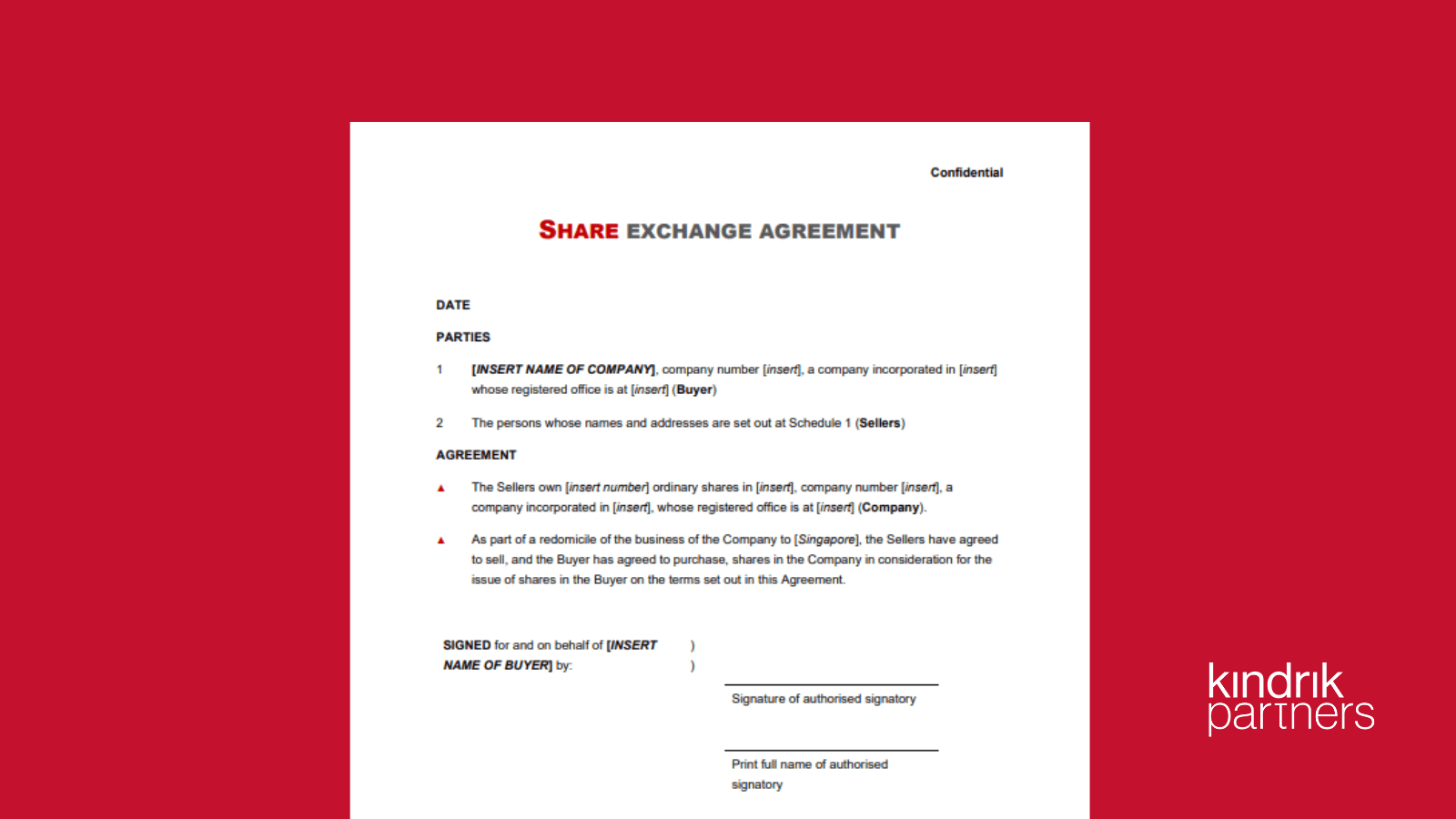
This agreement is for use by Southeast Asian companies looking to redomicile or flip to Singapore. Our experience is that, with a few exceptions, most Southeast Asian tech startups wishing to raise capital from professional investors end up being domiciled in Singapore (either to attract investment or as a requirement of their investors).
Flipping to a new jurisdiction can be done in two ways: either by a transfer of shares or by a transfer of assets. Please see our guides to raising seed capital in southeast asia for more information on the different processes involved. This agreement is for the first option – where the shares in your existing company are transferred to a newly incorporated Singapore company. That new company then issues shares to the shareholders of the existing company in equal proportions. These are separate corporate transactions in two different jurisdictions requiring legal and tax advice in each of those jurisdictions.
using our templates
Use of a template by business users is free of charge and is subject to you agreeing to our template terms of use.
explore our case studies

Southeast Asia’s online-to-offline (O2O) space is hot. Platforms linking online customers with offline services are now part and parcel of daily life, from the likes of well-backed Go-Jek and Grab, to Fave – one of the region’s most exciting new O2O companies.
Fave started out in 2015 as a fitness sharing platform called KFit before stepping into multi-category local commerce with the launch of Fave. The company is connecting millions of customers with thousands of local service businesses including restaurants, cafes, salons, spas, hotels, gyms and more.
Founder and CEO, Joel Neoh, talked to us about their journey and how they have found working with Kindrik Partners.
the Fave story
Fave’s founders Joel Neoh and Yeoh Chen Chow are no strangers to O2O local commerce. Joel started Groupsmore, a daily deals site that was acquired by Groupon in 2011. Joel went on to head up Groupon’s business in APAC, alongside Chen Chow, who led Groupon’s regional operations.
Spotting an opportunity to disrupt the fitness business in APAC, Joel left Groupon to start KFit, the region’s first-ever fitness sharing platform, touted as an Uber style platform for gyms and fitness studios.
After a year of tremendous growth and raising a US$12m series A financing, the company set its sights beyond the fitness space and launched its multi-category platform. It went on to acquire Groupon’s businesses in Indonesia, Malaysia and Singapore.
According to Joel, the pivot to a broader O2O platform was a natural progression for the company, as multi-category local commerce presented a much larger business opportunity. Joel observed that apps with high-frequency use cases tend to succeed in a competitive landscape. Fave was launched with a focus on the food and drink category – a major part of life in Southeast Asia.
Whilst deals businesses have been around for a while, Fave is focused on merchant-first innovation via deeper product development and data science. All with a view to enhancing the customer experience with daily deals and rewards. Joel notes that the traditional deals model only brings in new customers to offline businesses and stops there. To truly add value to local businesses, Fave wants to create an ecosystem where businesses can acquire, retain and re-target customers in the online world.
working with kindrik partners
Lee Bagshaw started working with Joel from the set-up of what was the KFit business in 2015. As well as advising Fave on its VC financing rounds, Lee and Chris Wilson have helped Fave on the three M&A deals relating to the acquisitions of Groupon’s Indonesian, Malaysian and Singaporean businesses.
Joel says that Kindrik Partners provided insightful and comprehensive legal advice that played a key role in helping Fave reach some major milestones. He specifically notes Kindrik Partners team’s considerable expertise in VC and tech M&A, which helped the company efficiently navigate the documentation negotiating during its funding rounds and the Groupon transactions.
The future of O2O commerce in Asia looks bright in Southeast Asia as new generation of digitally savvy consumers come online. Kindrik Partners looks forward to helping Fave continue its rapid journey to become a leading O2O player in the region.
Explore Fave.
[Note: The firm’s name was changed to Kindrik Partners in July 2020 and references to the firm’s previous name have been updated.]

Singapore company CardUp is an online platform that lets individuals and SMEs pay for expenses like taxes, rent, or even payroll, using their credit card – even if the recipient doesn’t accept cards.
Cardup raised a seed round lead by top tier venture firm Sequoia Capital in late 2017. We spoke to founder Nicki Ramsay about Cardup’s journey so far.
story
Nicki got the idea for CardUp while working at a major credit card provider in Singapore. She saw that a lot of big ticket items (like tax and rent) could not be paid for with a credit card, because the recipients were not willing to go through the hassle and fees associated with the setup process. This meant that card holders were not getting benefits from these big payments such as being able to access their credit facility or earn loyalty reward points. In addition, banks were losing out on the fees that would be linked to an increase in credit card spending.
CardUp solves this by flipping the existing card processing model, acting as the middleman between cardholders that want to use their card in more ways and recipients who don’t accept card payments. CardUp users benefit from using the credit line on their card to extend the payables period for these expenses, as well as earning credit card loyalty points and rewards. In addition, the recipient does not need to have a CardUp account to receive credit card payments.
Finding the initial capital and relevant expertise needed to get a company off the ground is a challenge for a lot of the founders that we work with. This is particularly common for solo founders like Nicki, as they are not able to draw on the financial resources and connections of their co-founders. In Nicki’s case, she decided to join The Finlab (United Overseas Bank’s Singapore fintech accelerator), which was a great way to access mentorship and exposure to a wide investor community.
While at The Finlab, Nicki spent a lot of time talking to financial institutions, to get them on board with cardholders using the platform. CardUp has since secured partnerships with many of Singapore’s major banks to promote CardUp’s services. The company also promoted the platform to individuals and SMEs through its online marketing content. The focus of this material was to educate users on the platform’s benefits and how the platform works.
the financing deal
As CardUp gained more users, the company needed to raise some money to further develop its platform.
Nicki pitched to a wide range of VCs in Southeast Asia. Sequoia was a natural fit as they are deep in the payments space, and CardUp is disrupting traditional payment processing models.
Other investors included SeedPlus, who were originally introduced to Cardup by The Finlab.
The company completed its ~US$1.7m seed round in late 2017. The investment has allowed the company to triple the size of its team in just a few months.
working with us
Nicki told us that Kindrik Partners’ depth of knowledge on VC deals in Southeast Asia was a massive help throughout the capital raising process:
Kindrik Partners added a lot of value for us during the negotiation with Sequoia as they have vast experience with startup and VC deals in the region and are very familiar with the different permutations of VC term sheets. Also, because they have acted for a lot of startups taking investment from Sequoia, they saved us time and cost by telling us which points Sequoia would likely be open to negotiating.
Overall, Nicki said that the Kindrik Partners team were extremely knowledgeable, and professional to deal with.
Having worked with Nicki, we are now certain that it won’t be long before everyone will be using their credit card for important payments, like their legal fees!
Explore CardUp.
[Note: The firm’s name was changed to Kindrik Partners in July 2020 and references to the firm’s previous name have been updated.]
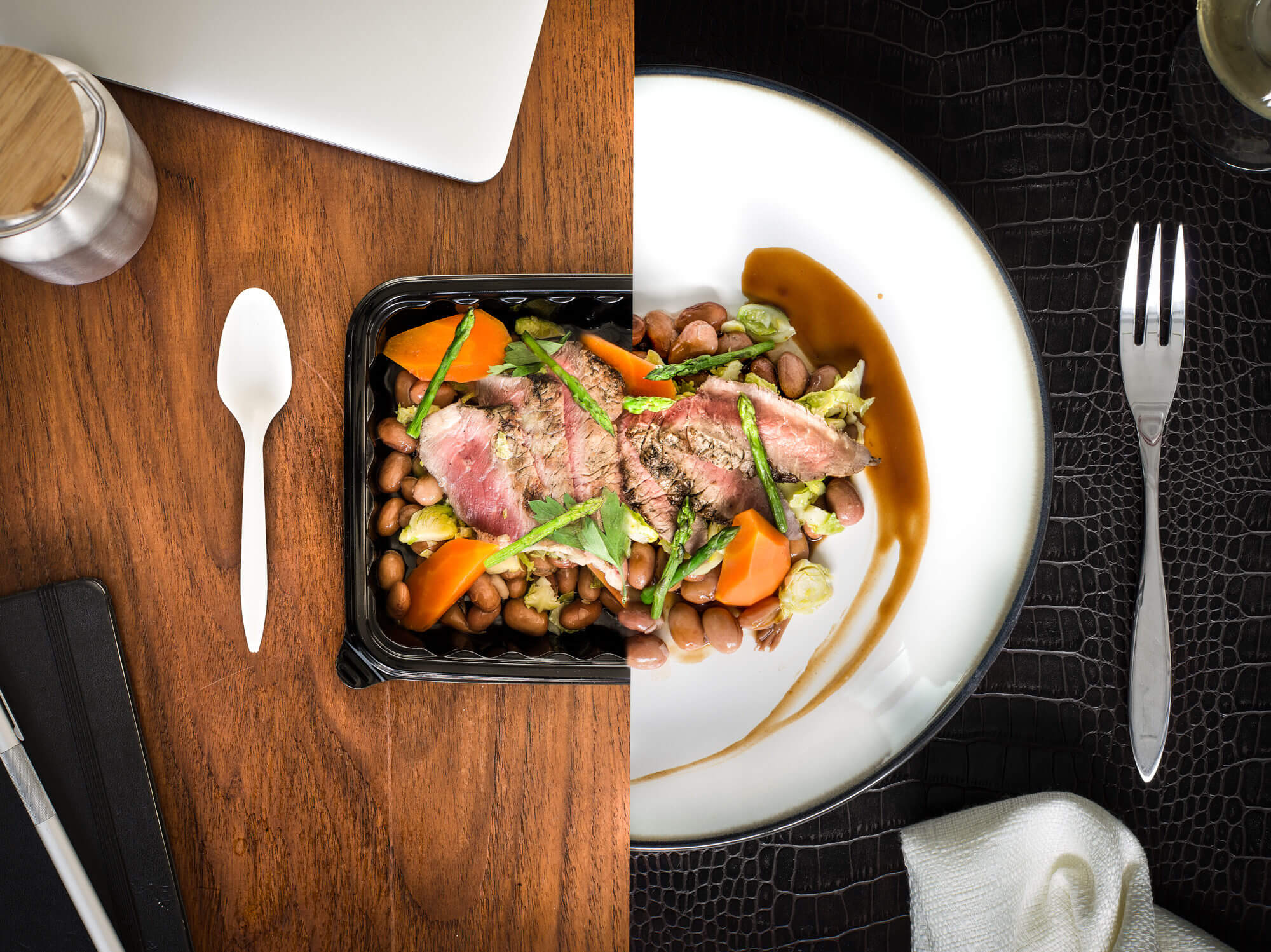
Singapore based and venture backed food technology startup Grain has fed thousands of happy customers delicious and wholesome meals, delivered in a few simple clicks.
Yi Sung Yong, Co-founder and Head of Product, recently talked to Kindrik Partners about his company and how he has found working with Kindrik Partners on their first capital raise.
the grain story
With backgrounds in management consulting and previous experience in IT startups, the 4 founders of Grain (Sung, Rifeng Gao, Isaac Tam and Ernest Sim, all recently named in the Forbes Asia 30 under 30 list) wanted to start a new and ambitious business in 2014, so they settled on changing the future of food delivery.
Since its recent beginnings, Grain is now described as a restaurant in the cloud and Uber for food in Singapore. It provides a convenient web and app delivery service for affordable and tasty food that is also good for you, offering 4 different meals each day which rotate weekly. Customers in the busy Singapore areas don’t pay for delivery and have no minimum spend.
After securing significant Series A funding, they now have major plans to offer more meals, improve operational efficiency by adding mobile distribution hub vans, increase headcount namely on the developer side and eventually to expand the business into China, including Hong Kong, and also Indonesia.
challenges
Sung says that given the diversity of food and size of the global industry, competition in the food market is building but there is still plenty of opportunity in the market. Whilst food delivery giant Food Panda largely dominates the South East Asian food delivery scene, acting as a middleman between restaurants and hungry consumers, Grain differentiates itself by offering a complete full stack food service. The entire supply chain is produced and controlled by them from one Singapore site, from the website and app business to cooking and delivery.
He also notes that whilst establishing a business and raising funds can be stressful, post-funding, hiring, onboarding and ongoing people management is their biggest challenge as they continue to grow.
working with kindrik partners
Sung’s previous experience of lawyers was that they were slow moving and traditional type lawyers that did not understand the pace of startup life.
For their first capital raise, Grain were referred to Kindrik Partners partner Lee Bagshaw through 500 Startups managing partner Khailee Ng, along with another Singaporean law firm. The referral happened on a Thursday, Lee got in touch immediately via WhatsApp and the term sheet was ready to go on the Friday. Grain did not receive a response from the other firm until the following Monday at which point the deal was well and truly on its way.
Sung says that it was Kindrik Partners’s speed and execution, WhatsApp versus long emails, moving like a startup that impressed him the most.
Kindrik Partners went on to assist Grain implement several convertible notes to secure short term bridge financing and raise of SG$2,500,000 for their Series A funding round, including investment from NSI Ventures, 500 Startups, Digital Media Partners and Ivan Lee (who founded and sold Thai Express in Singapore).
In addition to maintaining the startup pace and charging extremely reasonable legal fees, Sung really appreciated that Kindrik Partners drafted the documents from a founder’s versus lawyer’s perspective, ensuring the documents reflected Grain’s commercial motives without overkill on the legal jargon; Lee just got everything we thought we required and also pointed out the things we didn’t know we needed.
summing up
Given Grain have already delivered over 100,000 meals to ravenous Singapore residents alone, it’s looking likely that this startup will continue to eat up the market. Kindrik Partners will certainly be ready to move at speed for what seems like an inevitable growth and success.
Explore Grain.
[Note: The firm’s name was changed to Kindrik Partners in July 2020 and references to the firm’s previous name have been updated.]
