free legal resources to grow your tech company
Whether you’re raising your seed round or you’re negotiating your Series A, we’ve got your legal basics covered. Take a look around our guides, document makers, and free legal templates.

get free legal startup templates sent to your inbox
startup-friendly legal templates and guides, every month.
browse by topic
resources to help you tackle what you've got happening in your business.
browse by type
know what you're after? go straight to the type of resource you're after.
get started the right way with our free legal templates for newly formed companies
Want to put vesting agreements in place with your co-founders? Need terms & conditions for your SaaS product? Our startups will help you get the legal basics covered.
Browse our templates:

everything you need to do your next capital raise
We know that raising capital for your technology company is a tough gig. But even once you have investors that you like on the hook, there is still a lot of hard work to come before the money hits your bank account.
Explore our venture capital resources to understand the mechanics of raising a funding round in southeast Asia.


explore our m&a resources for tech companies
Whether you're strategically acquiring targets and technology, or considering selling your company, we've got resources to get you up to speed
read our case studies
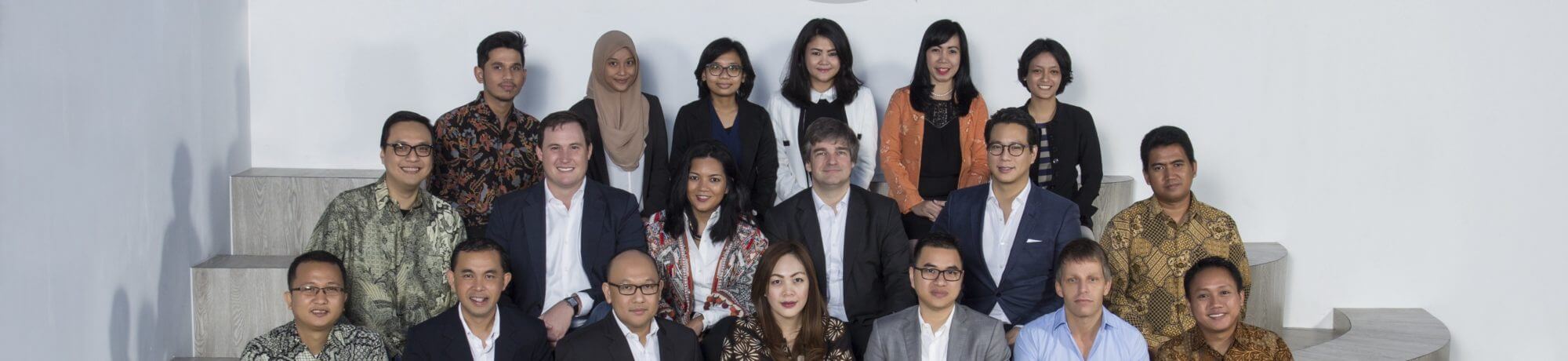
Fintech startups are the next big thing in the Southeast Asian tech scene. Kindrik Partners client C88 (formerly Compare88) is racing ahead of the pack after securing the backing of high-profile VC investors including Telstra Ventures.
C88 provides online financial services price comparison tools, helping consumers to compare the offers of major brands for products such as credit cards, personal loans, mortgages, vehicle loans, savings accounts and insurance. The company also offers a brokerage service, enabling consumers to purchase products directly on the C88 platform – for which C88 has secured relevant financial services licences through Southeast Asia.
Founder and CEO, J.P. Ellis, talked to us about the company’s background, its most recent series B financing round, and how they have found working with Kindrik Partners.
the c88 story
Prior to C88, founders Karl Knoflach and J.P. worked in private equity, finance, operations and leadership. The C88 senior team also consists of Gary Empl, a professional software developer with over two decades of experience leading teams in the creation of cutting-edge software in the financial services industry. Karl and Gary were part of the original founding team of einsurance.de in Munich in 1999 – a revolutionary company in the German insurance space which later became Check24.de, the German market-leader.
C88’s commercial teams in Indonesia, the Philippines and other markets are made up of senior bankers, insurance executives and sales operators with many years of experience in financial products sales and distribution. This experience, and the networks that senior team members bring, is crucial to C88 maintaining its market leader position.
J.P. notes that the Southeast Asian economy’s migration to digital begin with communities moving online for social needs. This was followed by online purchasing of physical goods, usually electronics and clothes, then travel bookings, followed more recently by financial services. This migration began in earnest in 2009, and by 2011 there were already major e-commerce providers. Online channel emerged in the insurance vertical in 2013, and C88 followed quickly releasing its platform in 2014.
J.P. observes that high traffic digital marketplaces, such as C88’s CekAja.com brand in Indonesia and eCompareMo.com brand in the Philippines, benefit consumers as well as underwriters. C88 can use its volume to create pricing efficiency for their customers. That volume also reduces the overall cost of acquisition for underwriters. Prior to the emergence of financial services e-commerce, banks and insurers basically only had two options for sales in the large markets of Southeast Asia: branches or physical agents. Digital sales through C88’s platform provides a highly cost-effective alternative.
challenges
Southeast Asia remains highly fragmented. Operating a multi-jurisdictional structure that is attractive to both consumers and providers, while keeping national regulators on-side, is challenging.
The company also faces the challenge of creating a common culture across national teams. Incentivising teams in different verticals and across countries to work together to solve problems creatively is an ever-evolving process of creative leadership and problem solving.
J.P adds that fortunately, C88’s team are multi-lingual and truly love what they do. It is not at all uncommon for them to log long hours during the week and weekends, because they genuinely enjoy what they do in building systems and solving problems for consumers in the region.
working with Kindrik Partners
As well as advising C88 on its venture capital financing rounds, Kindrik Partners’s Lee Bagshaw and Chris Wilson have helped C88 implement a variety of business critical structures including inter-company, cross-border licensing agreements and intellectual property documentation.
J.P says that Kindrik Partners provided high-quality and competitively-priced legal services in the critical areas of C88’s business. J.P. particularly appreciated the level of support he received when negotiating and completing the company’s recent Series B round led by Telstra Ventures – he says that the Kindrik Partners team know venture capital deals inside out, and made the negotiation of the financing documentation a breeze.
Kindrik Partners looks forward to helping C88 to continue its journey to become a leading fintech player in Southeast Asia and beyond.
Explore C88.
[Note: The firm’s name was changed to Kindrik Partners in July 2020 and references to the firm’s previous name have been updated.]

about Singapore Tourism Accelerator
The Singapore Tourism Accelerator is an equity-free 6-month programme for promising technology companies that power the travel and tourism industry. The Accelerator is organised by the Singapore Tourism Board (STB) and is managed by its appointed Corporate Innovation partner, Found8.
The cohort companies undergo a three-month accelerator program where they participate in capacity- building workshops providing insights to the Singapore ecosystem and market as well as the tourism and hospitality industry. The program is tailored to support the startups in identifying and securing a pilot partner and project to testbed their solution with. This is followed by three months of pilot implementation and execution with one of the close to 30 industry partners participating in the programme – including Singapore Airlines, Changi Airport, Marina Bay Sands, and other prominent tourism brands.
The Accelerator provides founders with an opportunity to learn critical market entry skills, pilot design and implementation skills, and fundraising strategies. The programme also offers 1:1 mentoring, expert feedback, and access to industry events. The accelerator culminates in a Demo Day attended by investors and members of the tourism industry.
The Accelerator is currently running its second cohort of 10 companies and Kindrik Partners has worked with the program as an advisor for both. Particularly in the case of startups who have come from outside the region, that can include incorporation in Singapore with a view to getting investment.
pivoting to remote-first with COVID-19
With the second cohort set to begin just as the COVID-19 situation was escalating in Singapore, the decision was made to pivot from an onsite programme to a digital-first programme.
“The global health crisis put a lot of different challenges on top of everyone’s normal workload. Now that we’re split across seven different time-zones, it’s a big ask in terms of flexibility and adaptability for the people who run the workshops. We are all now masters of Zoom,” says Katrin Miller, program manager.
kindrik partners support
presentations and office hours
In line with the move to remote-first, Sarah Yen, senior solicitor at Kindrik Partners, presented to the second cohort via webinar, covering basic corporate and commercial topics such as seed rounds and other common legal issues for growth stage companies.
The startups were also able to book one-on-one Zoom legal consultations to address any queries not covered in the presentations.
“It was beneficial to the startups to know they had access to a lawyer to address more specific questions once they were further through the process”, says Katrin.
“Throughout the programme, Sarah has been stellar to deal with. She has always made herself available to our startups and the advice she gives to help the founders is always well structured and clear.”
online templates
Founder in each cohort also have access to over 30 free legal templates and guides for startups that have been tailored to building tech companies in Southeast Asia.
“Anytime one of the startups needed a template, I always consulted the Kindrik Partners database first to see if there was something they could start working from,” says Katrin.
The templates cover common corporate and commercial agreements and resolutions used by growth startups. These include founder agreements, NDAs, and sample term sheets.
support tailored for the programme
Given the industry connections that the Accelerator offers to industry heavyweights like Singapore Airlines, Changi Airport, and Marina Bay Sands, Kindrik Partners also provides targeted assistance on pilot agreements.
“Running a pilot programme is a great way to fine-tune a solution and to approach enterprise customers”, says Sarah. “However, since there’s no real uniformity to pilot agreements, founders need to be aware of some key provisions that will shape their experience with the organisation they’re dealing with.”
Katrin agrees, adding “Some corporate partners have existing documentation around pilot programmes – but for many, it’s up to the startup to set up a legal document that seals the partnership. Kindrik Partners provided real value in educating the startups and help them understand the legalese – whether it be a letter of intent, an MOU, or formal partnership agreement.”
after demo day
fixed fees on seed funding rounds
Following demo day, Kindrik Partners is available to the cohort companies to assist them with their first institutional funding rounds. To bring more transparency to the market around legal costs, Kindrik Partners offers fixed fees for institutional seed funding rounds and some associated projects, such as ESOPs.
“We want to help founders understand the terms on which they are raising their first formal funding, to help them close the deal as efficiently as possible, and of course to ensure they are getting market terms. Providing fixed fees removes one of the biggest obstacles to start-ups engaging counsel during the funding process, i.e. concerns around creeping costs and their lawyers running the clock on each call or email query”, partner Chris Wilson says.
final words
The mentorship and guidance given to the startups has been highly valued by founders in the accelerator programme.
“It’s been a hard time to run a tourism accelerator during the coronavirus pandemic – it’s no surprise that we are the hardest hit. But we’ve noticed that many of our industry partners have stepped up and focused on innovation to give them a competitive edge when the industry recovers.”
“Having Kindrik Partners on hand to assist has been truly valuable throughout the course of the programme as our founders navigate the new normal.”
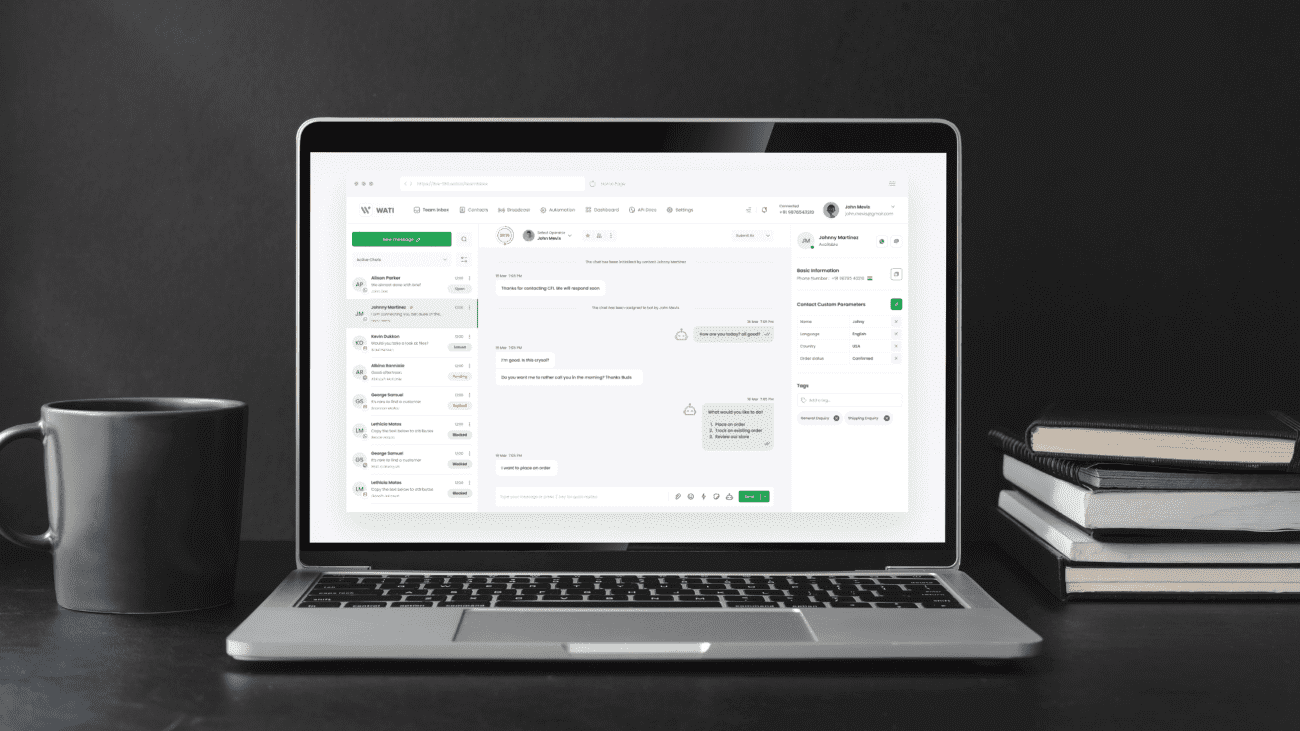
Hong Kong-based WATI.io helps companies have personalized conversations with an easy-to-use customer engagement software tool that’s built on WhatsApp’s API. The startup worked with Kindrik Partners on their recent capital raise. We talked to co-founder and COO Bianca Ho on WATI.io, the capital raising journey, and working with Kindrik Partners.
WATI.io’s story
The company was founded in 2016 by Bianca Ho and Ken Yeung in Hong Kong. Before embarking on entrepreneur journey, Bianca worked in finance before moving to a business development role at a SaaS startup that specialised in customer support. It was there that she saw how artificial intelligence could be leveraged to augment and supercharge existing customer support teams.
“We started with an AI digital assistant for enterprises”, Bianca recalls. “Our digital assistant provided enterprises with a simple solution to chat with their clients at any time in the client’s preferred channels and language.”
From there, the company saw the opportunity of offering a similar solution to SMEs. “We saw lot of small businesses using WhatsApp as a tool to communicate with their customers. We created WATI, a no-code solution for those companies to automate the support that they were offering using WhatsApp’s Business API.”
These days the team has 40 employees across seven locations and is serving over 2,500 businesses in 54 different countries.
working with kindrik partners
Bianca was first introduced to Kindrik Partners through another entrepreneur in Singapore – Ned Philips, cofounder at Bambu. They were looking for legal advice with their pre-series A round.
“We decided to work with Kindrik because the team was really responsive, and the legal fees were affordable.” says Bianca. “They’re easy to work with, and very straightforward and fuss-free.”
on WATI.io’s fundraising journey
“We were a part of the Surge accelerator programme run by Sequoia”, recalls Bianca. “The fundraising process was relatively straightforward, since they have standardised documents that Sequoia gives to all cohort companies.”
Bianca worked with partners Chris Wilson and Lee Bagshaw from the Southeast Asia office in Singapore. “They were very quick to respond to my emails, as well as friendly.” says Bianca.
“They’re also founder-centric, which is something I appreciated. Sequoia is a big name, but Kindrik worked to let us know when things weren’t necessarily market standard in the fundraising documents, and encouraged us to ask questions to understand what we were getting into.”
Kindrik Partners also assisted WATI.io in the preparation of its employee share option scheme (ESOP).
“An ESOP is a complex thing to decide, and not something you can change every day”, Bianca says, “It can be daunting and quite complex, so having a clear explanation of the process and documents was very useful for us.”
tips for founders
When it comes to giving tips to founders, Bianca is clear. “Focus on the business first”, she says. “Understand your customers. If you are a good business with solid fundamentals, it will be easier to get the capital you need.”
what’s to come
WATI.io is continuing to pick up speed, particularly with its new injection of capital. “We are continuing to hire and grow”, says Bianca. “It’s an exciting time for us and we’re excited at what’s to come for the company.”
latest from kindrik partners
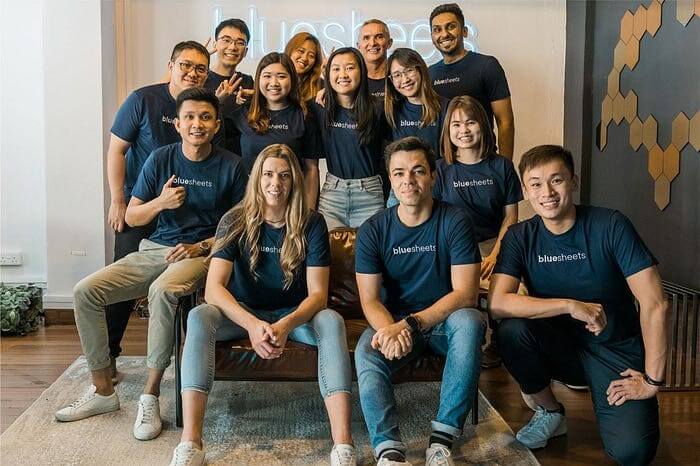
Kindrik Partners advised VC firm Illuminate Financial on its investment in Singapore-based AI-driven data processing and automation company bluesheets. Illuminate led the US$6.5 million series A round. Other returning investors included Insignia Ventures Partners, Antler Elevate, and 1982 Ventures.
Illuminate invests in B2B fintech and enterprise software companies that build solutions for the financial services industry. Backed by global financial institutions such as Citi, JP Morgan, Barclays, Jefferies, Singapore Exchange Group, and BNY Mellon, Illuminate uses its extensive network and industry knowledge to help their portfolio companies achieve their full potential in addition to providing capital.
bluesheets offers AI-driven data processing and workflow automation software that helps businesses digitise and automate their bookkeeping processes. It plans to use the funds to further enhance its AI capabilities and accelerate growth in key APAC markets, including Singapore, Thailand, ANZ, and Hong Kong.
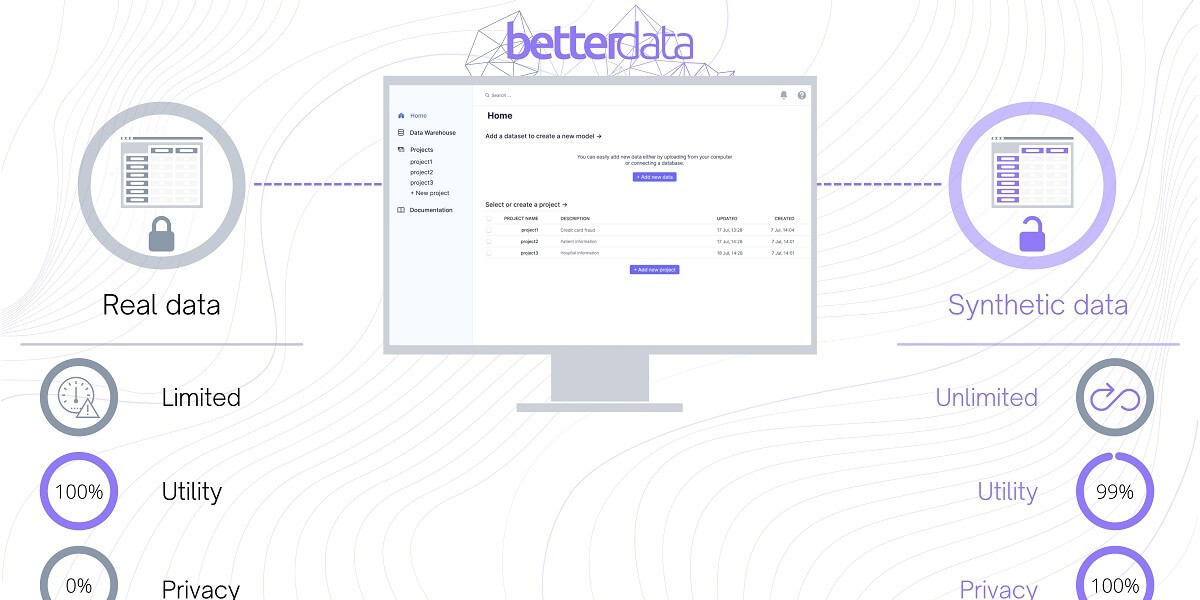
We’re happy to have advised Singapore-based synthetic data company Betterdata on an oversubscribed seed round of $1.65 million, led by Investible.
The company was founded in 2021 by Dr. Uzair Javaid and Kevin Yee and allows clients to share data faster and more securely in compliance with stricter data privacy regulations being introduced around the world. Betterdata uses generative AI to convert real data into synthetic data that looks, feels, and behaves like real datasets. These synthetic datasets retain the structure and correlations of the original data while eliminating the privacy and security concerns that come with holding and sharing sensitive data.
Betterdata plans to use the funding to publicly launch its product, hire more staff as the company scales, and improve its technology stack, with the aim of providing support for single-table, multi-table, and time-series datasets. The company also plans to expand across the Asia-Pacific region over the next two years.

Kindrik Partners advised Singapore-based startup Green Li-ion on its recent USD20.5 million pre-B funding round. The round was led by TRIREC, followed by investors including Banpu NEXT and Equinor Ventures.
Green Li-ion was founded in 2020 by Leon Farrant and Reza Katal to develop technology capable of recycling lithium-ion batteries and is now a leading developer of battery recycling technology. The company has developed modular units capable of recycling spent batteries into cathode material that can be used in the production of new batteries. Each unit is able to process 4-6 metric tons of spent batteries per day, the equivalent of 20 EV batteries or 70,000 iPhones.
The funding will help the company scale its manufacturing capacity in order to deliver 50 modular units per year. The first commercial operation is slated to start production in the first half of 2023 in Oklahoma, USA.
