free venture capital resources
Information and resources to help you navigate the capital raising process in Southeast Asia.


map of the funding terms
Got a term sheet? Compare it with typical investment terms for deals in Southeast Asia. Our map covers seed-stage, Series A, Series B and Series C+ rounds.


raising your seed round
Building a high-growth business often means bringing in seed capital to help bring your vision to life. Browse our guides to understand how to raise seed funding - from getting investor ready to understanding the terms in your term sheet.
Browse our seed funding templates:
part one: getting investor ready
> founder arrangements
> group restructuring
part two: how to structure your seed round
> what is a KISS
> what is a SAFE
> seed equity financing
> key terms and documentation
> how to find investors
need to brush up on your SAFEs and your KISSes?
see our startup glossary

raising your series a round
Ready to raise a series A round? If your business is scaling and you're starting to gain momentum with users, your startup might be ready for its next round of capital raising.
Browse our series A templates:
part one: key terms
> key economic rights: liquidation preferences, anti-dilution, share vesting
> key control rights: board composition, veto rights
part two: closing the deal
> employee share incentives (ESOPs)
> follow-on rounds
> venture debt

vc term sheet deep dive
Know what to focus on in negotiations with potential investors with our new video series on term sheets.
Join partner Lee Bagshaw as he walks you through a typical term sheet and explains common issues that arise.
We give you a copy of the term sheet marked up from a startup founders’ perspective, so that you can watch the video and follow along with the mark-up in front of you.

venture capital case studies
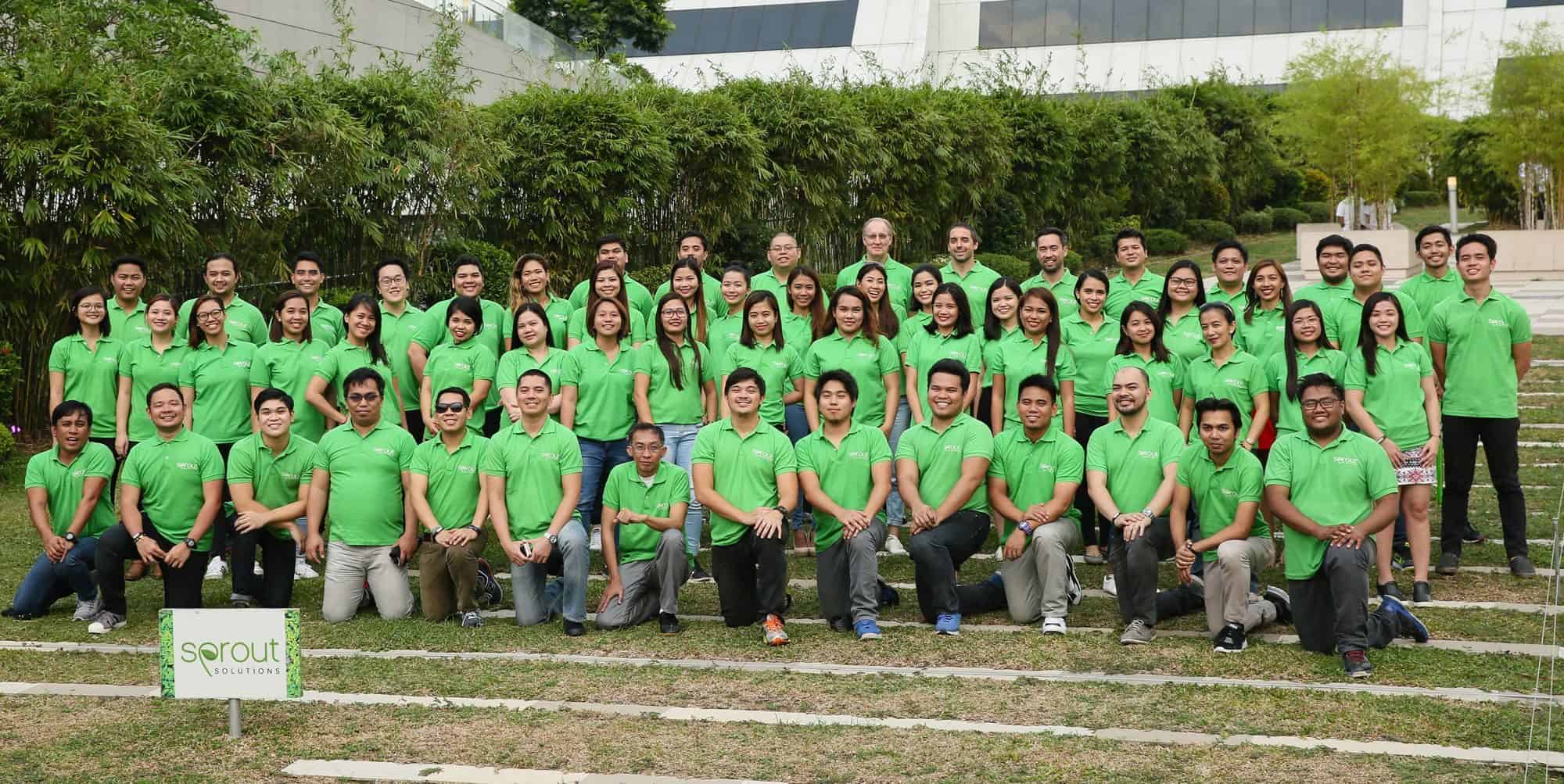
Sprout Solutions is a Philippines based SaaS payroll, HR and recruitment company. Sprout’s products are tailored to meet the requirements of each jurisdiction in which their enterprise clients operate.
We recently spoke to co-founder and CEO Patrick Gentry about working with Kindrik Partners on Sprout’s series seed funding round.
the sprout solutions story
Sprout was founded by the husband and wife team of Patrick and Alexandria Gentry. In 2016 Acceleprise (a US based SaaS accelerator) asked Sprout to be the first Philippines based company to join its program. Patrick says:
We were interviewed by other accelerators, but chose Acceleprise because it specialised in assisting companies that were looking to scale their sales to enterprise customers.
The connections that Patrick and Alexandria made at Acceleprise helped them to raise an angel round from overseas investors. Those funds were used to expand the company’s software engineering and sales teams. The company grew rapidly, and by the middle of 2017 it had over 75 employees and 150 enterprise clients in the Philippines.
After proving the business model locally, the company wanted to expand into other emerging markets in Southeast Asia. Patrick and Alexandria began looking for institutional investors to fund the tailoring of the company’s products for each new market, and to grow the international sales and services teams.
the deal
Patrick was well connected in the startup ecosystem after several years of bootstrapping both Sprout and a previous company. A fellow entrepreneur provided Patrick with a warm introduction to several VCs with a focus on B2B SaaS products. Sprout soon began negotiating a series seed investment round led by VCs Kickstart Ventures (Philippines), Wavemaker Partners (Singapore), and BEENEXT (Singapore).
A condition of the round was that Sprout needed to redomicile in Singapore. This type of restructure (or flip) is quite common, since many Southeast Asia VCs will only invest in a Singapore incorporated entity. There are a number of reasons for this, including taxation, minimal restrictions on foreign ownership, the ability to easily repatriate investment returns from Singapore, and legal certainty (including IP protection).
For Sprout, a new Singapore head company was incorporated and the existing company became a Philippines operating subsidiary. The terms of the restructure were incorporated into the long form investment documents and the flip was completed at the same time as the rest of the investment round. Patrick recalled that:
Some aspects of the restructure were unique. Kindrik Partners were great in this scenario as they did a deep dive to understand the specific requirements and complete the process by working closely with local counsel.
The company closed its US$1.6m series seed round in late 2017. Patrick told us that:
Completing the round was a huge deal. I knew we could accelerate this business with capital, and felt like the timing was perfect. It’s exciting to gain the freedom to stretch a bit and continue our rapid expansion in new areas of the business and market.
working with us
Kickstart recommended Kindrik Partners to Patrick as they had worked with us on the other side of previous deals.
Patrick says:
Kindrik Partners were invaluable in moving the deal forward as efficiently as possible by keeping the negotiations centred on the critical commercial points, and by providing insight as to what was common market practice in these areas. I can’t emphasize enough how important it is to have a strong partner that not only knows the process inside and out, but will also go to war for you and represent you as if they are negotiating for their own company.
Kindrik Partners even assisted with the calculation of the cap table, as the deal involved some bespoke debt conversion calculations relating to a previous round.
As entrepreneurs we pour our heart and soul (and blood and sweat) into our companies, and to have someone fighting for us as if it were their own – that’s just awesome!
Sprout is rapidly becoming a regional SaaS star, and we would like to thank Patrick for taking time out of his frantic schedule to speak with us.
[Note: The firm’s name was changed to Kindrik Partners in July 2020 and references to the firm’s previous name have been updated.]
Bambu is a Singapore-based robo-advisory startup. We talked to the company about working with Kindrik Partners through their successful Series A and B rounds.
bambu
Bambu is a B2B robo-advisor platform provider to banks and other financial institutions. Their digital platform allows these financial institutions to offer automated and technology-augmented investment services to their customers. The company started up in August 2016, and now has 70 staff with clients in America, Europe, the Middle East, and across Asia.
Bambu raised US$10m in their series B round which closed in June 2019. We spoke to their CEO and co-founder Ned Phillips about the fundraising process.
getting introduced to Kindrik Partners
Ned first heard about Kindrik Partners through an early investor and advisor to Bambu. When it came time to do their Series A round, Bambu had secured its first strategic investor, Franklin Templeton Investments, as well as its first venture capital investor, Wavemaker Partners. Since it was their first equity round, Ned knew it was time to bring in professional legal advisors.
As part of their search, Ned said that he met with a few of the bigger law firms, but none of them quite fit.
“You meet the partner”, he said, “but you know you’re not going to get the partner – the actual work always gets handed off to someone else in the firm.”
Kindrik Partners was transparent and honest when presenting their team. “What I liked about Kindrik Partners was that when I met Chris [Wilson] and Sarah [Yen], they said ‘this is us, you’re going to be working with us’, which was nice.“
“That made a big difference.”, says Ned. “It was important for us to know who we were dealing with, and it was very clear that it was them – that this was my team.”
raising the series a, then the series b
The series A round was very different from the seed round for Bambu. “The series A was the first time we were introduced to equity documents”, recalls Ned. “In our seed round we had used a SAFE convertible note, so there were no equity investors at that point.”
It was a big learning curve, particularly as a first-time founder. “My clearest memory about the Series A was the amount I learned about things I never knew about”, says Ned.
“There were a lot of things about equity documents that I wasn’t familiar with – tag-alongs, drag-alongs, founder vesting, liquidity preferences, warranties.”
(Unfamiliar with these terms? Click through to our startup glossary to learn more.)
When it came time for the series B round, Ned thinks that they were fortunate with how things went, and that it felt easier, attributing it to understanding more of the process and jargon.
“We had Franklin as a returning investor who was also willing to lead the round for us. We ended up with two investors filling the round – but it turned out that as soon as our round was full, everyone else wanted to come in, which was a nice problem to have.”
For other startups looking to raise money, Ned advises perseverance. “It’s not that it’s a numbers game, but it does take persistence. We reached out to so many investors. Many people give up at 10, or 20, 30, 40 people telling them no. But don’t be deterred – be polite, say thank you, and move on.”
working with Kindrik Partners
Ned describes the team as super helpful. “When we were first introduced, the fundraising process was new to me – the combination of Chris and Sarah on board to help was invaluable.”
Ned highlights Chris as an incredibly founder-friendly lawyer. “As a founder, you want to keep good investor relations, since it’s going to be a long-term relationship.”
“Chris could be the bad cop when he felt it was in the company’s best interests. He was also great at explaining what was important and what we could let go. He was strong, but fair.”
Ned also emphasises the complexity in negotiating a series A round. “Raising money isn’t just a negotiation on value (that part is done fairly quickly). There are all of these other things to decide in terms of what to hold onto and what to let go of.”
Ned recommends the law firm to other startup founders doing who are looking to raise funds for their company. “The team at Kindrik Partners really focuses on raising funds, and it’s so valuable to be talking directly with the people who are holding the pen on the documents, rather than just being a part of the sausage mill.”
“Put it this way – when it came time to do our series B, we didn’t spend one second thinking about using someone else. It was like, OK, we’re doing our round. Let’s get in touch with Kindrik Partners and get started.”
what’s next for bambu
It’s an exciting time for Bambu. The startup has lots of plans from the proceeds of their series B, including new products set for release and building their London presence. But Singapore remains home for the time being.
“Singapore is really helping fintech”, says Ned. “Honestly, it’s amazing – the Fintech Festival alone had 40,000 people attending last year. We’re selling to the world, but there’s no better place to do that from than Singapore.”
explore bambu
[Note: The firm’s name was changed to Kindrik Partners in July 2020 and references to the firm’s previous name have been updated.]
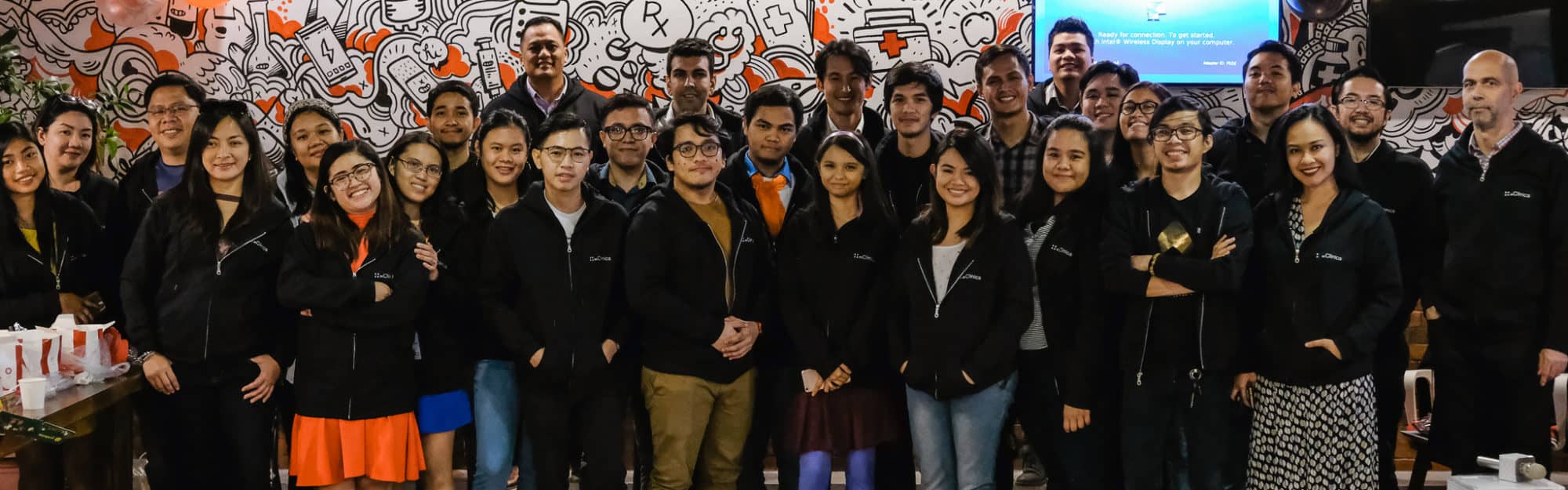
mClinica is a Singapore-headquartered health-tech company which provides data, analytics, and patient engagement tools for healthcare organisations in Southeast Asia. In 2017, mClinica closed a USD$6.3million series A financing round, with Kindrik Partners advising the company.
Founder and CEO Farouk Meralli talked to us about mClinica’s journey to date and working with Kindrik Partners.
the mClinica story
Whilst working for multinational pharmaceutical companies, Farouk identified issues in the healthcare sector in emerging markets. Pharmaceutical companies and public sector entities (NGOs and governments) lack access to consolidated data that similar companies in developed markets have. This is particularly so in Southeast Asia where pharmacies are mainly independent owner-operated businesses rather than the large branded chains that you see in established markets.
This led Farouk to start mClinica to connect pharmacies on a common mobile platform. The company launched in the Philippines in 2013, and has since expanded to Indonesia, Vietnam, Thailand and Malaysia. By the end of 2017, mClinica had connected over 60,000 pharmacy professionals and 12,000 pharmacies on a single digital platform. This platform now addresses several challenges in healthcare including education and engagement of pharmacy professionals, pharmacy-driven patient programs, and last-mile data.
Farouk recently received the Public Health Innovator Award from Harvard University for his work with mClinica, and was the youngest ever recipient of the award.
challenges
Due to the fragmented nature of the healthcare industry in Southeast Asia, developing mClinica’s products was no easy feat. Farouk had to recruit healthcare professionals who also had expertise in mobile technology, engage with lots of government agencies and regulators, and develop products that were flexible enough to work in different health contexts. However, Farouk’s patience and vision has paid off, with its pharmacy network now reaching approximately 80 million patients per month.
The business has also been through some financing rounds and other corporate transactions along the way, which Farouk admits can be a big distraction from the day job of growing the business – like all entrepreneurs, he just wants to focus on solving real problems for end users.
raising a series A round
mClinica’s series A round was led by Silicon Valley fund, Patamar Capital (formerly Unitus Impact), and joined by UK based Global Innovation Fund, MDI Ventures, and Endeavor Catalyst. Existing investors also took part in the investment round.
The cap raise was to help mClinica grow faster and enter more markets across Southeast Asia. By 2017, mClinica had a good profile in the regional tech and healthcare scene, and was known to investors. The company therefore had the luxury of picking investors that had knowledge of the healthcare space and would offer the best long-term strategic value.
In the end, mClinica was able to secure investment from well-known international investors, all of whom believed in the vision of transforming healthcare in Asia. A term sheet followed, and once a lead investor was committed, was agreed fairly quickly.
Farouk described an important aspect of the transaction was discussing the term sheet openly with all interested parties from the outset. This included existing seed investors who required careful management to avoid roadblocks later in the deal process.
working with Kindrik Partners
mClinica has worked with Lee Bagshaw since the incorporation of the business, including advising on seed funding deals with Kickstart Ventures, Spiral Ventures (formerly IMJ Investment Partners) and 500 Startups. Kindrik Partners has helped the company with other corporate and commercial matters, aside from the series A deal.
Farouk says: I believe mClinica was one of Lee’s first clients in Southeast Asia. Therefore to some extent we’ve been on the journey together in what is an exciting but challenging digital market. We feel like we’re in safe hands with Kindrik Partners. The team is very easy to work with and their VC transaction experience is second to none.
what’s next?
Since completing its series A financing, mClinica has continued to expand its pharmaceutical network, work on product development and grow its team. Right now, the focus is still on Southeast Asia, but mClinica’s products are also suited to many other developing countries worldwide.
As a transformative health-tech company operating in emerging economies, we’re proud to have been a part of Farouk’s journey to date. The digital economy in Southeast Asia will play a great role in improving healthcare delivery over the next decade and mClinica is leading the way.
[Note: The firm’s name was changed to Kindrik Partners in July 2020 and references to the firm’s previous name have been updated.]
