technology m&a lawyers
trusted advisors in the m&a scene
Most tech companies across Southeast Asia are likely to exit via m&a (rather than IPO). We can help you prepare for that journey. As m&a experts in the tech space, we work with our clients throughout their life-cycles to maximise value on exit.
Our corporate lawyers have advised on hundreds of acquisitions and exits over the course of their careers, involving entrepreneurs to the largest multinationals. We also help startup companies seeking to grow by the acquisition of other tech businesses in the region, which might involve share or asset purchases, or acqui-hires.
"Kindrik Partners played a key role in helping Fave reach some major milestones."
joel neoh, ceo, fave
tech m&a resources

who’s the buyer?
Before getting into negotiation of the key commercial and legal terms of the deal, the first question is – who is the buyer? And what are its plans? Is it already listed or looking to IPO, or even seeking a listing of the enlarged group via a SPAC process? If the answer is none of the above, then the buyer is likely to remain a private company up to an exit. Therefore your shareholders are in effect exchanging illiquid shares in the target for a smaller shareholding in a larger buyer entity, whilst losing control of the business at the same time. This means that the prospects and plans of the buyer should be key to your decision to sell. The ability to cash out via a successful exit will be dependent on the prospects of the larger combined business. And all the key strategic decisions, including whether and when to sell, will of course be made by others going forwards.part cash / share consideration
One factor to consider is how the consideration (the purchase price) will be split between cash and shares, and whether all shareholders in the target company will receive the same deal. Your investors may prefer to cash out as part of sale of the company rather than receive shares in another private company. Part of their decision making will be based on how well they consider the prospects of the buyer. Further, if the buyer is based in a foreign jurisdiction, investors sometimes can have issues with receiving consideration shares if the buyer’s place of domicile is outside of the scope of their fund mandate.valuation
A key aspect you need to agree at the term sheet stage is of course the valuation of the consideration shares to be issued to the sellers. This, along with the valuation of the target company being sold, determines what percentage of equity sellers will own in the buyer. If your potential buyer is a private company, this might be based on the valuation of their most recent financing, or any more recent valuation they have obtained independently. Or it might just the view of the board of the buyer. Either way, you should undertake financial due diligence and challenge this valuation where necessary. Between the timing of signing the non-binding term sheet and closing of the transaction there should be scope for the valuation to be adjusted subject to material due diligence findings. Finally, unlike with an all-cash sale, shareholders of the acquired target will be partners in the post-acquisition business and will therefore have as much interest in ensuring that there are synergies between the two businesses as the current shareholders of the buyer.class of shares
Valuation is one thing. The class of shares that sellers receive as consideration is just as important. If the buyer has raised several rounds of venture financing, it will inevitably have a liquidation preference stack. This is important for sellers to understand early in their diligence process. The class of shares is often a key negotiation point. If you receive ordinary shares in the buyer as consideration for the sale proceeds, those ordinary shares will sit behind any preferred shares that are in issue. This is particularly relevant for your investors who may be reluctant to in effect exchange their existing preference shares for ordinary shares in the buyer.due diligence
On any M&A deal, a buyer will carry out financial, legal and commercial due diligence on the target company. In the same way, sellers will want to do the same thing on the buyer in circumstances where shares are offered as consideration. As mentioned above, this would cover the financial due diligence (to validate the buyer’s valuation). We also recommend legal due diligence on key aspects such as the buyer share structure, its governance arrangements, whether there is any debt or key liabilities, and any material contractual matters, amongst other things. For example, if there are any convertible securities which would further dilute shareholders in the buyer.warranties from the buyer
To support any due diligence on the buyer, sellers should also insist on the buyer providing certain warranties. If the buyer fails to disclose an issue which represent a breach of warranty, sellers will want to be compensated in the same way as a buyer would be if they were in breach. Ideally these buyer warranties would be equivalent to the warranties being provided by the sellers. However sometimes buyers will only offer basic warranties around the shares to be issued as consideration. Ultimately, this is an issue for negotiation in the sale and purchase agreement.warranties, liability and price adjustment
As with any M&A deal, your investors may be reluctant to stand behind business warranties and liability for breach of such warranties. With all-cash deals, often the liability gap between buyer expectation and sellers wanting to minimise their potential liability is resolved by way of an escrow account, from which claims can be met pro-rata from all sellers. With all-share deals, sellers are unlikely to want to reimburse a buyer for breaches in cash. To deal with this, typically some consideration shares will be held back (or escrowed) by the buyer for a period to meet any claims, or alternatively the buyer may have an ability to claw back shares from sellers if there is determined claim (or a combination of both of these).approval rights in the buyer
In all-share deals, sellers transition from full owners who exercise control over their business to minority owners of the combined business. In these types of acquisitions, shareholders in the selling company might end up with around 15-20% of the equity in the buyer once all the consideration shares are issued. This means that realistically, investors cannot expect to retain the kind of control in the buyer as they might have had previously in the target company. Founders of the target are the same. They might get a single board seat but will not be making material decisions. In terms of approval rights, most likely the sellers will simply be able be vote alongside all other shareholders in the buyer, but nothing much more than this.restrictions on shares transfers
Your investors may have limited or even no restrictions on their ability to sell shares in your company. That may not be the case in respect of their shares in the buyer. Again, this requires some due diligence on the governance documents of the buyer. Practically, it is unlikely that material changes will be made to the buyer’s governance documents as this will require agreement from all its shareholders. In addition, as part of any warranty period, there may be a restriction on selling shares for some time. Selling shares to a listed buyer is very different as lock-ins period are typically required by law or under the applicable stock exchange rules. Even for private company buyers, there may be contractual restrictions on selling shares for a period.round up
If you are selling your company to a listed company like Square and being issued shares as consideration, it is fair to say that things are somewhat easier. As a listed company, the buyer will have a fixed valuation at any time. Financial information is publicly available which is likely to require less due diligence. Consideration shares issued by a listed buyer should be the same class as the listed shares and they will be capable of being sold easily in the market subject to any lock-in periods. For a sale to a private company, all-shares deals bring more issues to think about, and due diligence on the buyer is essential. Otherwise, it will not simply be a case of buy-now-pay-later — the expected pay day may not come at all.
A drag-along provision (or ‘drag right’) is a pretty simple concept. An agreed majority of shareholders receive an offer from a third party to acquire their company, and under the drag-along provision they can force the minority to sell. This avoids small shareholders potentially holding up an exit transaction, and so is an important mechanism to include in a company’s shareholders’ agreement or constitution.
So, why’s it tricky? Here’s a few things to think about:
who’s dragging who?
Clearly the key issue is what constitutes a majority for these purposes? It doesn’t always mean 50%+. In fact, drag-along provisions often stipulate that holders of no less than 75% of shares are required to enforce the drag right. However, this varies a lot depending on how the cap table looks.
Where it gets more complex is where a startup has investors holding different classes of shares. Very often the drag right is then triggered by shareholders holding at least 75% of all shares (including holders of a majority of any preference shares). This may change again as you go through the rounds with holders of different classes of preferred shares all wanting an individual say.
If you are a founder, it is best to ensure that you, or at least the ordinary shareholders as a group, retain a say – to avoid having your own company being sold from under you. As startups go through multiple financing rounds, founders are likely to be diluted to a point that they may well not be able to block a drag right triggered by, for example, holders of 50-75% of the total share capital.
There are two solutions to this: founders either look to retain an express veto over the drag right (which investors often resist), or more commonly the drag right requires approval of holders of a certain percentage of both the ordinary shares and the preference shares.
proceeds on a drag sale
Dragged shareholders that are required to sell their shares receive the same proceeds they would be entitled to on any other exit. There should be no special treatment for the majority shareholders who are enforcing the drag right. This is subject to any liquidation preference rights in favour of investors, i.e. just because you are dragged into a sale doesn’t mean that liquidation preferences don’t still apply.
liability of dragged shareholders
Often drag along provisions include language to the effect that dragged shareholders are only required to warrant that they have title to their shares and the power and capacity to sell. Dragged shareholders are not expected to provide business warranties (certainly in the case of dragged investors). Note, some investors may require additional carve-outs to exclude specific undertakings or obligations (e.g. non-competition obligations) that may be required as part of the sale documentation.
ability to enforce
A well drafted drag-along provision would ideally include language to the effect that if a dragged shareholder fails to deliver signed documents for its shares to the company by the required date, the company and its directors are deemed to have been appointed the agent and attorney of such defaulting shareholder with full power to take such actions necessary in their name.
asset sale
Sometimes, there is language in a drag-along provision around an asset sale, which is the alternative way in which an exit could occur, rather than a share sale. This usually states that if an asset sale is approved by the board and the agreed drag along majority, the remaining shareholders are required to take all actions necessary in order to give effect to such an asset sale by the company. Again, the distribution of proceeds on such an asset sale is subject to the liquidation preference applying on any preference shares in issue.
drag rights on default
Finally, in addition to the conventional drag-along rights discussed above, sometimes, there may be separate drag rights which can be enforced by investors only. These would come into play usually in a couple of scenarios. Firstly, if there has been an event of default by founders, and secondly in the context of exit rights, i.e. where the company has not secured an exit after a number of years. In this second scenario, investors naturally want the right to push the company to find a buyer and force founders to sell alongside them. Founders often push back on the inclusion on these kind of additional drag along rights.
what comes next?
If this has sparked questions for you about your upcoming corporate transaction, get in touch with our team. Otherwise, browse our other resources.

Atlassian made a splash in the tech M&A world recently by publishing their term sheet for strategic acquisitions.
So why has Atlassian gone public when acquisition terms are generally a closely guarded secret? Atlassian’s stated aim is to make the M&A process fairer, more efficient, and less painful for sellers.
We assume another driver is to position Atlassian as a seller-friendly buyer in the hyper-competitive tech M&A marketplace.
Has Atlassian achieved its goal(s)?
The Aussie tech legend scores brownie points for transparency. The traditional approach of keeping acquisition terms hidden allows buyers to claim their term sheets are market standard. This chestnut makes it hard for first-time founders to negotiate, as there is no easy way to judge whether particular terms are standard or harsh (or where on that continuum a term falls).
As Atlassian notes in its blog, making this information available to prospective sellers should make the negotiation process easier.
Atlassian also deserves credit for putting forward some seller-friendly terms.
Here’s our rundown of things we like in the term sheet and a couple of things that make us go hmmmmm.
three things we like for founders looking to sell
favourable escrow terms
It’s common for us to see buyers holding back at least 10-20% of the purchase price in M&A deals against warranty claims for up to 2 years post-closing (this is called escrow). Atlassian’s terms mean more money in sellers’ pockets upfront when the deal closes. The maximum ask is a 5% escrow if the deal is under $50m.If it’s over $50m the seller can choose between either i) a 5% escrow, or ii) a 1% escrow and footing the bill for Atlassian’s reps and warranties insurance covering up to 4% of the purchase price). In each case Atlassian is comfortable with a 15-month escrow period.
Atlassian’s escrow terms are substantially more attractive than those commonly offered to sellers in tech transactions.
a practical approach to general warranties
Atlassian caps the sellers’ liability at the escrow amount for general warranty claims (including IP warranties). There is also a 15-month claim period. We’ve seen warranty liability capped at anywhere from 25%-100% of the total purchase price, and claim periods of 12-24 months. Atlassian’s terms are therefore pretty friendly to sellers.
ESOPs covered upfront
The term sheet explains how Atlassian treats existing ESOPs. Generally speaking, vested equity is cashed out, and unvested equity is terminated and substituted for an Atlassian scheme. We’re happy to see Atlassian raising this upfront – share scheme details can sometimes be inadvertently left out at the term sheet stage, causing problems down the track.
things that make us go hmmmm (for founders looking to sell)
exposure outside the scope of general warranties
Liability for anything outside the scope of the general warranties is pretty tough – capped at 100% of the purchase price and subject to a claims period of the statutory limitation period, or 6 years (whichever is longer). This special basket includes tax warranties and indemnities dealing with specific issues picked up in due diligence. In the Southeast Asian context, 6+ years isn’t unusual for tax claims but is a long claims period for most other issues, which we think will be unattractive to many founders and sellers.
restrictions for core employees
Core Employees (typically founders) identified in the term sheet will receive a percentage of their purchase price in Atlassian shares that vest quarterly with a 1-year cliff. The core employees are also required to enter into non-compete and non-solicit undertakings. Hard-baking some of the purchase price in stock that is subject to future vesting is a bit tough on those founders who have long been fully vested.
However, this may not be a big concern if only a small percentage of the purchase price to be paid in stock – Atlassian has left this silent in the term sheet for now.
waive goodbye (maybe) to benefits
Atlassian reserves the right to require team members to waive existing vesting acceleration rights, change-in-control payments, severance compensation, or other payments that might be triggered by the acquisition. This is sometimes seen on Southeast Asian transactions, but is usually open to negotiation.
tipping basket
Atlassian expects to be able to bring warranty claims once the total minimum value of all warranty claims hits 0.5% of the purchase price (known as the tipping basket in the U.S. and as the de minimis amount in Southeast Asia). 0.5% does seem a bit low to us but we don’t tend to see sellers die in a ditch over this point..
reverse triangular what?
The term sheet assumes the transaction will be structured as a reverse triangular merger – a structure popular in the US for tax and other reasons. Reverse triangular mergers are not something to be attempted without adult supervision. Expect to spend some money on tax and legal advisers if you need to get your head around this.
It’s great to see such an open discussion by Atlassian of their term sheet and process, and we look forward to seeing whether other regular tech acquirers follow suit.
This article was co-authored with Fiona MacKinnon from our Wellington office.

This is a template disclosure letter for disclosing against warranties provided in an M&A or capital raising transaction.
read our guide: tricky clauses: warranty disclosures (4 minute read)
read our guide: raising seed capital in southeast asia (8 minute read)
Typically under these transactions, a company (and, in some cases, its founders) provides statements to a purchaser or investor in the transaction documents. If any of these statements (known as warranties) turn out to be untrue, the purchaser or investor can bring a claim for a breach and potentially recover money from the parties that gave the warranties.
A disclosure letter protects warrantors, by allowing them to disclose any matters that are inconsistent with the warranties set out in the transaction documents. The purchaser or investor cannot bring a warranty claim in respect of matters which have been fairly disclosed. The disclosure letter is the document which formally records these disclosed exceptions to the warranties. It is therefore an integral part of the transaction documents and the earlier warrantors start preparing the document on any transaction, the better.
using our templates
Use of a template by business users is free of charge and is subject to you agreeing to our template terms of use.
This agreement is for use when a company primarily wishes to bring in employees from a target company, rather than acquiring its business. Acqui-hires are common amongst well-funded startups looking to expand their teams by hiring talent from other startups. Often the employees are acqui-hired from businesses that are failing and are subsequently shut down.
This agreement covers the transfer of the employees and release of any existing restraints, together with a general assignment of intellectual property rights. It sets out the terms of payment of the acquisition amount – this is sometimes paid in tranches and adjusted if the transferring employees subsequently move on soon after completion of the acqui-hire.
using our templates
Use of a template by business users is free of charge and is subject to you agreeing to our template terms of use.
This is a template term sheet for use when one tech company is acquiring the shares of another tech company. It sets out the principal terms agreed between the acquiring company and the shareholders of the target company prior to preparing the formal sale and purchase agreement. The acquisition of a competing and/or complementary business in this manner is a common strategy of well-funded high growth technology companies.
This term sheet assumes that the transaction will be structured as a share sale (as is most common). It should not be used in connection with an acquisition of the business and assets of a target company. This term sheet is not legally binding (other than the confidentiality obligations in part B); it simply sets out the terms agreed in relation to the acquisition.
using our templates
Use of a template by business users is free of charge and is subject to you agreeing to our template terms of use.
subscribe to our newsletter and get the latest templates and tips for fast-growing startups in Southeast Asia
latest news from kindrik partners
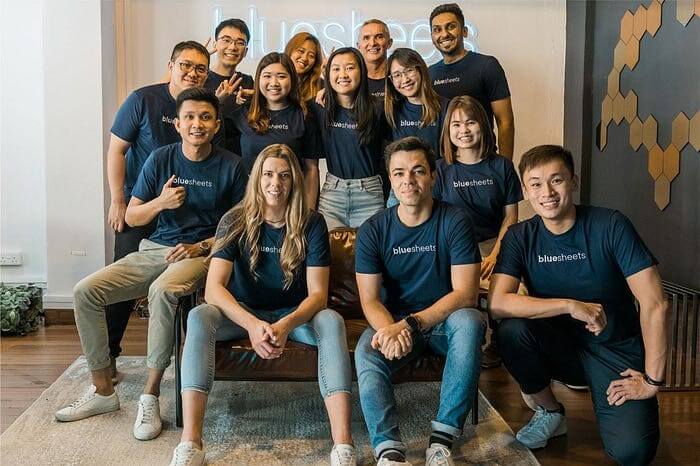
Kindrik Partners advised VC firm Illuminate Financial on its investment in Singapore-based AI-driven data processing and automation company bluesheets. Illuminate led the US$6.5 million series A round. Other returning investors included Insignia Ventures Partners, Antler Elevate, and 1982 Ventures.
Illuminate invests in B2B fintech and enterprise software companies that build solutions for the financial services industry. Backed by global financial institutions such as Citi, JP Morgan, Barclays, Jefferies, Singapore Exchange Group, and BNY Mellon, Illuminate uses its extensive network and industry knowledge to help their portfolio companies achieve their full potential in addition to providing capital.
bluesheets offers AI-driven data processing and workflow automation software that helps businesses digitise and automate their bookkeeping processes. It plans to use the funds to further enhance its AI capabilities and accelerate growth in key APAC markets, including Singapore, Thailand, ANZ, and Hong Kong.
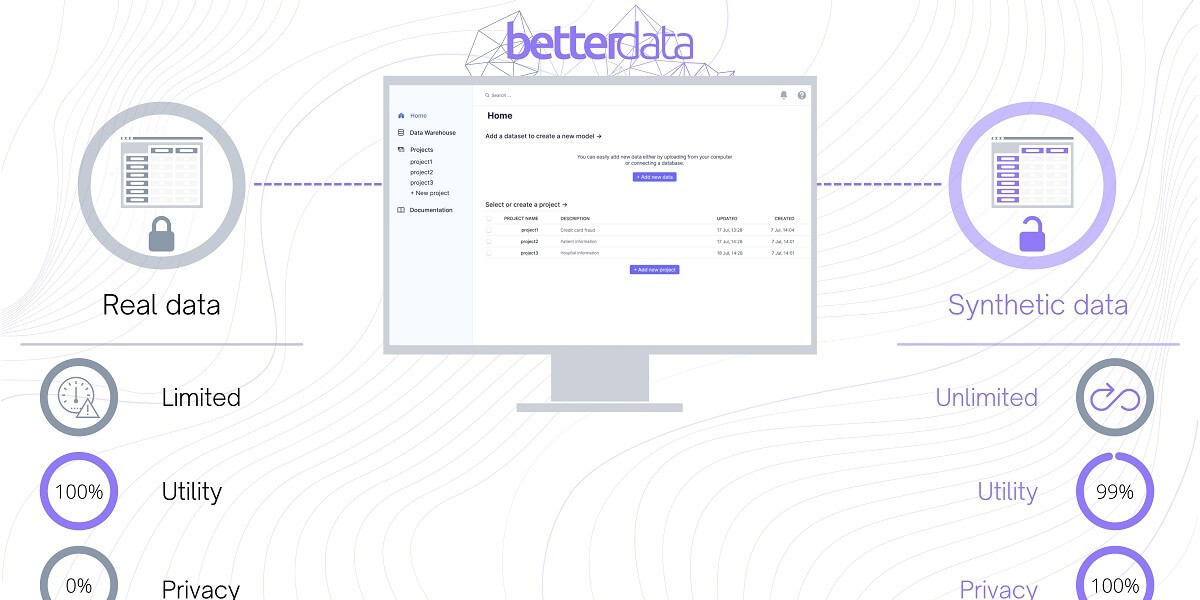
We’re happy to have advised Singapore-based synthetic data company Betterdata on an oversubscribed seed round of $1.65 million, led by Investible.
The company was founded in 2021 by Dr. Uzair Javaid and Kevin Yee and allows clients to share data faster and more securely in compliance with stricter data privacy regulations being introduced around the world. Betterdata uses generative AI to convert real data into synthetic data that looks, feels, and behaves like real datasets. These synthetic datasets retain the structure and correlations of the original data while eliminating the privacy and security concerns that come with holding and sharing sensitive data.
Betterdata plans to use the funding to publicly launch its product, hire more staff as the company scales, and improve its technology stack, with the aim of providing support for single-table, multi-table, and time-series datasets. The company also plans to expand across the Asia-Pacific region over the next two years.
