contract and commercial resources
Explore our collection of resources for commercial work in Southeast Asia.

templates

This is a simple company friendly consultancy agreement for engaging independent contractors or consultants (e.g. individuals or sole operator companies) to work within a business.
This template includes a restraint on the independent contractor to ensure that the independent contractor does not jeopardise the company’s business (by competing or similar) during the term and for a set period after. To be enforceable, a restraint must be reasonable. This, in turn, will depend on the facts relating to the agreement. However, the longer the restraint and the broader the restrained area, the more likely that arguments could be raised about the enforceability of the restraint.
using our templates
Use of a template by business users is free of charge and is subject to you agreeing to our template terms of use.
This document is intended for use by the founders of a startup company to formally transfer intellectual property relevant to the business, products or services of the company, to that company.
Before completing this deed, we suggest that companies and their founders first work to identify and record the intellectual property that the company intends to use (or is already using) in its business, including details of who:
- created the intellectual property, and on what basis (e.g. as a founder, employee or external consultant of the company)
- owns that intellectual property and on what basis (i.e. if the company owns intellectual property because it was created by its employees in the course of their employment, this should be recorded)
This will help:
- to identify intellectual property that needs to be transferred by a founder or consultant, etc. to the company (and to properly describe that intellectual property in a deed of assignment)
- to prove ownership of the company’s intellectual property in the future, e.g. in a capital raising or M&A transaction.
using our templates
Use of a template by business users is free of charge and is subject to you agreeing to our template terms of use.
This is a simple document to outline the main in principle terms of a proposed commercial relationship. The document is not legally binding (other than the confidentiality, termination, and governing law provisions in part D).
Other than the statement that the document is not intended to be binding and part D, there is no suggested content included – the document is simply a framework for the parties to record the in principle commercial terms that have been agreed, prior to preparing a formal agreement.
Although the letter of intent is non-binding, it can create moral or ethical obligations that are difficult to back away from. It is therefore important not to over-promise, and to set out relevant assumptions.
This document does not include an exclusivity provision – either party is free to enter into negotiations, or contract, with third parties for a similar or competing relationship.
using our templates
Use of a template by business users is free of charge and is subject to you agreeing to our template terms of use.
This is a simple mutual (or two way) confidentiality agreement setting out the terms on which each party will keep confidential the other party’s information.
It has been drafted to be fair to both parties and to enable easy signing (without the need for lengthy negotiation). If the purpose for which the information is being exchanged is highly sensitive or has unique aspects, consider whether a more belts and braces agreement may be required.
using our templates
Use of a template by business users is free of charge and is subject to you agreeing to our template terms of use.

Before you start a new business relationship, it’s often sensible to sign a non-disclosure or confidentiality agreement (NDA) so that you can explore the proposed relationship freely – in the comfort that your commercially sensitive information is protected.
NDAs are usually fairly standard, but there’s a handful of points that it’s a good idea to double check before you sign on the dotted line.
who are you contracting with?
A NDA may be a simple document, but its terms cover your most valuable information. So it should state the other party’s full legal name as a contracting party, or you may have problems enforcing the NDA.
what information is covered?
Make sure the description of confidential information covers all of the types of information that you will be sharing, e.g. the NDA should cover oral information as well as written information, so that things discussed at meetings are protected. It’s also a good idea to cover any information shared before the date of the NDA (in case you’ve given the other side an early taster of what you want to discuss).
what can your information be used for?
The NDA should include a clear purpose for which the information may be solely used, based on why you are sharing the information, e.g. for the parties to discuss a possible joint venture related to [X]. By limiting use of information to a purpose, it means the recipient can’t use your information for another reason.
It also pays to check to whom the recipient can disclose your information – usually this is limited to named classes of persons (e.g. professional advisors and employees) but make sure you’re happy for each class of person to receive the information. Of course, the more your information is passed on, the less control you have. Given this, it’s a good idea to:
- limit disclosure to a need to know basis for the purpose
- require these additional persons to be subject to similar confidentiality obligations too.
NDAs usually have stated exceptions to the restriction on disclosure. Keep these as narrow as possible, e.g. limited to where the recipient is compelled to disclose the information by law, a stock exchange that governs the recipient, or court order.
when should confidentiality end?
Often confidentiality obligations continue indefinitely, regardless of whether the NDA or purpose has ended, i.e. if the other party still has your information, it should still keep it confidential. Increasingly though, NDAs limit confidentiality obligations for a set period only (e.g. 3 years), meaning once that time period expires, the other party can use your information for any purpose. A time limit may not be an issue depending on what type of information you are sharing, e.g. financial information usually has a short shelf-life but IP (and technical descriptions of IP) may need longer protection. So, before agreeing to limited duration confidentiality, make sure you’re OK with unrestricted use of your information after that time or you place a positive obligation on the recipient to return or destroy your information before the end of the period. Another way to address this risk is to restrict access to the information that you are concerned about (e.g. read-only access onsite at your premises).
liability and remedies
Liability under a NDA is normally unlimited – reflecting the significant loss that the discloser could suffer if their information was misused. If there is a cap, make sure it’s meaningful (i.e. large) and takes account of the damage your business could suffer if your confidentiality was breached.
The NDA should also allow you to obtain court orders to protect your confidentiality (e.g. an order requiring the other party to specifically perform the NDA) because, if you have to sue for damages, the horse has bolted and your information is in the hands of someone who shouldn’t have it. A court order can be obtained quickly to prevent a current disclosure or breach. However, this remedy needs to be expressly stated because a court will be reluctant to grant an order of this type if it thinks damages provide you an adequate remedy.
use our free template
If you would like a standard NDA to use or to act as a comparison if the other side supplies their NDA, check out our free template NDA.
explore our case studies

Southeast Asia’s online-to-offline (O2O) space is hot. Platforms linking online customers with offline services are now part and parcel of daily life, from the likes of well-backed Go-Jek and Grab, to Fave – one of the region’s most exciting new O2O companies.
Fave started out in 2015 as a fitness sharing platform called KFit before stepping into multi-category local commerce with the launch of Fave. The company is connecting millions of customers with thousands of local service businesses including restaurants, cafes, salons, spas, hotels, gyms and more.
Founder and CEO, Joel Neoh, talked to us about their journey and how they have found working with Kindrik Partners.
the Fave story
Fave’s founders Joel Neoh and Yeoh Chen Chow are no strangers to O2O local commerce. Joel started Groupsmore, a daily deals site that was acquired by Groupon in 2011. Joel went on to head up Groupon’s business in APAC, alongside Chen Chow, who led Groupon’s regional operations.
Spotting an opportunity to disrupt the fitness business in APAC, Joel left Groupon to start KFit, the region’s first-ever fitness sharing platform, touted as an Uber style platform for gyms and fitness studios.
After a year of tremendous growth and raising a US$12m series A financing, the company set its sights beyond the fitness space and launched its multi-category platform. It went on to acquire Groupon’s businesses in Indonesia, Malaysia and Singapore.
According to Joel, the pivot to a broader O2O platform was a natural progression for the company, as multi-category local commerce presented a much larger business opportunity. Joel observed that apps with high-frequency use cases tend to succeed in a competitive landscape. Fave was launched with a focus on the food and drink category – a major part of life in Southeast Asia.
Whilst deals businesses have been around for a while, Fave is focused on merchant-first innovation via deeper product development and data science. All with a view to enhancing the customer experience with daily deals and rewards. Joel notes that the traditional deals model only brings in new customers to offline businesses and stops there. To truly add value to local businesses, Fave wants to create an ecosystem where businesses can acquire, retain and re-target customers in the online world.
working with kindrik partners
Lee Bagshaw started working with Joel from the set-up of what was the KFit business in 2015. As well as advising Fave on its VC financing rounds, Lee and Chris Wilson have helped Fave on the three M&A deals relating to the acquisitions of Groupon’s Indonesian, Malaysian and Singaporean businesses.
Joel says that Kindrik Partners provided insightful and comprehensive legal advice that played a key role in helping Fave reach some major milestones. He specifically notes Kindrik Partners team’s considerable expertise in VC and tech M&A, which helped the company efficiently navigate the documentation negotiating during its funding rounds and the Groupon transactions.
The future of O2O commerce in Asia looks bright in Southeast Asia as new generation of digitally savvy consumers come online. Kindrik Partners looks forward to helping Fave continue its rapid journey to become a leading O2O player in the region.
Explore Fave.
[Note: The firm’s name was changed to Kindrik Partners in July 2020 and references to the firm’s previous name have been updated.]

about Singapore Tourism Accelerator
The Singapore Tourism Accelerator is an equity-free 6-month programme for promising technology companies that power the travel and tourism industry. The Accelerator is organised by the Singapore Tourism Board (STB) and is managed by its appointed Corporate Innovation partner, Found8.
The cohort companies undergo a three-month accelerator program where they participate in capacity- building workshops providing insights to the Singapore ecosystem and market as well as the tourism and hospitality industry. The program is tailored to support the startups in identifying and securing a pilot partner and project to testbed their solution with. This is followed by three months of pilot implementation and execution with one of the close to 30 industry partners participating in the programme – including Singapore Airlines, Changi Airport, Marina Bay Sands, and other prominent tourism brands.
The Accelerator provides founders with an opportunity to learn critical market entry skills, pilot design and implementation skills, and fundraising strategies. The programme also offers 1:1 mentoring, expert feedback, and access to industry events. The accelerator culminates in a Demo Day attended by investors and members of the tourism industry.
The Accelerator is currently running its second cohort of 10 companies and Kindrik Partners has worked with the program as an advisor for both. Particularly in the case of startups who have come from outside the region, that can include incorporation in Singapore with a view to getting investment.
pivoting to remote-first with COVID-19
With the second cohort set to begin just as the COVID-19 situation was escalating in Singapore, the decision was made to pivot from an onsite programme to a digital-first programme.
“The global health crisis put a lot of different challenges on top of everyone’s normal workload. Now that we’re split across seven different time-zones, it’s a big ask in terms of flexibility and adaptability for the people who run the workshops. We are all now masters of Zoom,” says Katrin Miller, program manager.
kindrik partners support
presentations and office hours
In line with the move to remote-first, Sarah Yen, senior solicitor at Kindrik Partners, presented to the second cohort via webinar, covering basic corporate and commercial topics such as seed rounds and other common legal issues for growth stage companies.
The startups were also able to book one-on-one Zoom legal consultations to address any queries not covered in the presentations.
“It was beneficial to the startups to know they had access to a lawyer to address more specific questions once they were further through the process”, says Katrin.
“Throughout the programme, Sarah has been stellar to deal with. She has always made herself available to our startups and the advice she gives to help the founders is always well structured and clear.”
online templates
Founder in each cohort also have access to over 30 free legal templates and guides for startups that have been tailored to building tech companies in Southeast Asia.
“Anytime one of the startups needed a template, I always consulted the Kindrik Partners database first to see if there was something they could start working from,” says Katrin.
The templates cover common corporate and commercial agreements and resolutions used by growth startups. These include founder agreements, NDAs, and sample term sheets.
support tailored for the programme
Given the industry connections that the Accelerator offers to industry heavyweights like Singapore Airlines, Changi Airport, and Marina Bay Sands, Kindrik Partners also provides targeted assistance on pilot agreements.
“Running a pilot programme is a great way to fine-tune a solution and to approach enterprise customers”, says Sarah. “However, since there’s no real uniformity to pilot agreements, founders need to be aware of some key provisions that will shape their experience with the organisation they’re dealing with.”
Katrin agrees, adding “Some corporate partners have existing documentation around pilot programmes – but for many, it’s up to the startup to set up a legal document that seals the partnership. Kindrik Partners provided real value in educating the startups and help them understand the legalese – whether it be a letter of intent, an MOU, or formal partnership agreement.”
after demo day
fixed fees on seed funding rounds
Following demo day, Kindrik Partners is available to the cohort companies to assist them with their first institutional funding rounds. To bring more transparency to the market around legal costs, Kindrik Partners offers fixed fees for institutional seed funding rounds and some associated projects, such as ESOPs.
“We want to help founders understand the terms on which they are raising their first formal funding, to help them close the deal as efficiently as possible, and of course to ensure they are getting market terms. Providing fixed fees removes one of the biggest obstacles to start-ups engaging counsel during the funding process, i.e. concerns around creeping costs and their lawyers running the clock on each call or email query”, partner Chris Wilson says.
final words
The mentorship and guidance given to the startups has been highly valued by founders in the accelerator programme.
“It’s been a hard time to run a tourism accelerator during the coronavirus pandemic – it’s no surprise that we are the hardest hit. But we’ve noticed that many of our industry partners have stepped up and focused on innovation to give them a competitive edge when the industry recovers.”
“Having Kindrik Partners on hand to assist has been truly valuable throughout the course of the programme as our founders navigate the new normal.”
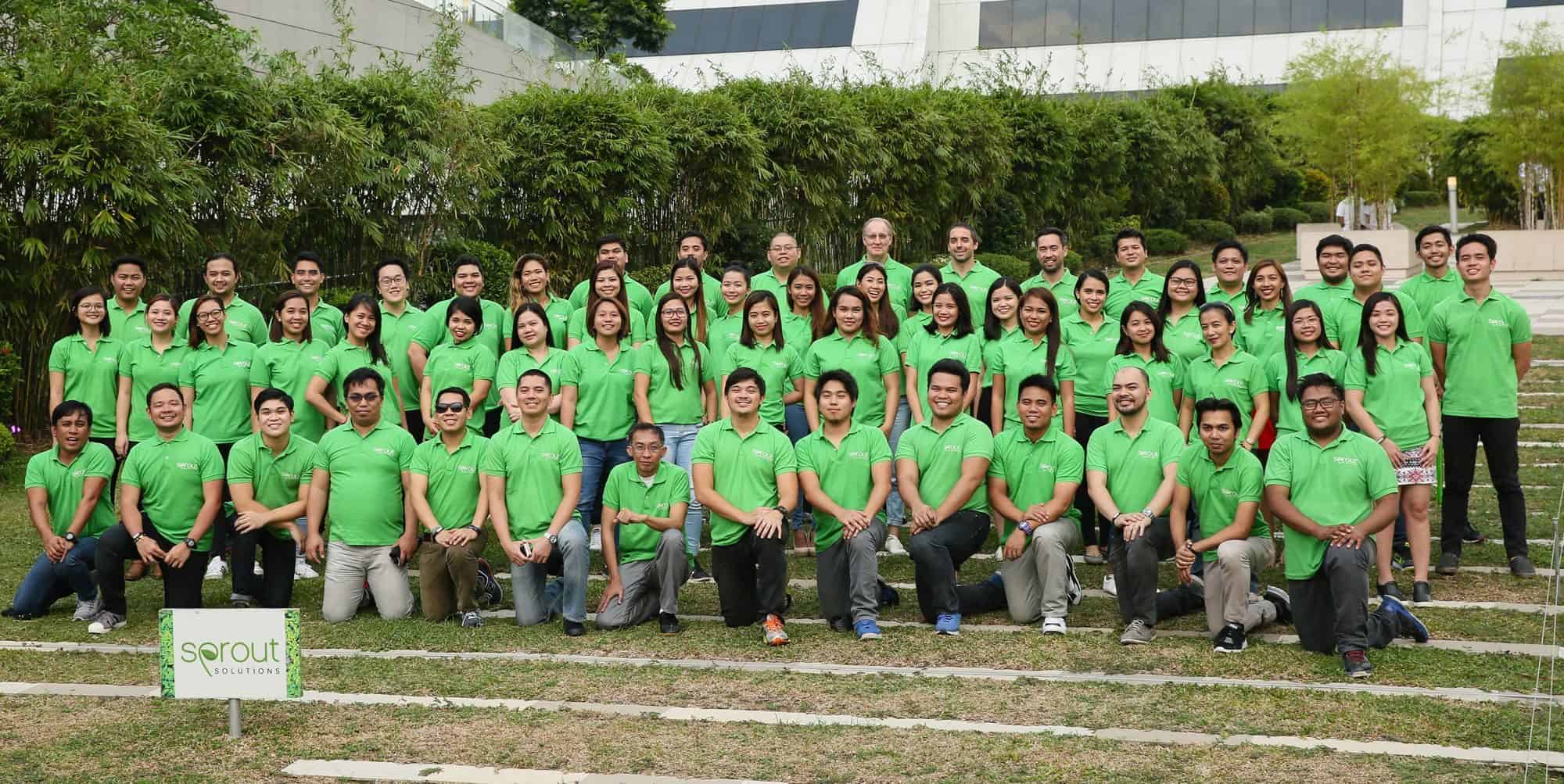
Sprout Solutions is a Philippines based SaaS payroll, HR and recruitment company. Sprout’s products are tailored to meet the requirements of each jurisdiction in which their enterprise clients operate.
We recently spoke to co-founder and CEO Patrick Gentry about working with Kindrik Partners on Sprout’s series seed funding round.
the sprout solutions story
Sprout was founded by the husband and wife team of Patrick and Alexandria Gentry. In 2016 Acceleprise (a US based SaaS accelerator) asked Sprout to be the first Philippines based company to join its program. Patrick says:
We were interviewed by other accelerators, but chose Acceleprise because it specialised in assisting companies that were looking to scale their sales to enterprise customers.
The connections that Patrick and Alexandria made at Acceleprise helped them to raise an angel round from overseas investors. Those funds were used to expand the company’s software engineering and sales teams. The company grew rapidly, and by the middle of 2017 it had over 75 employees and 150 enterprise clients in the Philippines.
After proving the business model locally, the company wanted to expand into other emerging markets in Southeast Asia. Patrick and Alexandria began looking for institutional investors to fund the tailoring of the company’s products for each new market, and to grow the international sales and services teams.
the deal
Patrick was well connected in the startup ecosystem after several years of bootstrapping both Sprout and a previous company. A fellow entrepreneur provided Patrick with a warm introduction to several VCs with a focus on B2B SaaS products. Sprout soon began negotiating a series seed investment round led by VCs Kickstart Ventures (Philippines), Wavemaker Partners (Singapore), and BEENEXT (Singapore).
A condition of the round was that Sprout needed to redomicile in Singapore. This type of restructure (or flip) is quite common, since many Southeast Asia VCs will only invest in a Singapore incorporated entity. There are a number of reasons for this, including taxation, minimal restrictions on foreign ownership, the ability to easily repatriate investment returns from Singapore, and legal certainty (including IP protection).
For Sprout, a new Singapore head company was incorporated and the existing company became a Philippines operating subsidiary. The terms of the restructure were incorporated into the long form investment documents and the flip was completed at the same time as the rest of the investment round. Patrick recalled that:
Some aspects of the restructure were unique. Kindrik Partners were great in this scenario as they did a deep dive to understand the specific requirements and complete the process by working closely with local counsel.
The company closed its US$1.6m series seed round in late 2017. Patrick told us that:
Completing the round was a huge deal. I knew we could accelerate this business with capital, and felt like the timing was perfect. It’s exciting to gain the freedom to stretch a bit and continue our rapid expansion in new areas of the business and market.
working with us
Kickstart recommended Kindrik Partners to Patrick as they had worked with us on the other side of previous deals.
Patrick says:
Kindrik Partners were invaluable in moving the deal forward as efficiently as possible by keeping the negotiations centred on the critical commercial points, and by providing insight as to what was common market practice in these areas. I can’t emphasize enough how important it is to have a strong partner that not only knows the process inside and out, but will also go to war for you and represent you as if they are negotiating for their own company.
Kindrik Partners even assisted with the calculation of the cap table, as the deal involved some bespoke debt conversion calculations relating to a previous round.
As entrepreneurs we pour our heart and soul (and blood and sweat) into our companies, and to have someone fighting for us as if it were their own – that’s just awesome!
Sprout is rapidly becoming a regional SaaS star, and we would like to thank Patrick for taking time out of his frantic schedule to speak with us.
[Note: The firm’s name was changed to Kindrik Partners in July 2020 and references to the firm’s previous name have been updated.]
