free legal resources to grow your tech company
Whether you’re raising your seed round or you’re negotiating your Series A, we’ve got your legal basics covered. Take a look around our guides, document makers, and free legal templates.

get free legal startup templates sent to your inbox
startup-friendly legal templates and guides, every month.
browse by topic
resources to help you tackle what you've got happening in your business.
browse by type
know what you're after? go straight to the type of resource you're after.
get started the right way with our free legal templates for newly formed companies
Want to put vesting agreements in place with your co-founders? Need terms & conditions for your SaaS product? Our startups will help you get the legal basics covered.
Browse our templates:

everything you need to do your next capital raise
We know that raising capital for your technology company is a tough gig. But even once you have investors that you like on the hook, there is still a lot of hard work to come before the money hits your bank account.
Explore our venture capital resources to understand the mechanics of raising a funding round in southeast Asia.


explore our m&a resources for tech companies
Whether you're strategically acquiring targets and technology, or considering selling your company, we've got resources to get you up to speed
read our case studies
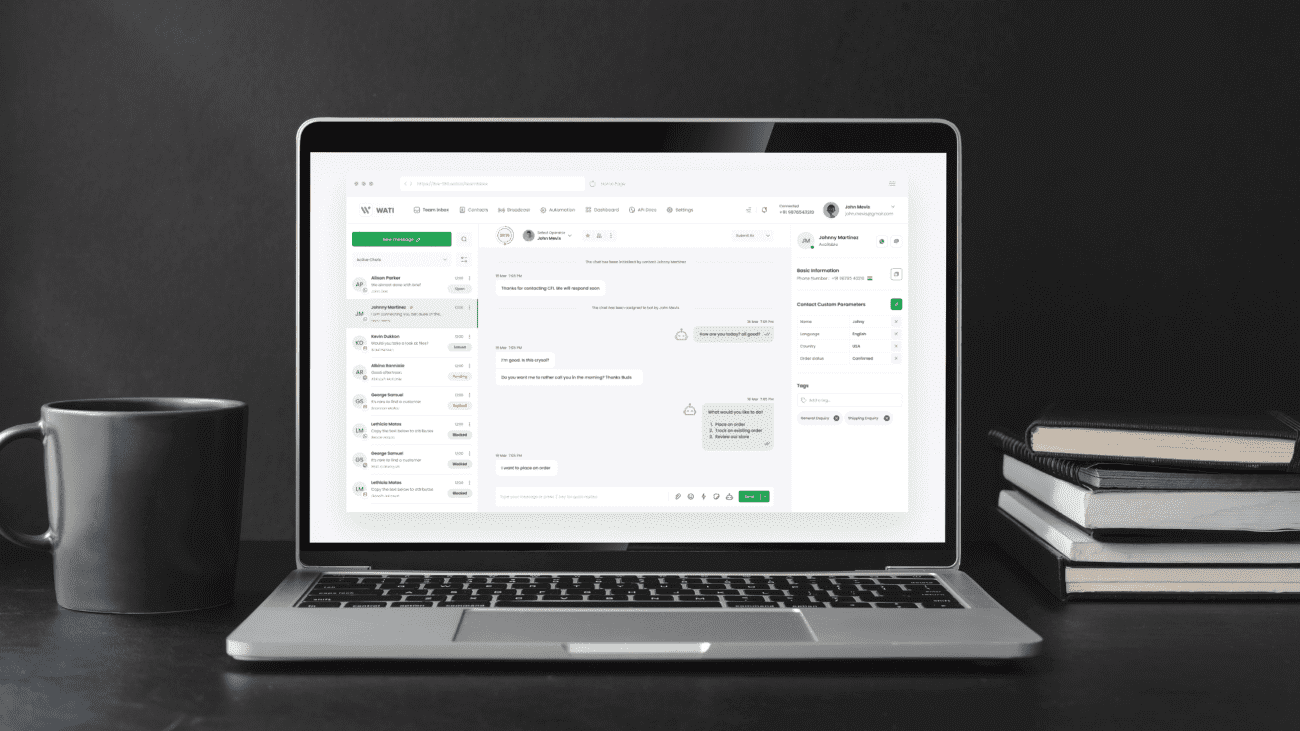
Hong Kong-based WATI.io helps companies have personalized conversations with an easy-to-use customer engagement software tool that’s built on WhatsApp’s API. The startup worked with Kindrik Partners on their recent capital raise. We talked to co-founder and COO Bianca Ho on WATI.io, the capital raising journey, and working with Kindrik Partners.
WATI.io’s story
The company was founded in 2016 by Bianca Ho and Ken Yeung in Hong Kong. Before embarking on entrepreneur journey, Bianca worked in finance before moving to a business development role at a SaaS startup that specialised in customer support. It was there that she saw how artificial intelligence could be leveraged to augment and supercharge existing customer support teams.
“We started with an AI digital assistant for enterprises”, Bianca recalls. “Our digital assistant provided enterprises with a simple solution to chat with their clients at any time in the client’s preferred channels and language.”
From there, the company saw the opportunity of offering a similar solution to SMEs. “We saw lot of small businesses using WhatsApp as a tool to communicate with their customers. We created WATI, a no-code solution for those companies to automate the support that they were offering using WhatsApp’s Business API.”
These days the team has 40 employees across seven locations and is serving over 2,500 businesses in 54 different countries.
working with kindrik partners
Bianca was first introduced to Kindrik Partners through another entrepreneur in Singapore – Ned Philips, cofounder at Bambu. They were looking for legal advice with their pre-series A round.
“We decided to work with Kindrik because the team was really responsive, and the legal fees were affordable.” says Bianca. “They’re easy to work with, and very straightforward and fuss-free.”
on WATI.io’s fundraising journey
“We were a part of the Surge accelerator programme run by Sequoia”, recalls Bianca. “The fundraising process was relatively straightforward, since they have standardised documents that Sequoia gives to all cohort companies.”
Bianca worked with partners Chris Wilson and Lee Bagshaw from the Southeast Asia office in Singapore. “They were very quick to respond to my emails, as well as friendly.” says Bianca.
“They’re also founder-centric, which is something I appreciated. Sequoia is a big name, but Kindrik worked to let us know when things weren’t necessarily market standard in the fundraising documents, and encouraged us to ask questions to understand what we were getting into.”
Kindrik Partners also assisted WATI.io in the preparation of its employee share option scheme (ESOP).
“An ESOP is a complex thing to decide, and not something you can change every day”, Bianca says, “It can be daunting and quite complex, so having a clear explanation of the process and documents was very useful for us.”
tips for founders
When it comes to giving tips to founders, Bianca is clear. “Focus on the business first”, she says. “Understand your customers. If you are a good business with solid fundamentals, it will be easier to get the capital you need.”
what’s to come
WATI.io is continuing to pick up speed, particularly with its new injection of capital. “We are continuing to hire and grow”, says Bianca. “It’s an exciting time for us and we’re excited at what’s to come for the company.”
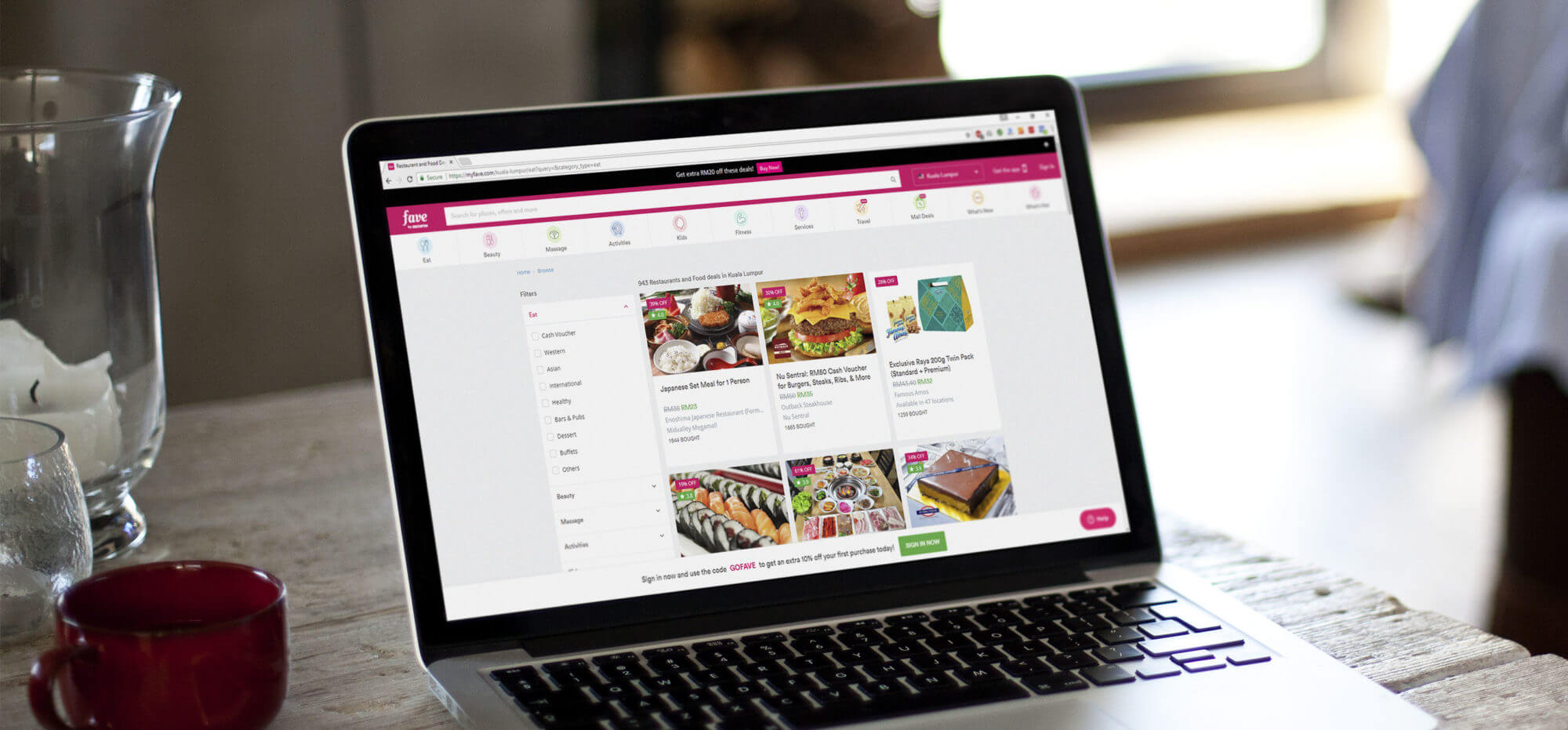
Southeast Asia’s online-to-offline (O2O) space is hot. Platforms linking online customers with offline services are now part and parcel of daily life, from the likes of well-backed Go-Jek and Grab, to Fave – one of the region’s most exciting new O2O companies.
Fave started out in 2015 as a fitness sharing platform called KFit before stepping into multi-category local commerce with the launch of Fave. The company is connecting millions of customers with thousands of local service businesses including restaurants, cafes, salons, spas, hotels, gyms and more.
Founder and CEO, Joel Neoh, talked to us about their journey and how they have found working with Kindrik Partners.
the Fave story
Fave’s founders Joel Neoh and Yeoh Chen Chow are no strangers to O2O local commerce. Joel started Groupsmore, a daily deals site that was acquired by Groupon in 2011. Joel went on to head up Groupon’s business in APAC, alongside Chen Chow, who led Groupon’s regional operations.
Spotting an opportunity to disrupt the fitness business in APAC, Joel left Groupon to start KFit, the region’s first-ever fitness sharing platform, touted as an Uber style platform for gyms and fitness studios.
After a year of tremendous growth and raising a US$12m series A financing, the company set its sights beyond the fitness space and launched its multi-category platform. It went on to acquire Groupon’s businesses in Indonesia, Malaysia and Singapore.
According to Joel, the pivot to a broader O2O platform was a natural progression for the company, as multi-category local commerce presented a much larger business opportunity. Joel observed that apps with high-frequency use cases tend to succeed in a competitive landscape. Fave was launched with a focus on the food and drink category – a major part of life in Southeast Asia.
Whilst deals businesses have been around for a while, Fave is focused on merchant-first innovation via deeper product development and data science. All with a view to enhancing the customer experience with daily deals and rewards. Joel notes that the traditional deals model only brings in new customers to offline businesses and stops there. To truly add value to local businesses, Fave wants to create an ecosystem where businesses can acquire, retain and re-target customers in the online world.
working with kindrik partners
Lee Bagshaw started working with Joel from the set-up of what was the KFit business in 2015. As well as advising Fave on its VC financing rounds, Lee and Chris Wilson have helped Fave on the three M&A deals relating to the acquisitions of Groupon’s Indonesian, Malaysian and Singaporean businesses.
Joel says that Kindrik Partners provided insightful and comprehensive legal advice that played a key role in helping Fave reach some major milestones. He specifically notes Kindrik Partners team’s considerable expertise in VC and tech M&A, which helped the company efficiently navigate the documentation negotiating during its funding rounds and the Groupon transactions.
The future of O2O commerce in Asia looks bright in Southeast Asia as new generation of digitally savvy consumers come online. Kindrik Partners looks forward to helping Fave continue its rapid journey to become a leading O2O player in the region.
Explore Fave.
[Note: The firm’s name was changed to Kindrik Partners in July 2020 and references to the firm’s previous name have been updated.]

Malaysian point of sale (POS) startup StoreHub is on a mission to help businesses execute better, through innovative technology and great design.
Wai Hong Fong, StoreHub CEO and co-founder, recently talked to us about his company and how he has found working with Kindrik Partners on their Series A capital raise.
the storehub story
Wai Hong refers to himself as an accidental entrepreneur. Most of his family are professionals and he says that it was a combination of kind of stumbling into opportunities plus being frustrated with a problem and wanting to solve it, which led him to where he is today.
After completing his BA in arts, media and philosophy at the University of Melbourne, he co-founded and became Managing Director at OZHut a lifestyle online retailer, where he did everything from writing code, web development and design, search engine optimization and even running the packing tables at the warehouse.
After 5 years at OzHut, he moved to China to study Mandarin and met a friend running a small retail store who asked him to look at his POS given Wai Hong’s e-Commerce background. He realised how terrible it was and not only wanted to help his friend fix this but other small to medium businesses that required offline and online sales support.
Wai Hong knew that the iPad POS was taking off in the US but there were no alternatives in Asia. With the belief that it was time for technology to revolutionise the traditional POS industry in Asia, and to help build better businesses, he co-founded StoreHub in 2013, along with current Chief Technology Officer, Congyu Li.
In the first 12 months of development, they bootstrapped the company then received a small investment from an angel investor, as well as a grant from Malaysia’s Cradle Fund. Wai Hong says that this initial funding allowed them to grow their product quickly and we’ve been cashflow positive and profitable since late 2015.
StoreHub is now a cloud-based iPad POS with inventory management, reporting and CRM, accessed via a mobile responsive backend, with over 850 retail stores paying a monthly subscription and customers in Malaysia, Philippines, Thailand and Indonesia.
In addition to the POS product offering, StoreHub supports its product with exceptional customer service based on the business to consumer experience which is not commonly offered by the industry.
In 2016, StoreHub announced a partnership with Malaysia-listed payments giant GHL Systems to deliver a fully integrated mobile point of sale (mPOS) credit card terminal and iPad POS solution. They also secured USD$850k in their Series A capital raising round from 500 Startups, as well as investors in China, Singapore and Malaysia.
Wai Hong says that StoreHub now plans to grow at least another 5 times its current size in the next year, add complementary products to their core offering and also enter new South East Asian markets, such as Thailand and Philippines.
challenges
Wai Hong notes that the biggest challenge for StoreHub is hiring and managing people, especially on a shoestring budget, talent acquisition and management is key.
The POS market is also highly competitive however StoreHub manages to differentiate because of their broad offering and leveraging their customer service focus which is generally seen as an afterthought in the industry. Being product and tech obsessed has also helped them stay ahead of the pack.
working with Kindrik Partners
Wai Hong primarily dealt with lawyers for the angel investment which involved local lawyers but it unfortunately turned out to be a painful and expensive experience.
He was then introduced to Kindrik Partners partner Lee Bagshaw through former Kindrik Partners lawyer, now investment analyst at tech VC Monks Hill, Lucy Luo. Lee supported StoreHub through the Series A capital raising, including drafting all of the documents which is unique for a deal like this, as investors usually provide the first round of documents.
Wai Hong says that it was our first serious cap raise and it was a refreshing experience given the angel investment round, knowing if I had an issue I would be getting sound advice. It made a huge difference that Lee thoroughly understood the South East Asian venture capital landscape, particularly as they had to negotiate with the investors.
Given Lee really understood StoreHub’s business, Wai Hong would work with him again on further corporate governance work like an Employee Share Options Scheme. He has also recommended both Kindrik Partners and Lee to a whole bunch of startups.
He says not only was Lee fast at delivering the work which helped StoreHub maintain their professionalism with investors, but he gets the space, market standards and provides valuable industry insights. Wai Hong thought Lee’s wealth of experience showed specifically when he advised on the all important term sheet, his advice and guidance was spot on.
Wai Hong also thinks that the Kindrik Partners Templates are also pretty cool, providing good information and learning points, and are a good starting point for legal work.
summing up
StoreHub’s growth is a testament to the company’s commitment to building a product and providing outstanding customer service. Kindrik Partners can’t wait to see what Wai Hong and the team have planned for their ambitious next steps.
Explore StoreHub.
[Note: The firm’s name was changed to Kindrik Partners in July 2020 and references to the firm’s previous name have been updated.]
latest from kindrik partners
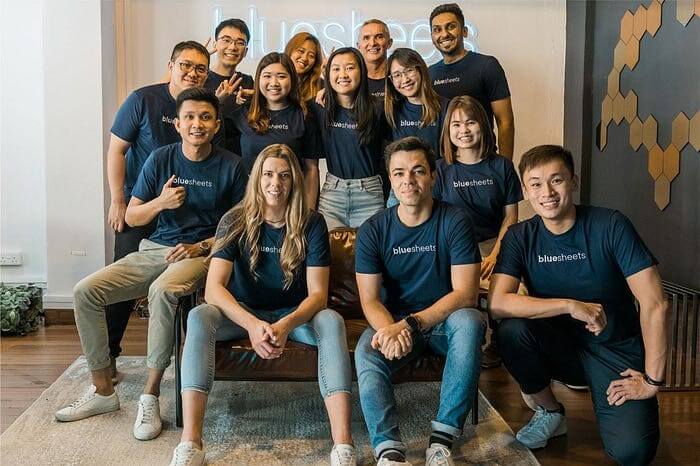
Kindrik Partners advised VC firm Illuminate Financial on its investment in Singapore-based AI-driven data processing and automation company bluesheets. Illuminate led the US$6.5 million series A round. Other returning investors included Insignia Ventures Partners, Antler Elevate, and 1982 Ventures.
Illuminate invests in B2B fintech and enterprise software companies that build solutions for the financial services industry. Backed by global financial institutions such as Citi, JP Morgan, Barclays, Jefferies, Singapore Exchange Group, and BNY Mellon, Illuminate uses its extensive network and industry knowledge to help their portfolio companies achieve their full potential in addition to providing capital.
bluesheets offers AI-driven data processing and workflow automation software that helps businesses digitise and automate their bookkeeping processes. It plans to use the funds to further enhance its AI capabilities and accelerate growth in key APAC markets, including Singapore, Thailand, ANZ, and Hong Kong.
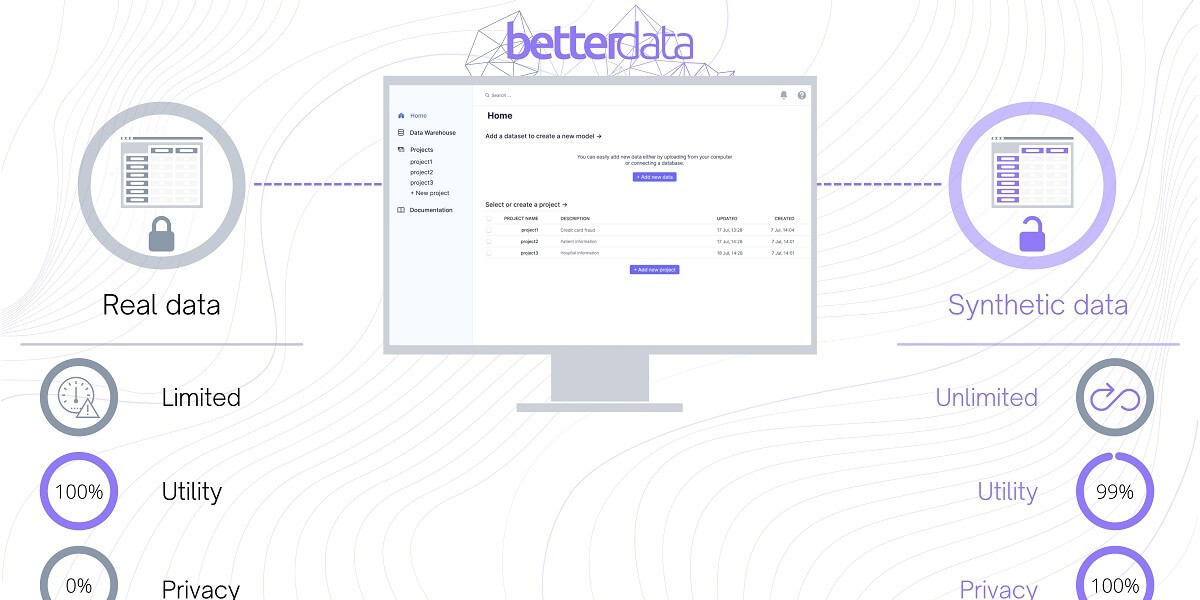
We’re happy to have advised Singapore-based synthetic data company Betterdata on an oversubscribed seed round of $1.65 million, led by Investible.
The company was founded in 2021 by Dr. Uzair Javaid and Kevin Yee and allows clients to share data faster and more securely in compliance with stricter data privacy regulations being introduced around the world. Betterdata uses generative AI to convert real data into synthetic data that looks, feels, and behaves like real datasets. These synthetic datasets retain the structure and correlations of the original data while eliminating the privacy and security concerns that come with holding and sharing sensitive data.
Betterdata plans to use the funding to publicly launch its product, hire more staff as the company scales, and improve its technology stack, with the aim of providing support for single-table, multi-table, and time-series datasets. The company also plans to expand across the Asia-Pacific region over the next two years.

Kindrik Partners advised Singapore-based startup Green Li-ion on its recent USD20.5 million pre-B funding round. The round was led by TRIREC, followed by investors including Banpu NEXT and Equinor Ventures.
Green Li-ion was founded in 2020 by Leon Farrant and Reza Katal to develop technology capable of recycling lithium-ion batteries and is now a leading developer of battery recycling technology. The company has developed modular units capable of recycling spent batteries into cathode material that can be used in the production of new batteries. Each unit is able to process 4-6 metric tons of spent batteries per day, the equivalent of 20 EV batteries or 70,000 iPhones.
The funding will help the company scale its manufacturing capacity in order to deliver 50 modular units per year. The first commercial operation is slated to start production in the first half of 2023 in Oklahoma, USA.
