BLOG
when it comes to vcs and deep tech

share:
We attended Innovfest Unbound last week at Marina Bay Sands, which bought together more than 15,000 attendees across the tech sector. One of the areas of focus was on deep tech – startups based on substantial scientific or engineering breakthroughs – which is a sentiment we’ve seen reflected in the increased levels of financing in this space (see our blog on other investment trends we’ve seen in 2019). We dropped by ‘The Investor Advantage’, a panel session populated with several regional VCs as well as government-funded firm SGInnovate. Here are their takeaways on the deep tech ecosystem in Singapore:
- Singapore has great potential to be a global leader in this space: Although Israel gets a lot of limelight as a hub for deep tech because of their military and engineering background, Singapore has to potential to also be at the forefront. Singapore has the ability to harness both human and capital resources like few other countries, and with the efforts of government-owned SGInnovate and other government efforts, is likely to push the country forward in this space.
- Startups need a go-to-market strategy before you approach VCs: Across the board the VCs looked to see a game plan for commercialisation before they invest. If a company is pre-revenue and pre-commercialisation, SGInnovate is a better organisation to turn to for support, as its focus is on the technical innovation itself, developing cutting and bleeding edge technology.
- You can’t just stay a technical founder: Domain experience is a given where many scientists are launching their solution after or in conjunction with their post-graduate studies. Commercial nous is very useful in a sea of technical founders with no commercial experience. Even technical founders need to build storytelling capability.
- You need to know the market: Founders can often have tunnel vision about their solution, with insufficient knowledge about their direct competitors, substitutes, and alternatives. They need to understand the market risk – that is, understand why the market will choose their solution over its alternatives.
All in all, it was an excellent session moderated by Ka Kay Lum of Deal Street Asia, with some great insights from the panel:
- Sae Min Ahn, Managing Partner – Rakuten Ventures,
- Ro Charlz, Vice President – Vickers Venture Partners,
- Sui Ling Cheah, Operating Partner – Wavemaker Partners,
- Hsien-Hui Tong, Head, Venture Investing – SGInnovate.
Having been involved with many of the deep tech investments made by these venture capital firms, we’re excited as they are about the developments in this industry. We’ll continue to watch this space with great interest.
explore our other blog posts
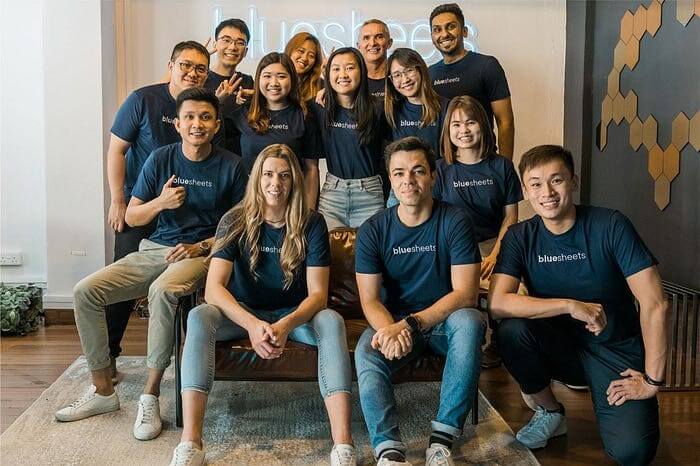
Kindrik Partners advised VC firm Illuminate Financial on its investment in Singapore-based AI-driven data processing and automation company bluesheets. Illuminate led the US$6.5 million series A round. Other returning investors included Insignia Ventures Partners, Antler Elevate, and 1982 Ventures.
Illuminate invests in B2B fintech and enterprise software companies that build solutions for the financial services industry. Backed by global financial institutions such as Citi, JP Morgan, Barclays, Jefferies, Singapore Exchange Group, and BNY Mellon, Illuminate uses its extensive network and industry knowledge to help their portfolio companies achieve their full potential in addition to providing capital.
bluesheets offers AI-driven data processing and workflow automation software that helps businesses digitise and automate their bookkeeping processes. It plans to use the funds to further enhance its AI capabilities and accelerate growth in key APAC markets, including Singapore, Thailand, ANZ, and Hong Kong.
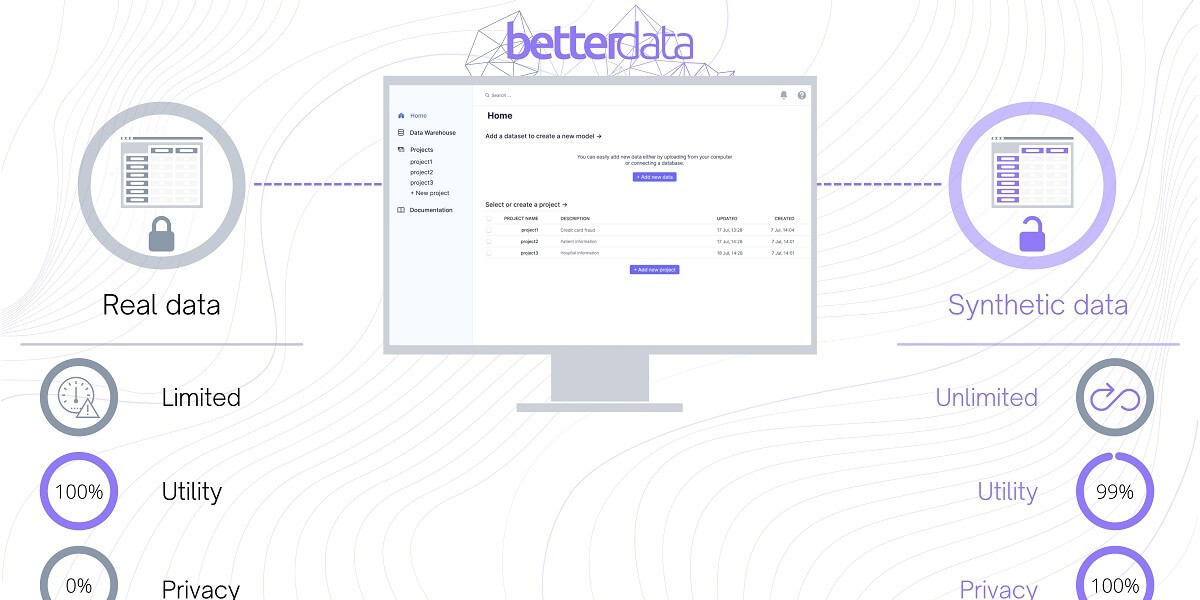
We’re happy to have advised Singapore-based synthetic data company Betterdata on an oversubscribed seed round of $1.65 million, led by Investible.
The company was founded in 2021 by Dr. Uzair Javaid and Kevin Yee and allows clients to share data faster and more securely in compliance with stricter data privacy regulations being introduced around the world. Betterdata uses generative AI to convert real data into synthetic data that looks, feels, and behaves like real datasets. These synthetic datasets retain the structure and correlations of the original data while eliminating the privacy and security concerns that come with holding and sharing sensitive data.
Betterdata plans to use the funding to publicly launch its product, hire more staff as the company scales, and improve its technology stack, with the aim of providing support for single-table, multi-table, and time-series datasets. The company also plans to expand across the Asia-Pacific region over the next two years.
