free legal resources to grow your tech company
Whether you’re raising your seed round or you’re negotiating your Series A, we’ve got your legal basics covered. Take a look around our guides, document makers, and free legal templates.

get free legal startup templates sent to your inbox
startup-friendly legal templates and guides, every month.
browse by topic
resources to help you tackle what you've got happening in your business.
browse by type
know what you're after? go straight to the type of resource you're after.
get started the right way with our free legal templates for newly formed companies
Want to put vesting agreements in place with your co-founders? Need terms & conditions for your SaaS product? Our startups will help you get the legal basics covered.
Browse our templates:

everything you need to do your next capital raise
We know that raising capital for your technology company is a tough gig. But even once you have investors that you like on the hook, there is still a lot of hard work to come before the money hits your bank account.
Explore our venture capital resources to understand the mechanics of raising a funding round in southeast Asia.


explore our m&a resources for tech companies
Whether you're strategically acquiring targets and technology, or considering selling your company, we've got resources to get you up to speed
read our case studies

Southeast Asia’s online-to-offline (O2O) space is hot. Platforms linking online customers with offline services are now part and parcel of daily life, from the likes of well-backed Go-Jek and Grab, to Fave – one of the region’s most exciting new O2O companies.
Fave started out in 2015 as a fitness sharing platform called KFit before stepping into multi-category local commerce with the launch of Fave. The company is connecting millions of customers with thousands of local service businesses including restaurants, cafes, salons, spas, hotels, gyms and more.
Founder and CEO, Joel Neoh, talked to us about their journey and how they have found working with Kindrik Partners.
the Fave story
Fave’s founders Joel Neoh and Yeoh Chen Chow are no strangers to O2O local commerce. Joel started Groupsmore, a daily deals site that was acquired by Groupon in 2011. Joel went on to head up Groupon’s business in APAC, alongside Chen Chow, who led Groupon’s regional operations.
Spotting an opportunity to disrupt the fitness business in APAC, Joel left Groupon to start KFit, the region’s first-ever fitness sharing platform, touted as an Uber style platform for gyms and fitness studios.
After a year of tremendous growth and raising a US$12m series A financing, the company set its sights beyond the fitness space and launched its multi-category platform. It went on to acquire Groupon’s businesses in Indonesia, Malaysia and Singapore.
According to Joel, the pivot to a broader O2O platform was a natural progression for the company, as multi-category local commerce presented a much larger business opportunity. Joel observed that apps with high-frequency use cases tend to succeed in a competitive landscape. Fave was launched with a focus on the food and drink category – a major part of life in Southeast Asia.
Whilst deals businesses have been around for a while, Fave is focused on merchant-first innovation via deeper product development and data science. All with a view to enhancing the customer experience with daily deals and rewards. Joel notes that the traditional deals model only brings in new customers to offline businesses and stops there. To truly add value to local businesses, Fave wants to create an ecosystem where businesses can acquire, retain and re-target customers in the online world.
working with kindrik partners
Lee Bagshaw started working with Joel from the set-up of what was the KFit business in 2015. As well as advising Fave on its VC financing rounds, Lee and Chris Wilson have helped Fave on the three M&A deals relating to the acquisitions of Groupon’s Indonesian, Malaysian and Singaporean businesses.
Joel says that Kindrik Partners provided insightful and comprehensive legal advice that played a key role in helping Fave reach some major milestones. He specifically notes Kindrik Partners team’s considerable expertise in VC and tech M&A, which helped the company efficiently navigate the documentation negotiating during its funding rounds and the Groupon transactions.
The future of O2O commerce in Asia looks bright in Southeast Asia as new generation of digitally savvy consumers come online. Kindrik Partners looks forward to helping Fave continue its rapid journey to become a leading O2O player in the region.
Explore Fave.
[Note: The firm’s name was changed to Kindrik Partners in July 2020 and references to the firm’s previous name have been updated.]
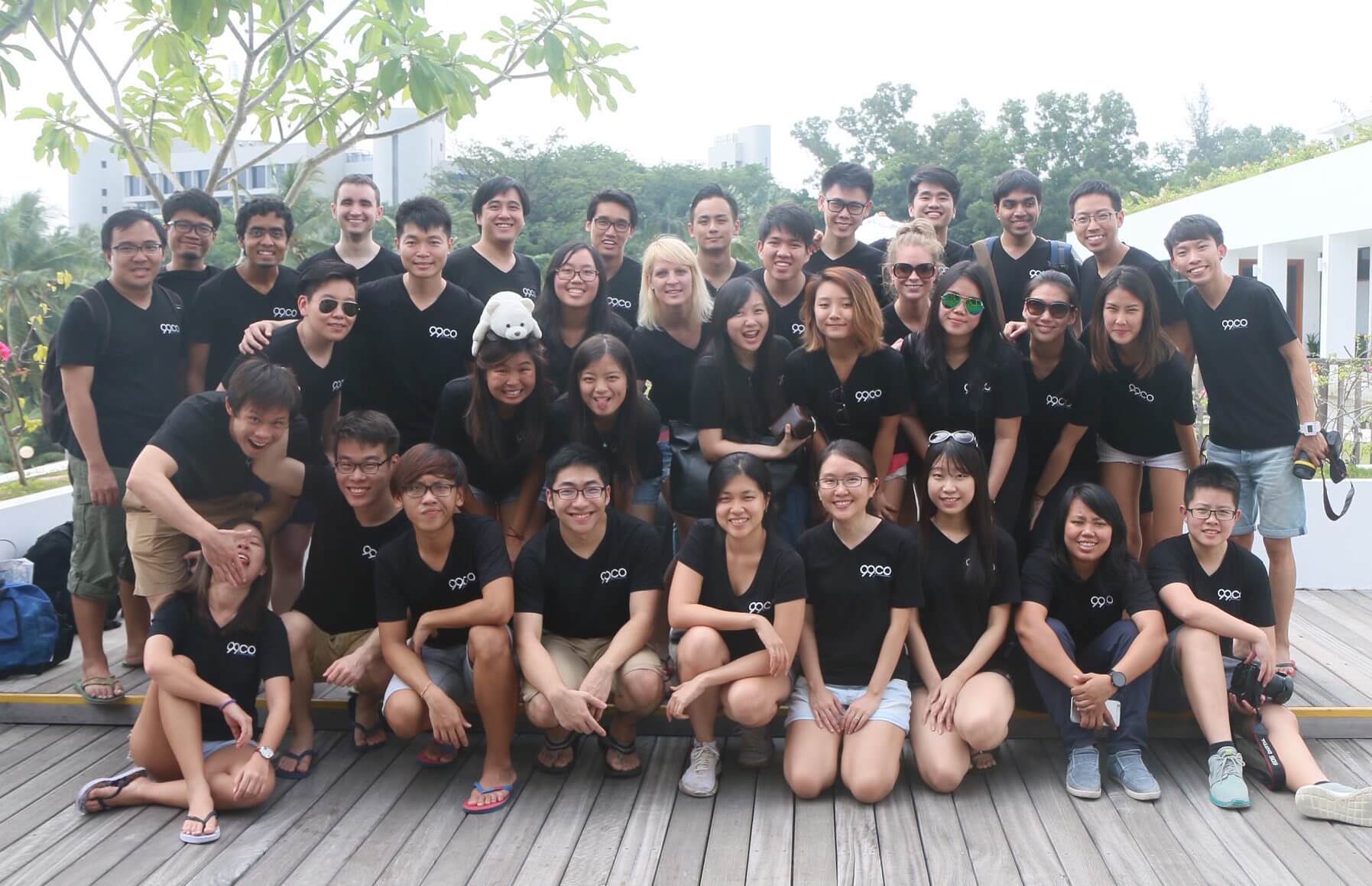
Singapore based property startup 99.co likes a challenge. Dominated by well funded regional players, there would be easier sectors to disrupt than online property. However 99.co is fighting hard with a unique proposition. The company has raised two rounds of funding since incorporation and is backed by high-profile investors including Sequoia Capital and Facebook co-founder, Eduardo Saverin.
Founder and CEO, Darius Cheung, talked to us about the company’s progress, its most recent capital raising transaction in 2015, and how they have found working with Kindrik Partners.
the 99.co story
Darius is one of Singapore’s celebrated young tech entrepreneurs having sold mobile security startup tenCube to McAfee in 2010. This was a decent sized exit for a Singapore tech startup at the time. With the current hot funding environment and massive interest in mobile disruptive technologies in Southeast Asia, Darius is now looking to build a company for an even larger exit.
Not surprisingly, given the city state’s rapid growth, Singaporeans have always had a real interest in property. So 99.co is playing in a compelling space. Singapore has over 30,000 property agents many of which use online real estate platforms such as 99.co. The company recently set up an Indonesian website and plan to get going in Malaysia and Thailand further down the line.
99.co differentiates itself from larger competitors by promising a more intuitive search experience, where the rankings for listings are influenced by the quality of the published content. The site, for example, could favour listings with more photos or with value add information such as commute times or local amenities. This contrasts with the traditional model where the level of fees paid typically pushes classifieds higher. Darius believes that users will increasingly seek this kind of consumer friendly experience.
99.co charges agents a basic subscription fee to list their properties. The company has, however, recently launched a new product called 99PRO – a subscription model where agents can unlock additional features like interactive map searches and new data.
challenges
Darius agrees that the competition is tough to crack in Singapore and the region, given the dominant players. Content is king – the number of listings is fundamental to the success of the business. Bridging the gap, and chasing the platforms that have the majority market share, requires innovative offerings. Plus it’s a crowded market. Aside from other startups trying to challenge those established players, print media still retains a surprisingly sizeable chunk of the market.
The nature of 99.co’s subscription model means the company will need to add alternative revenue streams over time.
Finally, talent acquisition in Singapore and building the 99.co team has been difficult given the number of other startups also hiring sought-after developers.
working with kindrik partners
Lee Bagshaw was introduced to Darius by one of 99.co’s investors. Lee has helped the company through each of its financing transactions. Most recently in 2015, Lee, supported by Chris Wilson, advised on the company’s series B transaction led by Sequoia and Saverin.
Darius’ previous view on lawyers had been that they were expensive and it was not always easy to see their value. He describes working with Lee as a breath of fresh air. Whether by email, on the phone, by WhatsApp or even in the passenger seat of Darius’ car, Lee’s advice was always simple to understand, but with real value add.
Darius was impressed with Kindrik Partners’s knowledge of VC financing deals in Southeast Asia. He says Lee and the team were also very fast, generally turning documents around in under 24 hours. Darius believes that, by working for a tech focussed firm, the Kindrik Partners lawyers have a greater connection with startup founders, combined with unique experience. Throughout the negotiations, Darius found that even if the company could not secure the best outcome on all points, Lee and Chris ensured that he understood clearly the implications, so he could quickly move on.
summing up
99.co are operating in an exciting space in Southeast Asia. Real estate tech companies globally have grown rapidly, achieving some astonishing valuations.
Sequoia’s and Saverin’s backing shows that notable investors are looking carefully at this space in Southeast Asia, particularly for platforms that are distinguishable from the others.
Kindrik Partners will be closely watching 99.co continue its growth to become a significant online property player in Southeast Asia.
Explore 99.co.
[Note: The firm’s name was changed to Kindrik Partners in July 2020 and references to the firm’s previous name have been updated.]

about X0PA.AI
Singapore-based X0PA.AI is a SaaS talent hiring and recruitment platform that uses AI and data science to match applicants to roles, as well as predict issues such as attrition, loyalty and performance.
CEO Nina Suri has scaled the team over three years to twenty-five employees, located across Singapore, India, and the UK, with plans to start in the UAE.
X0PA recently implemented an employee share option plan (ESOP) and Nina shared her experience.
why implement an ESOP
“Having had over twenty years of entrepreneurship, I knew I wanted to build a culture of ownership and inclusivity, and ensure that our team felt involved and satisfied”, says Nina.
“An ESOP is one way that our employees can feel like they’re a part of growing something – that our success is their success”, says Nina.
putting the ESOP in place
The company originally drafted some ESOP paperwork when they first incorporated, but as they grew, X0PA’s company secretary recommended that it be replaced with something more robust and market standard.
“We learned that the ESOP needed major amendments in order to be more in line with what is typically seen in the market in Singapore, and reflect what investors are likely to expect”, said Nina.
Nina reached out Kindrik Partners after the firm was recommended to them by their company secretary. XOPA worked with Sarah Yen in Kindrik Partners’s Singapore office, who was able to create the right framework for the startup.
“We were looking for a firm who advised a lot of startups in Southeast Asia. Sarah took the time to explain and really make sure that we understood the mechanics of how the ESOP operated. This made it easier for us to communicate that to our employees.”
“It’s important when putting together an ESOP to consider several different factors”, says Sarah. “What works for the company, what is standard in the market to attract quality talent, and what your investors and most importantly a future potential buyer might expect to see.”
about the ESOP
A X0PA employee is invited to participate in the ESOP once they have been with the team for twelve months, and if they’re considered a ‘high performer’.
“At the moment we have a rockstar team, and 100% of the people who we have hired have been invited to join”, says Nina.
“In my previous venture I also felt strongly about letting my employees be directly involved – but I gave them straight equity. It was a more traditional business with a partnership model.”
“This time, an ESOP seemed more appropriate – it was a more scalable model and more appropriate for the type of company we wanted to build.”
X0PA’s management team put aside 10% of the company’s equity towards the ESOP, with the expectation that this allocation would last at least five years. They set the exercise price by the valuation of the company at the time of allocation.
Allocations were not standardised per employee but were allocated according to the contribution and importance’ of the employee’s role in the organisation, according to Nina.
The X0PA team also included an acceleration clause in the ESOP – if the company exits before the vesting period, their employee’s options fully vest.
advice for other founders
“We weren’t familiar with the nitty gritty of putting in place an ESOP – it was a new experience for us”, says Nina.
“My advice would be to go with a lawyer who is experienced with startups and ESOPs, so you don’t have to go through the complications that we went through as we started to scale”, she says.
Nina also stressed that it was important to familiarise yourself with the mechanics of your startup’s ESOP so that management could communicate with staff effectively about how it worked.
Nina also had some tips about how to communicate with a team when implementing an ESOP.
“We kept it very simple for our staff. We broke down into the main points – what is the ESOP, what does it mean for them, what do they get, how much do they get. We didn’t want to get them worked up about the legal language.”
Nina also made sure that she sent each team member an individual email after the scheme was introduced to the company, confirming what the ESOP meant, how that individual’s options vested, and what would happen to their options in different scenarios.
“You need to make sure your team understands what the ESOP is. If you’re giving them something, and they don’t appreciate it, and then what’s the point? It’s best to spell it out and make sure that everyone understands – then you’re all working towards a common purpose.”
what’s next for X0PA?
“We’re starting to move from startup to scale up now. We’re experiencing massive acceleration and growth, with several Government departments, enterprises, polytechnics and universities as clients”, says Nina.
“Our product is ready, and strong, and we’re ready to grow and help our clients with their digital transformation. We are focused on growth both from increasing market share in the markets we operate in as well as market expansion point of view.”
[Note: The firm’s name was changed to Kindrik Partners in July 2020 and references to the firm’s previous name have been updated.]
Explore our other case studies here, or access our full library of ESOP guides and templates via our resources section.
latest from kindrik partners
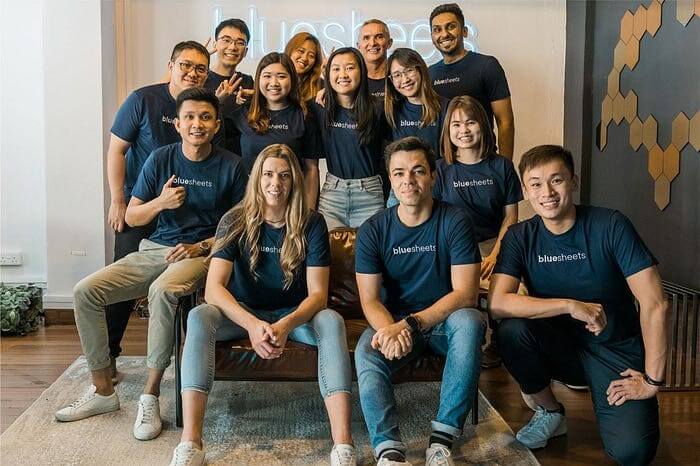
Kindrik Partners advised VC firm Illuminate Financial on its investment in Singapore-based AI-driven data processing and automation company bluesheets. Illuminate led the US$6.5 million series A round. Other returning investors included Insignia Ventures Partners, Antler Elevate, and 1982 Ventures.
Illuminate invests in B2B fintech and enterprise software companies that build solutions for the financial services industry. Backed by global financial institutions such as Citi, JP Morgan, Barclays, Jefferies, Singapore Exchange Group, and BNY Mellon, Illuminate uses its extensive network and industry knowledge to help their portfolio companies achieve their full potential in addition to providing capital.
bluesheets offers AI-driven data processing and workflow automation software that helps businesses digitise and automate their bookkeeping processes. It plans to use the funds to further enhance its AI capabilities and accelerate growth in key APAC markets, including Singapore, Thailand, ANZ, and Hong Kong.
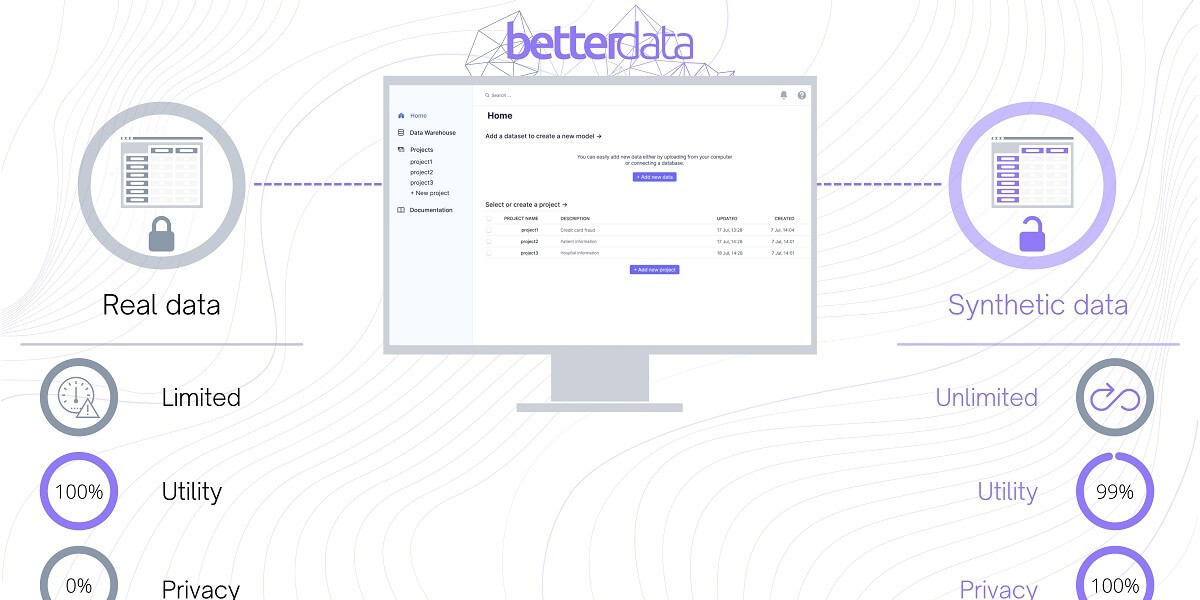
We’re happy to have advised Singapore-based synthetic data company Betterdata on an oversubscribed seed round of $1.65 million, led by Investible.
The company was founded in 2021 by Dr. Uzair Javaid and Kevin Yee and allows clients to share data faster and more securely in compliance with stricter data privacy regulations being introduced around the world. Betterdata uses generative AI to convert real data into synthetic data that looks, feels, and behaves like real datasets. These synthetic datasets retain the structure and correlations of the original data while eliminating the privacy and security concerns that come with holding and sharing sensitive data.
Betterdata plans to use the funding to publicly launch its product, hire more staff as the company scales, and improve its technology stack, with the aim of providing support for single-table, multi-table, and time-series datasets. The company also plans to expand across the Asia-Pacific region over the next two years.

Kindrik Partners advised Singapore-based startup Green Li-ion on its recent USD20.5 million pre-B funding round. The round was led by TRIREC, followed by investors including Banpu NEXT and Equinor Ventures.
Green Li-ion was founded in 2020 by Leon Farrant and Reza Katal to develop technology capable of recycling lithium-ion batteries and is now a leading developer of battery recycling technology. The company has developed modular units capable of recycling spent batteries into cathode material that can be used in the production of new batteries. Each unit is able to process 4-6 metric tons of spent batteries per day, the equivalent of 20 EV batteries or 70,000 iPhones.
The funding will help the company scale its manufacturing capacity in order to deliver 50 modular units per year. The first commercial operation is slated to start production in the first half of 2023 in Oklahoma, USA.
