tech contract
lawyers
tech contract lawyers
We help tech companies sort out their basic contracts, including website T&C’s, SaaS terms of use, software licence agreements, contractor agreements and services agreements.
Because we produce these types of agreements for scores of companies, and we have great open source templates to draw upon, we can do this work very cost effectively.
We also support tech companies negotiating customer agreements and channel partner agreements (distribution agreements and reseller agreements) worldwide. We provide no-nonsense advice on contract terms, helping our clients to achieve great commercial outcomes rather than sweating the small stuff.
“Kindrik Partners are tech focused experts, who drive hard for a positive outcome and make sure the outcome is the right one for the business.”
matthew gibson, cfo, invenco
contracts resources

Before you start a new business relationship, it’s often sensible to sign a non-disclosure or confidentiality agreement (NDA) so that you can explore the proposed relationship freely – in the comfort that your commercially sensitive information is protected.
NDAs are usually fairly standard, but there’s a handful of points that it’s a good idea to double check before you sign on the dotted line.
who are you contracting with?
A NDA may be a simple document, but its terms cover your most valuable information. So it should state the other party’s full legal name as a contracting party, or you may have problems enforcing the NDA.
what information is covered?
Make sure the description of confidential information covers all of the types of information that you will be sharing, e.g. the NDA should cover oral information as well as written information, so that things discussed at meetings are protected. It’s also a good idea to cover any information shared before the date of the NDA (in case you’ve given the other side an early taster of what you want to discuss).
what can your information be used for?
The NDA should include a clear purpose for which the information may be solely used, based on why you are sharing the information, e.g. for the parties to discuss a possible joint venture related to [X]. By limiting use of information to a purpose, it means the recipient can’t use your information for another reason.
It also pays to check to whom the recipient can disclose your information – usually this is limited to named classes of persons (e.g. professional advisors and employees) but make sure you’re happy for each class of person to receive the information. Of course, the more your information is passed on, the less control you have. Given this, it’s a good idea to:
- limit disclosure to a need to know basis for the purpose
- require these additional persons to be subject to similar confidentiality obligations too.
NDAs usually have stated exceptions to the restriction on disclosure. Keep these as narrow as possible, e.g. limited to where the recipient is compelled to disclose the information by law, a stock exchange that governs the recipient, or court order.
when should confidentiality end?
Often confidentiality obligations continue indefinitely, regardless of whether the NDA or purpose has ended, i.e. if the other party still has your information, it should still keep it confidential. Increasingly though, NDAs limit confidentiality obligations for a set period only (e.g. 3 years), meaning once that time period expires, the other party can use your information for any purpose. A time limit may not be an issue depending on what type of information you are sharing, e.g. financial information usually has a short shelf-life but IP (and technical descriptions of IP) may need longer protection. So, before agreeing to limited duration confidentiality, make sure you’re OK with unrestricted use of your information after that time or you place a positive obligation on the recipient to return or destroy your information before the end of the period. Another way to address this risk is to restrict access to the information that you are concerned about (e.g. read-only access onsite at your premises).
liability and remedies
Liability under a NDA is normally unlimited – reflecting the significant loss that the discloser could suffer if their information was misused. If there is a cap, make sure it’s meaningful (i.e. large) and takes account of the damage your business could suffer if your confidentiality was breached.
The NDA should also allow you to obtain court orders to protect your confidentiality (e.g. an order requiring the other party to specifically perform the NDA) because, if you have to sue for damages, the horse has bolted and your information is in the hands of someone who shouldn’t have it. A court order can be obtained quickly to prevent a current disclosure or breach. However, this remedy needs to be expressly stated because a court will be reluctant to grant an order of this type if it thinks damages provide you an adequate remedy.
use our free template
If you would like a standard NDA to use or to act as a comparison if the other side supplies their NDA, check out our free template NDA.

This is a simple document to outline the main in principle terms of a proposed commercial relationship. The document is not legally binding (other than the confidentiality, termination, and governing law provisions in part D).
Other than the statement that the document is not intended to be binding and part D, there is no suggested content included – the document is simply a framework for the parties to record the in principle commercial terms that have been agreed, prior to preparing a formal agreement.
Although the letter of intent is non-binding, it can create moral or ethical obligations that are difficult to back away from. It is therefore important not to over-promise, and to set out relevant assumptions.
This document does not include an exclusivity provision – either party is free to enter into negotiations, or contract, with third parties for a similar or competing relationship.
using our templates
Use of a template by business users is free of charge and is subject to you agreeing to our template terms of use.
This is a simple company friendly consultancy agreement for engaging independent contractors or consultants (e.g. individuals or sole operator companies) to work within a business.
This template includes a restraint on the independent contractor to ensure that the independent contractor does not jeopardise the company’s business (by competing or similar) during the term and for a set period after. To be enforceable, a restraint must be reasonable. This, in turn, will depend on the facts relating to the agreement. However, the longer the restraint and the broader the restrained area, the more likely that arguments could be raised about the enforceability of the restraint.
using our templates
Use of a template by business users is free of charge and is subject to you agreeing to our template terms of use.
This document is intended for use by the founders of a startup company to formally transfer intellectual property relevant to the business, products or services of the company, to that company.
Before completing this deed, we suggest that companies and their founders first work to identify and record the intellectual property that the company intends to use (or is already using) in its business, including details of who:
- created the intellectual property, and on what basis (e.g. as a founder, employee or external consultant of the company)
- owns that intellectual property and on what basis (i.e. if the company owns intellectual property because it was created by its employees in the course of their employment, this should be recorded)
This will help:
- to identify intellectual property that needs to be transferred by a founder or consultant, etc. to the company (and to properly describe that intellectual property in a deed of assignment)
- to prove ownership of the company’s intellectual property in the future, e.g. in a capital raising or M&A transaction.
using our templates
Use of a template by business users is free of charge and is subject to you agreeing to our template terms of use.
This is a simple mutual (or two way) confidentiality agreement setting out the terms on which each party will keep confidential the other party’s information.
It has been drafted to be fair to both parties and to enable easy signing (without the need for lengthy negotiation). If the purpose for which the information is being exchanged is highly sensitive or has unique aspects, consider whether a more belts and braces agreement may be required.
using our templates
Use of a template by business users is free of charge and is subject to you agreeing to our template terms of use.
subscribe to our newsletter and get the latest templates and tips for fast-growing startups in Southeast Asia
latest news from kindrik partners
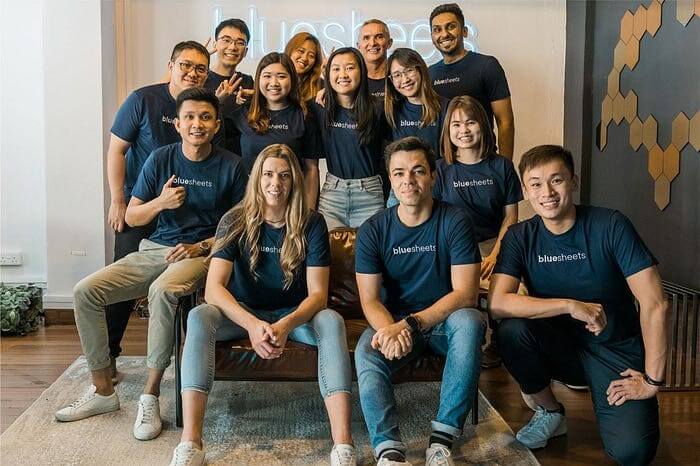
Kindrik Partners advised VC firm Illuminate Financial on its investment in Singapore-based AI-driven data processing and automation company bluesheets. Illuminate led the US$6.5 million series A round. Other returning investors included Insignia Ventures Partners, Antler Elevate, and 1982 Ventures.
Illuminate invests in B2B fintech and enterprise software companies that build solutions for the financial services industry. Backed by global financial institutions such as Citi, JP Morgan, Barclays, Jefferies, Singapore Exchange Group, and BNY Mellon, Illuminate uses its extensive network and industry knowledge to help their portfolio companies achieve their full potential in addition to providing capital.
bluesheets offers AI-driven data processing and workflow automation software that helps businesses digitise and automate their bookkeeping processes. It plans to use the funds to further enhance its AI capabilities and accelerate growth in key APAC markets, including Singapore, Thailand, ANZ, and Hong Kong.
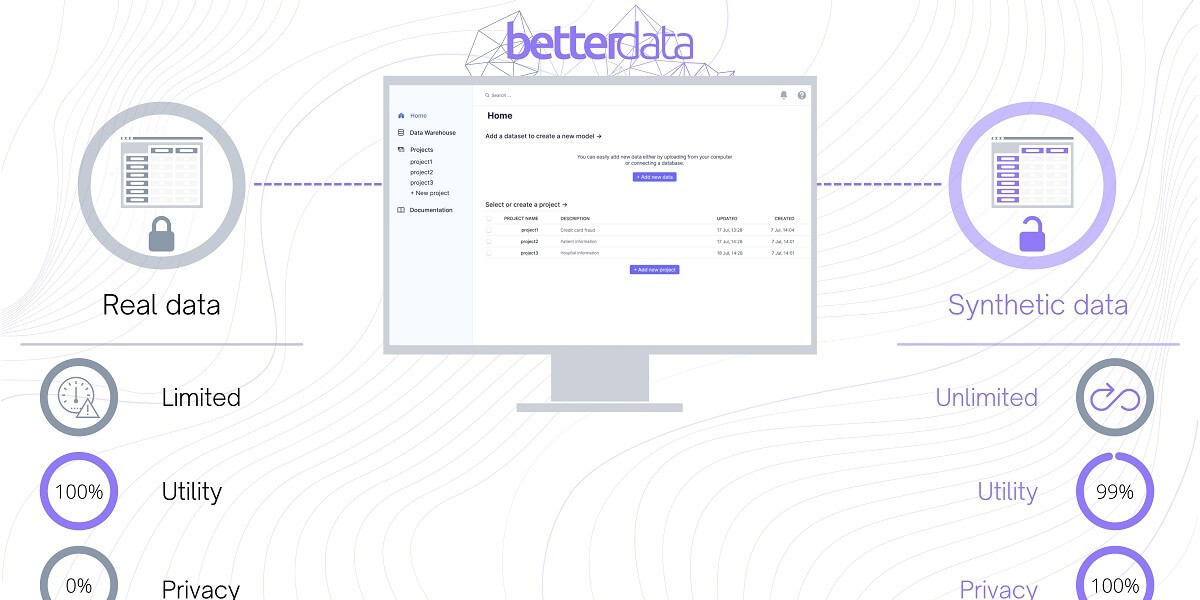
We’re happy to have advised Singapore-based synthetic data company Betterdata on an oversubscribed seed round of $1.65 million, led by Investible.
The company was founded in 2021 by Dr. Uzair Javaid and Kevin Yee and allows clients to share data faster and more securely in compliance with stricter data privacy regulations being introduced around the world. Betterdata uses generative AI to convert real data into synthetic data that looks, feels, and behaves like real datasets. These synthetic datasets retain the structure and correlations of the original data while eliminating the privacy and security concerns that come with holding and sharing sensitive data.
Betterdata plans to use the funding to publicly launch its product, hire more staff as the company scales, and improve its technology stack, with the aim of providing support for single-table, multi-table, and time-series datasets. The company also plans to expand across the Asia-Pacific region over the next two years.
