free venture capital resources
Information and resources to help you navigate the capital raising process in Southeast Asia.


map of the funding terms
Got a term sheet? Compare it with typical investment terms for deals in Southeast Asia. Our map covers seed-stage, Series A, Series B and Series C+ rounds.


raising your seed round
Building a high-growth business often means bringing in seed capital to help bring your vision to life. Browse our guides to understand how to raise seed funding - from getting investor ready to understanding the terms in your term sheet.
Browse our seed funding templates:
part one: getting investor ready
> founder arrangements
> group restructuring
part two: how to structure your seed round
> what is a KISS
> what is a SAFE
> seed equity financing
> key terms and documentation
> how to find investors
need to brush up on your SAFEs and your KISSes?
see our startup glossary

raising your series a round
Ready to raise a series A round? If your business is scaling and you're starting to gain momentum with users, your startup might be ready for its next round of capital raising.
Browse our series A templates:
part one: key terms
> key economic rights: liquidation preferences, anti-dilution, share vesting
> key control rights: board composition, veto rights
part two: closing the deal
> employee share incentives (ESOPs)
> follow-on rounds
> venture debt

vc term sheet deep dive
Know what to focus on in negotiations with potential investors with our new video series on term sheets.
Join partner Lee Bagshaw as he walks you through a typical term sheet and explains common issues that arise.
We give you a copy of the term sheet marked up from a startup founders’ perspective, so that you can watch the video and follow along with the mark-up in front of you.

venture capital case studies
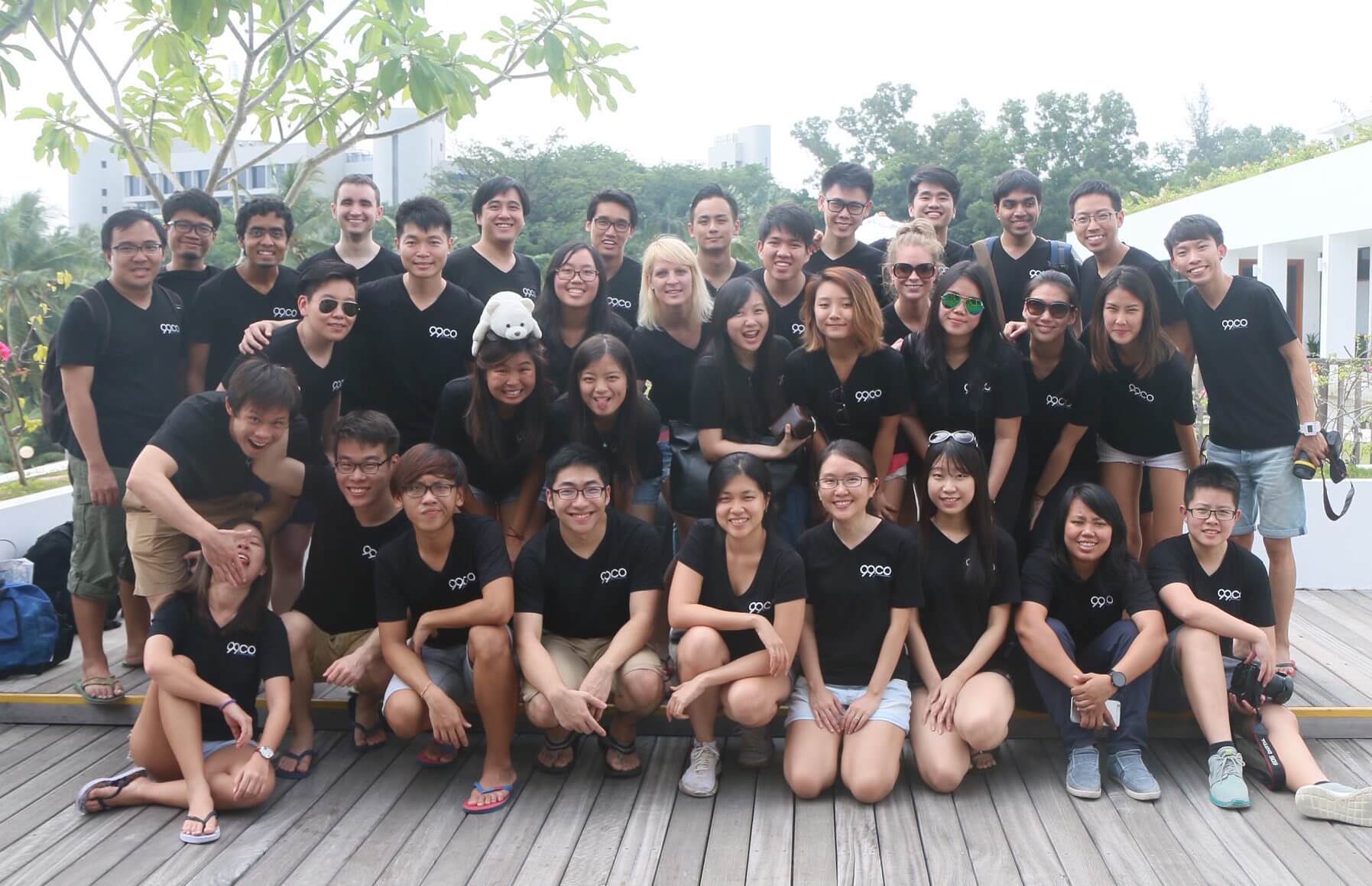
Singapore based property startup 99.co likes a challenge. Dominated by well funded regional players, there would be easier sectors to disrupt than online property. However 99.co is fighting hard with a unique proposition. The company has raised two rounds of funding since incorporation and is backed by high-profile investors including Sequoia Capital and Facebook co-founder, Eduardo Saverin.
Founder and CEO, Darius Cheung, talked to us about the company’s progress, its most recent capital raising transaction in 2015, and how they have found working with Kindrik Partners.
the 99.co story
Darius is one of Singapore’s celebrated young tech entrepreneurs having sold mobile security startup tenCube to McAfee in 2010. This was a decent sized exit for a Singapore tech startup at the time. With the current hot funding environment and massive interest in mobile disruptive technologies in Southeast Asia, Darius is now looking to build a company for an even larger exit.
Not surprisingly, given the city state’s rapid growth, Singaporeans have always had a real interest in property. So 99.co is playing in a compelling space. Singapore has over 30,000 property agents many of which use online real estate platforms such as 99.co. The company recently set up an Indonesian website and plan to get going in Malaysia and Thailand further down the line.
99.co differentiates itself from larger competitors by promising a more intuitive search experience, where the rankings for listings are influenced by the quality of the published content. The site, for example, could favour listings with more photos or with value add information such as commute times or local amenities. This contrasts with the traditional model where the level of fees paid typically pushes classifieds higher. Darius believes that users will increasingly seek this kind of consumer friendly experience.
99.co charges agents a basic subscription fee to list their properties. The company has, however, recently launched a new product called 99PRO – a subscription model where agents can unlock additional features like interactive map searches and new data.
challenges
Darius agrees that the competition is tough to crack in Singapore and the region, given the dominant players. Content is king – the number of listings is fundamental to the success of the business. Bridging the gap, and chasing the platforms that have the majority market share, requires innovative offerings. Plus it’s a crowded market. Aside from other startups trying to challenge those established players, print media still retains a surprisingly sizeable chunk of the market.
The nature of 99.co’s subscription model means the company will need to add alternative revenue streams over time.
Finally, talent acquisition in Singapore and building the 99.co team has been difficult given the number of other startups also hiring sought-after developers.
working with kindrik partners
Lee Bagshaw was introduced to Darius by one of 99.co’s investors. Lee has helped the company through each of its financing transactions. Most recently in 2015, Lee, supported by Chris Wilson, advised on the company’s series B transaction led by Sequoia and Saverin.
Darius’ previous view on lawyers had been that they were expensive and it was not always easy to see their value. He describes working with Lee as a breath of fresh air. Whether by email, on the phone, by WhatsApp or even in the passenger seat of Darius’ car, Lee’s advice was always simple to understand, but with real value add.
Darius was impressed with Kindrik Partners’s knowledge of VC financing deals in Southeast Asia. He says Lee and the team were also very fast, generally turning documents around in under 24 hours. Darius believes that, by working for a tech focussed firm, the Kindrik Partners lawyers have a greater connection with startup founders, combined with unique experience. Throughout the negotiations, Darius found that even if the company could not secure the best outcome on all points, Lee and Chris ensured that he understood clearly the implications, so he could quickly move on.
summing up
99.co are operating in an exciting space in Southeast Asia. Real estate tech companies globally have grown rapidly, achieving some astonishing valuations.
Sequoia’s and Saverin’s backing shows that notable investors are looking carefully at this space in Southeast Asia, particularly for platforms that are distinguishable from the others.
Kindrik Partners will be closely watching 99.co continue its growth to become a significant online property player in Southeast Asia.
Explore 99.co.
[Note: The firm’s name was changed to Kindrik Partners in July 2020 and references to the firm’s previous name have been updated.]

Fintech startups are the next big thing in the Southeast Asian tech scene. Kindrik Partners client C88 (formerly Compare88) is racing ahead of the pack after securing the backing of high-profile VC investors including Telstra Ventures.
C88 provides online financial services price comparison tools, helping consumers to compare the offers of major brands for products such as credit cards, personal loans, mortgages, vehicle loans, savings accounts and insurance. The company also offers a brokerage service, enabling consumers to purchase products directly on the C88 platform – for which C88 has secured relevant financial services licences through Southeast Asia.
Founder and CEO, J.P. Ellis, talked to us about the company’s background, its most recent series B financing round, and how they have found working with Kindrik Partners.
the c88 story
Prior to C88, founders Karl Knoflach and J.P. worked in private equity, finance, operations and leadership. The C88 senior team also consists of Gary Empl, a professional software developer with over two decades of experience leading teams in the creation of cutting-edge software in the financial services industry. Karl and Gary were part of the original founding team of einsurance.de in Munich in 1999 – a revolutionary company in the German insurance space which later became Check24.de, the German market-leader.
C88’s commercial teams in Indonesia, the Philippines and other markets are made up of senior bankers, insurance executives and sales operators with many years of experience in financial products sales and distribution. This experience, and the networks that senior team members bring, is crucial to C88 maintaining its market leader position.
J.P. notes that the Southeast Asian economy’s migration to digital begin with communities moving online for social needs. This was followed by online purchasing of physical goods, usually electronics and clothes, then travel bookings, followed more recently by financial services. This migration began in earnest in 2009, and by 2011 there were already major e-commerce providers. Online channel emerged in the insurance vertical in 2013, and C88 followed quickly releasing its platform in 2014.
J.P. observes that high traffic digital marketplaces, such as C88’s CekAja.com brand in Indonesia and eCompareMo.com brand in the Philippines, benefit consumers as well as underwriters. C88 can use its volume to create pricing efficiency for their customers. That volume also reduces the overall cost of acquisition for underwriters. Prior to the emergence of financial services e-commerce, banks and insurers basically only had two options for sales in the large markets of Southeast Asia: branches or physical agents. Digital sales through C88’s platform provides a highly cost-effective alternative.
challenges
Southeast Asia remains highly fragmented. Operating a multi-jurisdictional structure that is attractive to both consumers and providers, while keeping national regulators on-side, is challenging.
The company also faces the challenge of creating a common culture across national teams. Incentivising teams in different verticals and across countries to work together to solve problems creatively is an ever-evolving process of creative leadership and problem solving.
J.P adds that fortunately, C88’s team are multi-lingual and truly love what they do. It is not at all uncommon for them to log long hours during the week and weekends, because they genuinely enjoy what they do in building systems and solving problems for consumers in the region.
working with Kindrik Partners
As well as advising C88 on its venture capital financing rounds, Kindrik Partners’s Lee Bagshaw and Chris Wilson have helped C88 implement a variety of business critical structures including inter-company, cross-border licensing agreements and intellectual property documentation.
J.P says that Kindrik Partners provided high-quality and competitively-priced legal services in the critical areas of C88’s business. J.P. particularly appreciated the level of support he received when negotiating and completing the company’s recent Series B round led by Telstra Ventures – he says that the Kindrik Partners team know venture capital deals inside out, and made the negotiation of the financing documentation a breeze.
Kindrik Partners looks forward to helping C88 to continue its journey to become a leading fintech player in Southeast Asia and beyond.
Explore C88.
[Note: The firm’s name was changed to Kindrik Partners in July 2020 and references to the firm’s previous name have been updated.]

Southeast Asia’s online-to-offline (O2O) space is hot. Platforms linking online customers with offline services are now part and parcel of daily life, from the likes of well-backed Go-Jek and Grab, to Fave – one of the region’s most exciting new O2O companies.
Fave started out in 2015 as a fitness sharing platform called KFit before stepping into multi-category local commerce with the launch of Fave. The company is connecting millions of customers with thousands of local service businesses including restaurants, cafes, salons, spas, hotels, gyms and more.
Founder and CEO, Joel Neoh, talked to us about their journey and how they have found working with Kindrik Partners.
the Fave story
Fave’s founders Joel Neoh and Yeoh Chen Chow are no strangers to O2O local commerce. Joel started Groupsmore, a daily deals site that was acquired by Groupon in 2011. Joel went on to head up Groupon’s business in APAC, alongside Chen Chow, who led Groupon’s regional operations.
Spotting an opportunity to disrupt the fitness business in APAC, Joel left Groupon to start KFit, the region’s first-ever fitness sharing platform, touted as an Uber style platform for gyms and fitness studios.
After a year of tremendous growth and raising a US$12m series A financing, the company set its sights beyond the fitness space and launched its multi-category platform. It went on to acquire Groupon’s businesses in Indonesia, Malaysia and Singapore.
According to Joel, the pivot to a broader O2O platform was a natural progression for the company, as multi-category local commerce presented a much larger business opportunity. Joel observed that apps with high-frequency use cases tend to succeed in a competitive landscape. Fave was launched with a focus on the food and drink category – a major part of life in Southeast Asia.
Whilst deals businesses have been around for a while, Fave is focused on merchant-first innovation via deeper product development and data science. All with a view to enhancing the customer experience with daily deals and rewards. Joel notes that the traditional deals model only brings in new customers to offline businesses and stops there. To truly add value to local businesses, Fave wants to create an ecosystem where businesses can acquire, retain and re-target customers in the online world.
working with kindrik partners
Lee Bagshaw started working with Joel from the set-up of what was the KFit business in 2015. As well as advising Fave on its VC financing rounds, Lee and Chris Wilson have helped Fave on the three M&A deals relating to the acquisitions of Groupon’s Indonesian, Malaysian and Singaporean businesses.
Joel says that Kindrik Partners provided insightful and comprehensive legal advice that played a key role in helping Fave reach some major milestones. He specifically notes Kindrik Partners team’s considerable expertise in VC and tech M&A, which helped the company efficiently navigate the documentation negotiating during its funding rounds and the Groupon transactions.
The future of O2O commerce in Asia looks bright in Southeast Asia as new generation of digitally savvy consumers come online. Kindrik Partners looks forward to helping Fave continue its rapid journey to become a leading O2O player in the region.
Explore Fave.
[Note: The firm’s name was changed to Kindrik Partners in July 2020 and references to the firm’s previous name have been updated.]
