startup lawyers
startup lawyers
It seems like everyone you meet these days has founded a startup, works at a startup, or wants to sell you a package for startups. Or maybe we spend too much time hanging out at tech incubators?
A typical engagement with a Southeast Asian startup involves helping the business set up in, or flip to, Singapore. We then put in place governance documents such as a constitution, shareholders’ agreement and founder vesting documents.
Early on, we help Singapore startups get investment ready, taking care of the legal basics that investors expect to see covered. As your business grows, we also advise on company or group structuring, contractor arrangements and employee share incentive schemes.
We understand that cash is tight, yet there are endless issues to think about. To help out, we’ve developed free legal templates which you can use to cover the basics when you are just starting out. These tools are also a great learning resource.
Our team has learnt a massive amount about tech business over the years. Our startup clients get the benefit of that experience as part of the package, whether we are on the clock or catching up over a coffee.
"Kindrik Partners were instrumental to a fast and favourable outcome on the round.
As first time founders, we relied on their partnership for not only support with the necessary documentation, but advice on standard processes and critical regional context on terms."will hanschell, founder, pencil
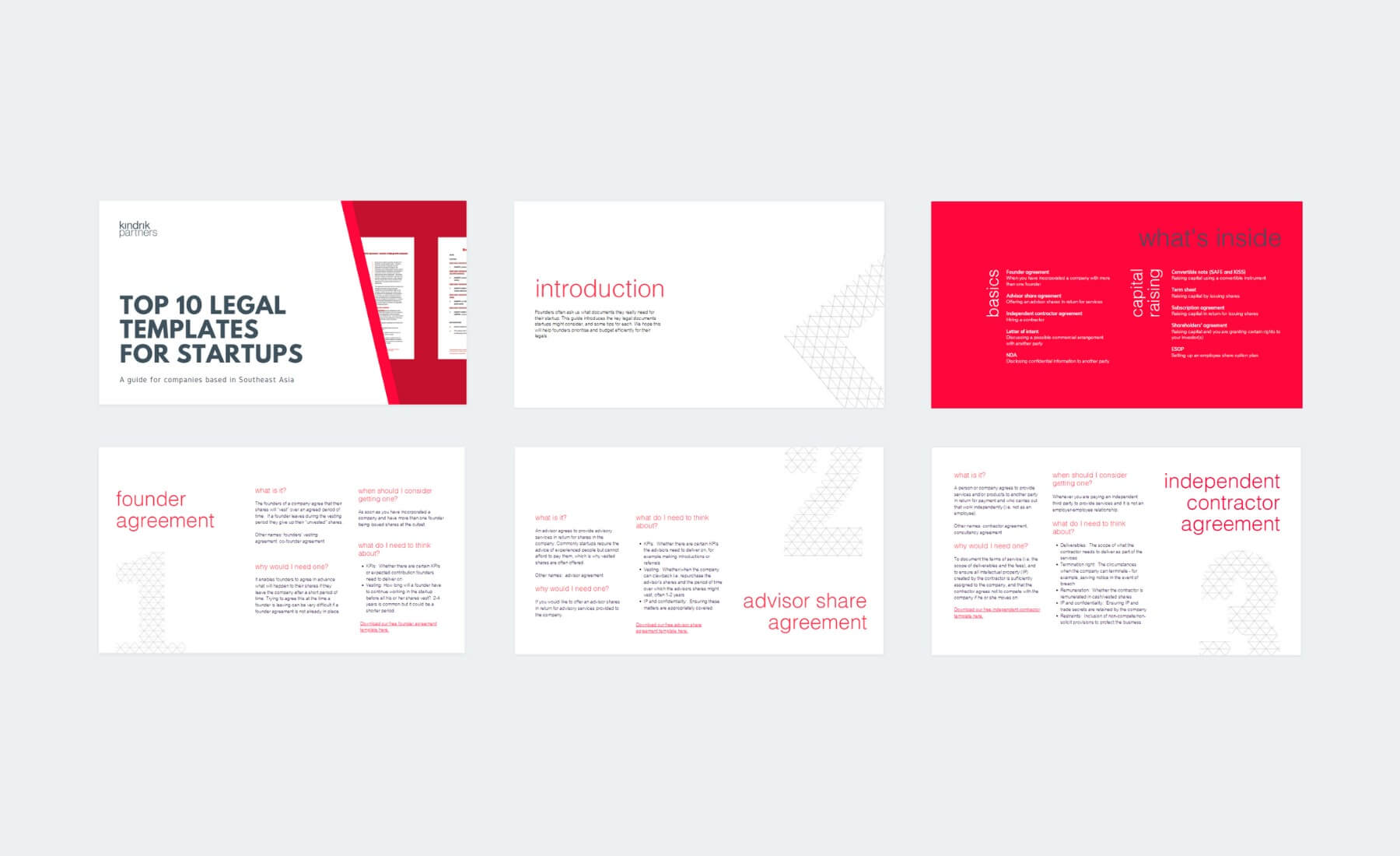
top 10 legal templates for startups
From venture capital to drafting governance contracts, we help startups every day with their legal needs. We’ve rounded up our most popular templates and tips for putting this paperwork in place.
browse our other startup resources
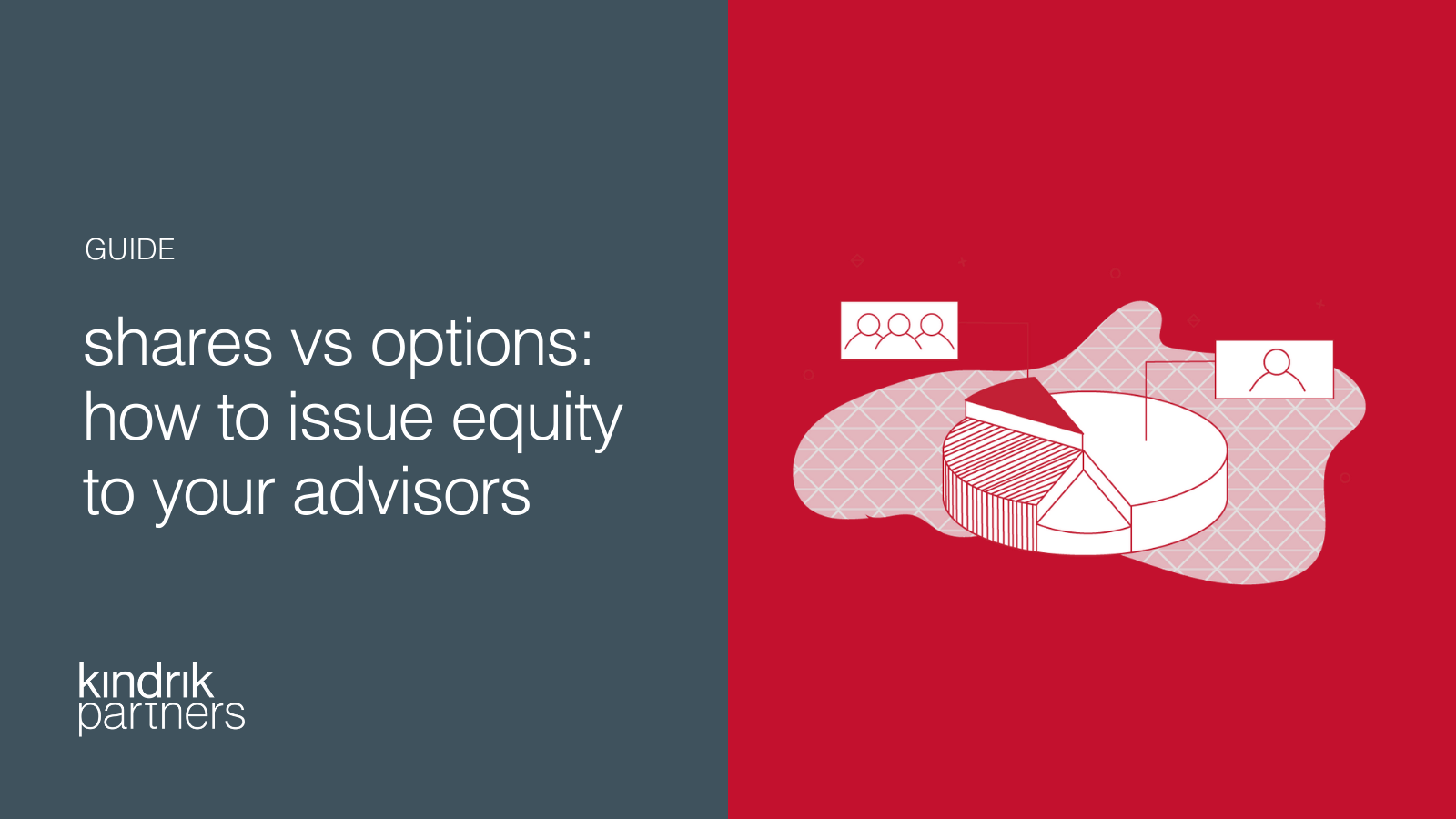
Advisors help startups by offering expertise or perspectives that the core founder team may not have. Since most startups don’t have the cash to compensate these advisors, a common way to pay for their guidance is to offer equity.
We are often asked how companies should best go about this. In this guide we cover the types of advisor equity (shares versus options), how vesting can be incorporated, what else to cover, and other common questions.
types of advisor equity
When offering equity to advisors, there are two common roads to take: either giving shares, or granting options. The fundamental difference between shares and options is that if someone owns shares, they are immediately a shareholder in the company. If someone owns options, they have the right to purchase shares in the future.
share issue
Shares are a straightforward way to compensate an advisor. In most cases, advisors prefer shares rather than receiving options under the company’s option scheme. Like any share issue, the company will need to pass board and shareholder resolutions, as well as receiving necessary waivers and consents under the constitution and shareholders’ agreement in place. For that reason, a company intending to issue shares to advisors in the future usually carves this out under the constitution and shareholders’ agreement in the same way as they would an ESOP.
granting options
Options are an alternative way to compensate an advisor, and can be granted easily if a pool of options (such as an ESOP) has already been established. However, often advisors can come on board before the ESOP is formally set up.
If options are issued to an advisor, in the event that the advisor wants to exercise their options and convert them into shares, they will need to pay the ‘exercise price’, which may be around the price that the investors paid in the last funding round. This means that they will need to come up with cash to exercise their options.
how much to give?
There are different models to decide how much equity to offer. The Founders Institute gives a useful framework based on the stage of the company (idea, startup, or growth) and based on the various levels of engagement. This is really just a guide however.
| Idea Stage | Startup Stage | Growth Stage | |
| Standard: Monthly Meetings | 0.25% | 0.20% | 0.15% |
| Strategic: Add Recruiting | 0.50% | 0.40% | 0.30% |
| Expert: Add Contacts & Projects | 1.00% | 0.80% | 0.60% |
https://fi.co/insight/the-founder-institute-s-standard-advisor-agreement-for-startups-fast
vesting schedule
Advisor agreements typically have a vesting schedule of around 12-24 months, i.e. they are shorter than vesting schedules for founders and employees under an ESOP. This is because advisors generally bring greater value over a short term. As your startups grow, it cycles through different advisors that fit their applicable stage of growth.
Some advisor agreements also contain some measure of ‘claw back’ if the advisor does not perform make the expected contributions over the agreed period. An alternative to a provision like this would be using a cliff of 3-6 months to provide for a ‘test run’ to see if the relationship is beneficial.
other provisions
The advisor should agree that all intellectual property and other business, technical and financial information that the advisor obtains from the company or learns in connection with his or her services is appropriately assigned to the company.
As a minimum, the advisor should be subject to confidentiality provisions. You may want to add a no-conflict provision, and also a provision that the advisor complies with certain company policies.
Finally, there is usually a termination right for both parties and sometimes automatic termination if the company has not requested that the advisor render any services for a lengthy period.
tax implications
Options and shares are treated differently with regards to how they are treated in a tax sense. Generally speaking if you are issued shares for services, you would expect to have an income tax liability whereas options do not trigger a liability until exercised. We recommend obtaining tax and accounting advice before putting in place any advisor agreement.
advisor agreement template
We have produced a simple template agreement that a startup can use when bringing an investor on board. The template is drafted on the basis that the advisor receives shares, and that no cash compensation will be paid. It also provides that some of the shares may be clawed back by the company if the advisor fails to make the expected contributions over the agreed period, which is usually one or two years.
You can download our advisor share agreement template here. If you have any questions regarding the template or want to work with us to draft your advisor agreement, get in touch.

In the last few years, convertible notes have been frequently used on Singapore financings. Perhaps less common has been the use of SAFEs – the instrument created by Y-Combinator (YC) several years ago. However SAFEs are on the increase on fundraising deals across Southeast Asia.
Two years ago, YC reinvented the SAFE and launched what is now known as the ‘post-money’ SAFE. And just last month they released beta versions of the “Valuation Cap, no Discount” post-money safe and side letter specifically for companies registered in Singapore. You can access these here.
quick reminder – what’s a SAFE?
A simple agreement for future equity – in short, it’s an instrument convertible into shares similar to a KISS or convertible note. What’s different with a SAFE is that it doesn’t typically have any interest accruing, nor any maturity date and repayment obligation. They are therefore seen as a founder friendly investment tool to raise capital.
Like KISSes and other convertible notes, SAFEs typically convert into shares on the basis of a conversion price which is usually an agreed discount to the price of the next equity round, but which is subject to an overall valuation cap – i.e. whichever gives the lower price for investors.
so, what changed with the ‘post-money’ SAFE?
post-money SAFEs don’t dilute each other (bad news for founders)
The main change is that the new SAFE uses a post-money valuation cap instead of pre-money. The drafting change is fairly subtle to see: the definition of Fully Diluted Capital in the SAFE is amended to reflect the new principle. However, the impact can be significant. It means that the company’s valuation for calculating the conversion is “post” (i.e. after) the conversion of any other SAFEs or convertible instruments issued by the company, but prior to the valuation of the company immediately after the equity financing round. This results in further dilution for founders on conversion and potentially to any other investors that do not hold post-money SAFEs.
Just to be clear and to dispel a myth, by ‘post-money’, this is post all other SAFEs and convertible notes, but not post the next equity financing as well, as some founders have asked. That really would cause dilution!
Under post-money SAFEs, the post-equity financing option pool is no longer factored into the pre-money calculations, which actually benefits founders from a dilution perspective. Under the original SAFE, option pool expansions resulted in SAFE investors receiving additional shares. However, overall this doesn’t balance out the additional dilutive effect outlined above.
you’ll only feel the impact with multiple rounds of SAFEs
It is worth pointing out that for a company that only ever raises one SAFE investment round, a post-money SAFE has no real impact. Rather, it comes into play when more than one series of SAFEs or other convertible notes are issued. In Singapore, we perhaps see this less commonly than say in the US where substantial amounts are often invested using SAFEs and other convertible instruments, and not only in the first round of investment.
easier to calculate cap table (good news for founders)
YC’s view at the time of launching the new SAFE was that it makes the maths simpler for everyone and creates more certainty over ownership and dilution. Which is probably true. But if you issue more than one round of SAFEs or other convertible notes, and you use post-money SAFEs, founders will likely experience more dilution on conversion than they would have done under the original YC SAFE, simple as that.
In light of this, if presented with a post-money SAFE, founders may want to negotiate up the valuation cap to mitigate against the dilutive impacts potentially coming into effect.
what else did YC change?
The original YC SAFE granted holders a pro-rata right on the next financing round. The new SAFE doesn’t automatically include this. Instead, YC put out a separate side letter on their website under which these additional pro-rata rights might be granted.
Also, the old SAFE could only ever be amended by the holder. The new SAFE on the other hand permits amendments by written consent from a majority of SAFE holders. This is something we think is valuable on all convertible instruments, i.e. the holders effectively make decisions on a consensus basis, avoiding one single small investor taking a different view holding things up.
other key points to remember about a SAFE
Not specific to the new post money version, but whenever drafting or reviewing a SAFE, keep these tips in mind:
- Look out for most favoured nation (MFN) provisions. These enable early investors to have the benefit of any rights granted to future SAFE holders which might be more beneficial. If nothing else, it can be a burden reissuing new SAFEs on these better terms to lots of prior investors.
- SAFEs typically convert automatically on completion of the next equity financing. There should ideally be no minimum amount to be raised to trigger this automatic conversion under a SAFE. Some investors like to include a threshold to ensure it is a legitimate fundraising round. Always be careful you do not go too high with this so as to prevent automatic conversion of the SAFE.
- A SAFE (like all convertible instruments) should include language to the effect that, on conversion, holders will only have the benefit of their lower conversion price for the purposes of liquidation preference and anti-dilution rights. This can be achieved through issuing a separate class of “shadow” preferred shares, or just by drafting carefully the relevant provisions in the constitution and shareholders agreement put in place on the equity round.
round up
If you are presented with any kind of SAFE right now, it will most likely be the post-money version, so come and have a chat to us.
subscribe to our newsletter and get the latest templates and tips for fast-growing startups in Southeast Asia
read our startup case studies

Southeast Asia’s online-to-offline (O2O) space is hot. Platforms linking online customers with offline services are now part and parcel of daily life, from the likes of well-backed Go-Jek and Grab, to Fave – one of the region’s most exciting new O2O companies.
Fave started out in 2015 as a fitness sharing platform called KFit before stepping into multi-category local commerce with the launch of Fave. The company is connecting millions of customers with thousands of local service businesses including restaurants, cafes, salons, spas, hotels, gyms and more.
Founder and CEO, Joel Neoh, talked to us about their journey and how they have found working with Kindrik Partners.
the Fave story
Fave’s founders Joel Neoh and Yeoh Chen Chow are no strangers to O2O local commerce. Joel started Groupsmore, a daily deals site that was acquired by Groupon in 2011. Joel went on to head up Groupon’s business in APAC, alongside Chen Chow, who led Groupon’s regional operations.
Spotting an opportunity to disrupt the fitness business in APAC, Joel left Groupon to start KFit, the region’s first-ever fitness sharing platform, touted as an Uber style platform for gyms and fitness studios.
After a year of tremendous growth and raising a US$12m series A financing, the company set its sights beyond the fitness space and launched its multi-category platform. It went on to acquire Groupon’s businesses in Indonesia, Malaysia and Singapore.
According to Joel, the pivot to a broader O2O platform was a natural progression for the company, as multi-category local commerce presented a much larger business opportunity. Joel observed that apps with high-frequency use cases tend to succeed in a competitive landscape. Fave was launched with a focus on the food and drink category – a major part of life in Southeast Asia.
Whilst deals businesses have been around for a while, Fave is focused on merchant-first innovation via deeper product development and data science. All with a view to enhancing the customer experience with daily deals and rewards. Joel notes that the traditional deals model only brings in new customers to offline businesses and stops there. To truly add value to local businesses, Fave wants to create an ecosystem where businesses can acquire, retain and re-target customers in the online world.
working with kindrik partners
Lee Bagshaw started working with Joel from the set-up of what was the KFit business in 2015. As well as advising Fave on its VC financing rounds, Lee and Chris Wilson have helped Fave on the three M&A deals relating to the acquisitions of Groupon’s Indonesian, Malaysian and Singaporean businesses.
Joel says that Kindrik Partners provided insightful and comprehensive legal advice that played a key role in helping Fave reach some major milestones. He specifically notes Kindrik Partners team’s considerable expertise in VC and tech M&A, which helped the company efficiently navigate the documentation negotiating during its funding rounds and the Groupon transactions.
The future of O2O commerce in Asia looks bright in Southeast Asia as new generation of digitally savvy consumers come online. Kindrik Partners looks forward to helping Fave continue its rapid journey to become a leading O2O player in the region.
Explore Fave.
[Note: The firm’s name was changed to Kindrik Partners in July 2020 and references to the firm’s previous name have been updated.]
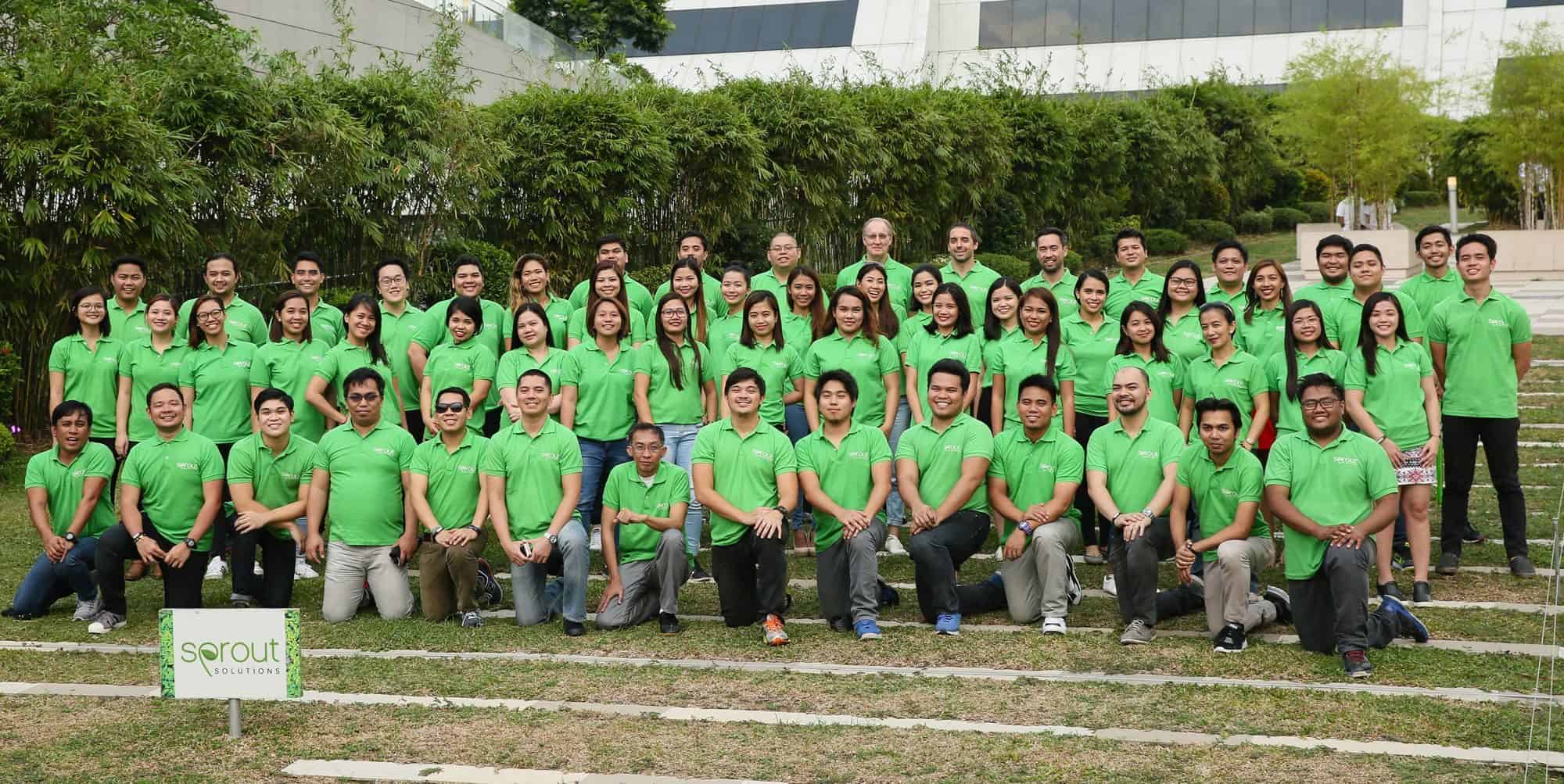
Sprout Solutions is a Philippines based SaaS payroll, HR and recruitment company. Sprout’s products are tailored to meet the requirements of each jurisdiction in which their enterprise clients operate.
We recently spoke to co-founder and CEO Patrick Gentry about working with Kindrik Partners on Sprout’s series seed funding round.
the sprout solutions story
Sprout was founded by the husband and wife team of Patrick and Alexandria Gentry. In 2016 Acceleprise (a US based SaaS accelerator) asked Sprout to be the first Philippines based company to join its program. Patrick says:
We were interviewed by other accelerators, but chose Acceleprise because it specialised in assisting companies that were looking to scale their sales to enterprise customers.
The connections that Patrick and Alexandria made at Acceleprise helped them to raise an angel round from overseas investors. Those funds were used to expand the company’s software engineering and sales teams. The company grew rapidly, and by the middle of 2017 it had over 75 employees and 150 enterprise clients in the Philippines.
After proving the business model locally, the company wanted to expand into other emerging markets in Southeast Asia. Patrick and Alexandria began looking for institutional investors to fund the tailoring of the company’s products for each new market, and to grow the international sales and services teams.
the deal
Patrick was well connected in the startup ecosystem after several years of bootstrapping both Sprout and a previous company. A fellow entrepreneur provided Patrick with a warm introduction to several VCs with a focus on B2B SaaS products. Sprout soon began negotiating a series seed investment round led by VCs Kickstart Ventures (Philippines), Wavemaker Partners (Singapore), and BEENEXT (Singapore).
A condition of the round was that Sprout needed to redomicile in Singapore. This type of restructure (or flip) is quite common, since many Southeast Asia VCs will only invest in a Singapore incorporated entity. There are a number of reasons for this, including taxation, minimal restrictions on foreign ownership, the ability to easily repatriate investment returns from Singapore, and legal certainty (including IP protection).
For Sprout, a new Singapore head company was incorporated and the existing company became a Philippines operating subsidiary. The terms of the restructure were incorporated into the long form investment documents and the flip was completed at the same time as the rest of the investment round. Patrick recalled that:
Some aspects of the restructure were unique. Kindrik Partners were great in this scenario as they did a deep dive to understand the specific requirements and complete the process by working closely with local counsel.
The company closed its US$1.6m series seed round in late 2017. Patrick told us that:
Completing the round was a huge deal. I knew we could accelerate this business with capital, and felt like the timing was perfect. It’s exciting to gain the freedom to stretch a bit and continue our rapid expansion in new areas of the business and market.
working with us
Kickstart recommended Kindrik Partners to Patrick as they had worked with us on the other side of previous deals.
Patrick says:
Kindrik Partners were invaluable in moving the deal forward as efficiently as possible by keeping the negotiations centred on the critical commercial points, and by providing insight as to what was common market practice in these areas. I can’t emphasize enough how important it is to have a strong partner that not only knows the process inside and out, but will also go to war for you and represent you as if they are negotiating for their own company.
Kindrik Partners even assisted with the calculation of the cap table, as the deal involved some bespoke debt conversion calculations relating to a previous round.
As entrepreneurs we pour our heart and soul (and blood and sweat) into our companies, and to have someone fighting for us as if it were their own – that’s just awesome!
Sprout is rapidly becoming a regional SaaS star, and we would like to thank Patrick for taking time out of his frantic schedule to speak with us.
[Note: The firm’s name was changed to Kindrik Partners in July 2020 and references to the firm’s previous name have been updated.]
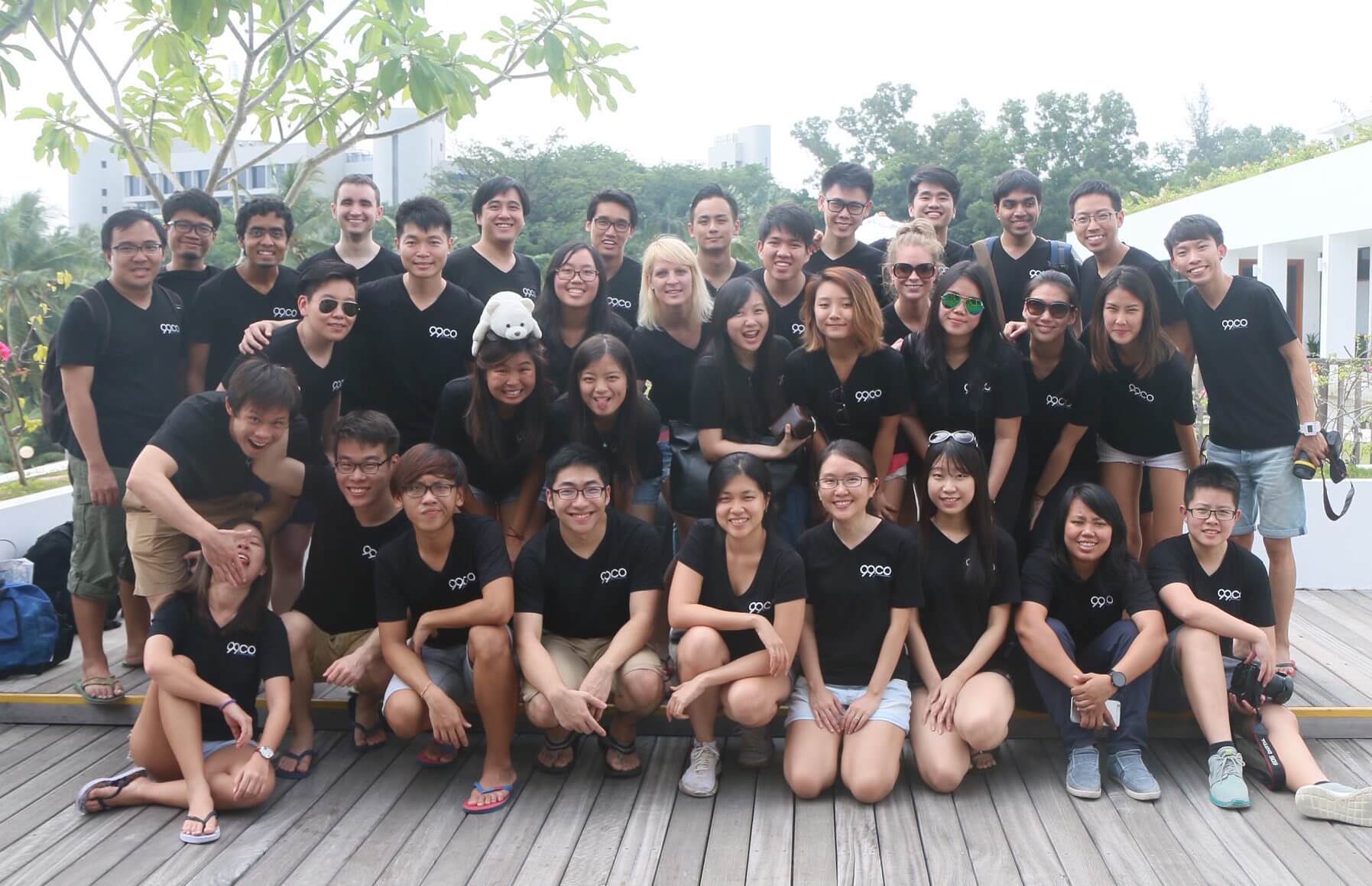
Singapore based property startup 99.co likes a challenge. Dominated by well funded regional players, there would be easier sectors to disrupt than online property. However 99.co is fighting hard with a unique proposition. The company has raised two rounds of funding since incorporation and is backed by high-profile investors including Sequoia Capital and Facebook co-founder, Eduardo Saverin.
Founder and CEO, Darius Cheung, talked to us about the company’s progress, its most recent capital raising transaction in 2015, and how they have found working with Kindrik Partners.
the 99.co story
Darius is one of Singapore’s celebrated young tech entrepreneurs having sold mobile security startup tenCube to McAfee in 2010. This was a decent sized exit for a Singapore tech startup at the time. With the current hot funding environment and massive interest in mobile disruptive technologies in Southeast Asia, Darius is now looking to build a company for an even larger exit.
Not surprisingly, given the city state’s rapid growth, Singaporeans have always had a real interest in property. So 99.co is playing in a compelling space. Singapore has over 30,000 property agents many of which use online real estate platforms such as 99.co. The company recently set up an Indonesian website and plan to get going in Malaysia and Thailand further down the line.
99.co differentiates itself from larger competitors by promising a more intuitive search experience, where the rankings for listings are influenced by the quality of the published content. The site, for example, could favour listings with more photos or with value add information such as commute times or local amenities. This contrasts with the traditional model where the level of fees paid typically pushes classifieds higher. Darius believes that users will increasingly seek this kind of consumer friendly experience.
99.co charges agents a basic subscription fee to list their properties. The company has, however, recently launched a new product called 99PRO – a subscription model where agents can unlock additional features like interactive map searches and new data.
challenges
Darius agrees that the competition is tough to crack in Singapore and the region, given the dominant players. Content is king – the number of listings is fundamental to the success of the business. Bridging the gap, and chasing the platforms that have the majority market share, requires innovative offerings. Plus it’s a crowded market. Aside from other startups trying to challenge those established players, print media still retains a surprisingly sizeable chunk of the market.
The nature of 99.co’s subscription model means the company will need to add alternative revenue streams over time.
Finally, talent acquisition in Singapore and building the 99.co team has been difficult given the number of other startups also hiring sought-after developers.
working with kindrik partners
Lee Bagshaw was introduced to Darius by one of 99.co’s investors. Lee has helped the company through each of its financing transactions. Most recently in 2015, Lee, supported by Chris Wilson, advised on the company’s series B transaction led by Sequoia and Saverin.
Darius’ previous view on lawyers had been that they were expensive and it was not always easy to see their value. He describes working with Lee as a breath of fresh air. Whether by email, on the phone, by WhatsApp or even in the passenger seat of Darius’ car, Lee’s advice was always simple to understand, but with real value add.
Darius was impressed with Kindrik Partners’s knowledge of VC financing deals in Southeast Asia. He says Lee and the team were also very fast, generally turning documents around in under 24 hours. Darius believes that, by working for a tech focussed firm, the Kindrik Partners lawyers have a greater connection with startup founders, combined with unique experience. Throughout the negotiations, Darius found that even if the company could not secure the best outcome on all points, Lee and Chris ensured that he understood clearly the implications, so he could quickly move on.
summing up
99.co are operating in an exciting space in Southeast Asia. Real estate tech companies globally have grown rapidly, achieving some astonishing valuations.
Sequoia’s and Saverin’s backing shows that notable investors are looking carefully at this space in Southeast Asia, particularly for platforms that are distinguishable from the others.
Kindrik Partners will be closely watching 99.co continue its growth to become a significant online property player in Southeast Asia.
Explore 99.co.
[Note: The firm’s name was changed to Kindrik Partners in July 2020 and references to the firm’s previous name have been updated.]
